Milk Powder Prices Prop Up Farmgate Milk Price
Milk powder prices are keeping farmgate prices up, helping processors offset the dip in milk fat prices.
 increase font size
 ANZ agricultural economist Matt Dilly believes the stars are aligning for a strong spring.
New Zealand milk production is off to a strong start, with the first month of the 2025/26 dairy season recording a whopping 17.8% jump in milk production, compared to the previous season.
While June and July, are the seasonal lows and their milk production numbers don’t typically draw much attention, ANZ agricultural economist Matt Dilly believes the stars are aligning for a strong spring – from August to October – led by a signal from the market that the world needs more milk.
Dilly says high global dairy prices are encouraging farmers to increase production where possible, both in New Zealand and overseas.
Fonterra’s opening milk price is $10/kgMS and falls within a wide forecast range of $8 to $11/kgMS. ANZ is also forecasting a milk price of $10.
The milk production boost is driven by good pasture growth over winter, providing plenty of feed available under foot. This includes a recovery from drought conditions that impacted Waikato and Taranaki from January to March 2025.
Dilly notes that great reproduction metrics, particularly the 6-week in-calf rate, mean more cows ready to be milked earlier in the season.
“The metrics were good last year and even better this year,” he says.
This winter’s dairy cow cull numbers are roughly 8% lower than last year. Farmers have been drying off their herds as late as possible, and they are also likely to keep older cows past their ‘best before’ date to boost production in 2025/26.
Dilly says a surge in palm kernel expeller (PKE) imports - up 34% in the past year - should provide support on the shoulders of the coming season.
“Last season’s milk production was up 3.0%, the largest year on year gain since 2014/15,” he says.
The weather was very good last year despite challenges in Southland, Taranaki, and Waikato.
“The extra feed on hand this year provides a buffer, but the weather tends to drive milk production in New Zealand, says Dilly.
“It is hard to make large gains two years in a row, but with the stars aligning, growth of 1-3% should be attainable in 2025/26 if the weather cooperates. The expansion signal from the market is much stronger this year – recall Fonterra’s opening milk price was just $8/kgMS last year – and Southland should rebound with vigour.
“If this comes to pass, it would be the second straight year of high prices and high output, a rare and very welcome combination for New Zealand’s rural sector.”
Milk powder prices are keeping farmgate prices up, helping processors offset the dip in milk fat prices.
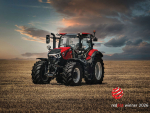
Case IH has unveiled its redesigned next generation Puma Series tractors, said to offer improvements in connectivity, operator comfort, fuel efficiency and drivability.
Cameron Reed lives between two worlds.
A milk glut around the world shows no sign of easing, putting downward pressure on farmgate milk prices for the next few months.
Farmers and growers are powering the economy with export revenue at record highs.


Farmer-owned fertiliser company, Ballance Agri Nutrients is welcoming National’s plan to negotiate security agreements with key supplier countries to protect New Zealand-bound products from export restrictions and greater supply chain certainty.

Carrfields has announced the appointment of Stu Hall to the newly created role of chief operating officer, Carrfields Ltd, reflecting the continued growth of their agribusinesses and the need to ensure the company has the leadership capacity and support in place as it pursues the emerging opportunities ahead.
New Zealand's role is not to compete with Indian growers, according to NZ Apples and Pears.
The potato industry is celebrating the success of two rising stars - James Blair, the 2026 Young Grower of the Year and runner-up and innovation award winner, Amber Davy.
Twenty-eight emerging leaders from across the horticulture sector spent two days last month learning valuable skills and connecting with industry experts.
There are five entrants in this year’s Young Horticulturist of the Year, competing in a series of technical, practical, business and leadership challenges.