Pāmu and Meet the Need Launch Mince Recipe Cards for Food Banks
A partnership between state-owned enterprise Pāmu (Landcorp Farming Limited) and charity Meet the Need is putting more than quality New Zealand beef into food bank parcels this year.
 increase font size
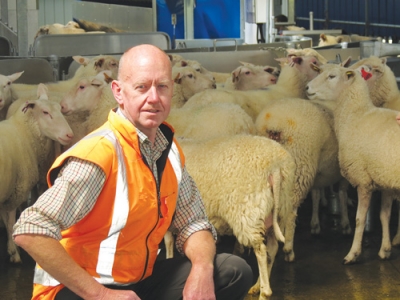 John Ryrie says people need to have realistic expectations about sheep milking.
A world expert on the sheep milking industry says UK farmers would be envious of the level of research being done in New Zealand into sheep milking.
John Ryrie, from the UK and now managing the Spring Sheep Dairy operation on a Landcorp farm near Taupo, told Rural News that the NZ sheep milking industry is backed by good research. He says the research in NZ is by highly competent people and supported by government agencies.
But while there is growing interest in the sheep milking industry in NZ, Ryrie says people need to have realistic expectations of what can be achieved and not draw comparisons to the bovine milk sector. He says it won't replace bovine alone in the quantity of milk produced.
"I also don't think it's a fad. Fads signify to me short-lived and this is not short-lived. There is a market in China among a large population with specific needs for sheep milk products for nutrition and digestive requirements," Ryrie explained.
"The other factor is a cow will give you 3000L a year in NZ, whereas a sheep will do 400 to possibly 800L a year. So it's important that sheep milk is not a commodity product. This is a product that can be refined and produced for specific markets and for specific people in the population."
Ryrie says much changed in the NZ sheep milking sector in the space of a year, as reflected in this year's conference. A year ago the talk was about the potential of the sector and what could be done, he says.
"This year we have more sheep milking flocks established, we are looking at components of milk and where to go with those components in the market. It's a credit to the organisers of the conference and to the research bodies involved and all the farmers who have taken up the challenge of sheep milking."
Staff trained and ready to go
A year ago John Ryrie moved from the UK to NZ to head up Spring Sheep Dairy, a joint venture between Landcorp and a marketing company, SLC.
The first year has passed in setting up the farm and training staff in the art of milking sheep. Ryrie says when the new season starts, the staff will be ready to go and will understand the systems – no stress.
With the initial setup done, Ryrie says they are now looking to improve the genetic composition of the flock.
"We are looking to import genetics to improve and broaden the bloodlines within our flock. We will probably bring in a mix of semen and embryos," he told Rural News. "Semen is the quickest fix because we can get a large number of semen straws in to cover a large number of our ewes in the short term; but to get very specific, high-quality bloodlines we'd use embryos."
The latter will take time given the approval process which Ryrie supports. He says safeguarding NZ's biosecurity is paramount. But once approval is given it will be a great opportunity for NZ to expand its genetic pool of milking sheep.
Ryrie says he's delighted to work in NZ and while there are challenges – including facial eczema – he believes these can be overcome. NZ's drier climate will result in less foot problems and overall the sheep milking industry will do better here than in Europe.
A partnership between state-owned enterprise Pāmu (Landcorp Farming Limited) and charity Meet the Need is putting more than quality New Zealand beef into food bank parcels this year.

State farmer Pamu has delivered its strongest operating result on record.
Four years since it was first detected in New Zealand, researchers and growers now know much more about management of maize pest fall armyworm (FAW).
Generative AI in the workplace, trials in the field, and industry-relevant research took centre stage at this year’s Grape Days events in Central Otago, Hawke’s Bay and Marlborough.
State farmer Pāmu (Landcorp) has announced it will pay a $10 million special dividend to the Crown off the back of a strong outlook for the business and a capital repayment of $9.5 million following Fonterra's consumer business sale.

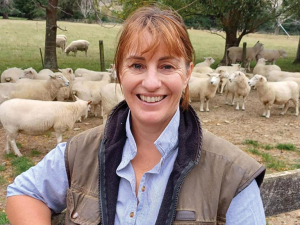
B+LNZ's Wormwise veterinarian Mary Bowron has won the Best Sheep and Beef Vet of the Year Award in recognition of her outstanding contribution to New Zealand’s sheep and beef sector.
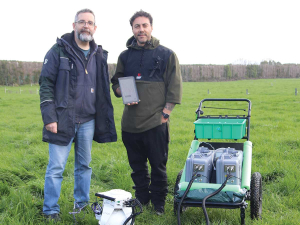
Researchers at Massey University are using a special piece of scientific equipment to improve the measurement of greenhouse gas emissions from pasture soils.
More signs of a booming kiwifruit sector.
OPINION: David Seymour and James Meager's plan to make it easier for farmers and orchardists to operate drones can best be described a 'courageous' move.
New Zealand wool is reaching new heights as air filtration companies move away from synthetic products to biodegradable alternatives.
Opuha Dam's ability to protect South Canterbury communities from major flooding has taken a significant step forward, with Opuha Water Limited (OWL) successfully commissioning a new outlet valve capable of releasing record volumes of water from the dam ahead of a weather event.