Beef + Lamb NZ's Lambing Kit Checklist for a Tough Season
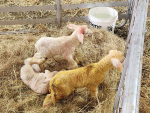
With lambing underway in many regions, Beef + Lamb New Zealand is encouraging farmers to put together a wellequipped lambing kit to help minimise lamb losses, particularly in bad weather.
 increase font size
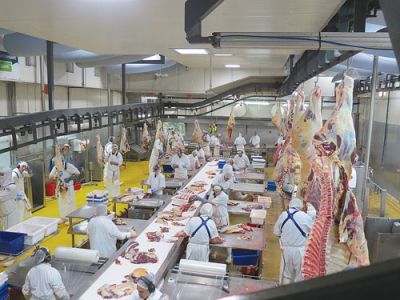 The red meat sector has been urged not to reinvent the wheel in regards to coming up with organic standards for the industry.
Primary sectors need not create new standards for animal welfare, grass-fed, GMO and biodiversity because these are already part of existing organic standards, says Brendan Hoare.
The former chief executive of Organics Aotearoa NZ (OANZ) says a real task, and one that should be done for the best of New Zealand, is to ‘unpack’ the organic standards which have all these components and are internationally recognised.
“New Zealand does not need is a proliferation of standards and confusion in field (farmer) and market (customer). Clearly pathways to best management practices that are aligned with market requirement are essential.”
Hoare moved on from his position as OANZ chief executive at the end of October, after a restructuring of that organisation, but he remains involved in the industry through his company Pure New Zealand.
He says while there are export markets for organic beef, lamb and wool, there is also a very strong domestic market.
“We always say we are not going to solve the red meat sectors’ issues. But we offer solutions for sure and can answer some of the questions they have, but the structural issues they need to organise.”
In its latest market report, Hoare says OANZ made sure they had the Federation of Maori Authorities, DairyNZ, BLNZ and Horticulture NZ and Wine NZ all doing research with them to find out more.
For sheep and beef, results were indicative – although not conclusive – of a trend. At least 50% of BLNZ members, who replied to the research BLNZ put out, wanted to know more about organics. “Farmers want change too. I come from a farming background, I live on a small farm and I am engaged daily,” says Hoare.
“The market wants change and farmers do too. Most farming communities I talk to realise things aren’t great. No one consciously, purposely likes to pollute or destroy the environment. There might be a few, but we have got to offer pathways for people to move. I think that is crucial.
“You can’t [sit] on your high horse and blame; that is not the culture you need. You must have an environment where people have avenues to move at a pace, time and framework which works for them and their families. It has to be sustainable economically over time.”
With lambing underway in many regions, Beef + Lamb New Zealand is encouraging farmers to put together a wellequipped lambing kit to help minimise lamb losses, particularly in bad weather.

Chinese beef trade quotas and a looming suspension of Brazilian beef imports into the European Union are expected to reshape global beef trade flows over the remainder of 2026, with implications for New Zealand exporters, according to Rabobank's Q3 Global Beef Quarterly report.
Will a stronger, more coordinated voice help rebuild confidence and improve returns in the wool sector?
Bovine Viral Diarrhoea (BVD) is sometimes viewed as a dairy industry issue, but the reality is that the disease can have serious consequences for beef breeding herds as well.
Fonterra has announced it will continue with the planned expansion of its organic business into the South Island.

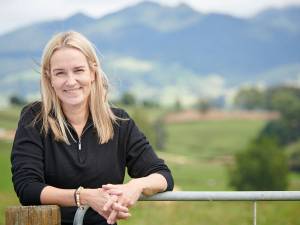
Minister of Conservation Hon Tama Potaka has appointed Susan O'Regan as Chair of the Queen Elizabeth II National Trust (QEII) for a three-year term.
Red meat farmers are welcoming Labour’s plan to review the Emissions Trading Scheme and not to campaign on pricing agricultural emissions.
Where any worker in the kiwifruit industry is mistreated, we expect the authorities to take action.
Mid Canterbury Federated Farmers arable chair, Bevan Lill, said Beef + Lamb NZ data indicated that for the last six years, the average arable return on investment was about 0.8% while inflation ran about 4% - so the average arable farm was going backwards at about 3% a year.
Seed and grain companies share the concerns of arable farmers about the viability of their sector, says Seed and Grain New Zealand chief executive Dr Sarah Clark.
The New Zealand Institute of Forestry (NZIF) says unnecessary changes to New Zealand’s Emissions Trading Scheme (NZ ETS) will seriously erode investor confidence and result in significant reductions in forest planting rates.