NZKGI Responds to Migrant Worker Exploitation Reports
Where any worker in the kiwifruit industry is mistreated, we expect the authorities to take action.
 increase font size
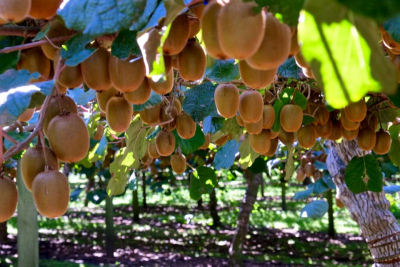
New Zealand’s primary sector exports continue to surpass expectations, with revenue forecast to grow 7.1% on the previous financial year.
The Ministry for Primary Industries’ Situation and Outlook report for June 2019 forecasts primary industry revenue to reach $45.7 billion for the year to June 2019, slightly above the March 2019 forecast.
The report was released today by the Agriculture Minister Damien O’Conno at the National Fieldays, Hamilton.
O’Connor says this is the second straight year of substantial export growth, with significant gains across most primary industry products.
“Export performance is up nearly $7.5 billion over the last two years. That’s incredibly impressive considering the weakening global economic environment and a rising sense of uncertainty in global markets,” he says.
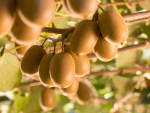
Sustained demand from China and South East Asia is supporting prices for dairy exports. Horticulture and pasture-based production excelled in most areas, with red meat weights and milk production both high, and kiwifruit production up 25% on the 2018 harvest.
Growers are anticipating good demand for New Zealand apples from UK and continental Europe, as well as China, following the market success of new varieties, says O’Connor.
He says that over the next year, a focus on higher value products, combined with ongoing favourable exchange rates, is expected to support export revenue growth.
“I’m really pleased to see New Zealand’s primary sectors succeeding through investment in innovation and focusing on a move away from volume to value.
“I know that, while the big picture is very bright, for many producers it has been a tough year. We’ve had regions affected by drought, fires, biosecurity responses like M.bovis and fruit flies and also untimely cool temperatures affecting some fruit yields,” he says.
“I think it’s fair to say that the only constants for the primary sectors are change and challenges. Our producers should be really proud of their resilience and ongoing high performance. I’m certainly very proud of them.
“I’m confident that by continuing to focus on high value, sustainably produced food and fibre, we’ll have strong years ahead”.
This is the second straight year of substantial export growth, with significant gains across most primary industry products:
The next report is due to be released in September.
Where any worker in the kiwifruit industry is mistreated, we expect the authorities to take action.

Kiwifruit growers are watchful but remain optimistic as concerns around the potential effects of the El Niño weather pattern this season.
OPINION: Succession and long-term planning are perennial topics because it is perpetually sidelined on busy farms.
OPINION: The stats speak for themselves.
Farms across the upper North Island are trialling different pasture mixes as part of a research programme that aims to build greater resilience into farming systems.


Alliance is calling for final applications for its 2027 Graduate Programme, with applications closing on Sunday 25 October.
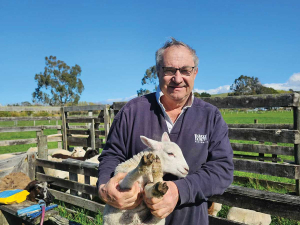
Decades piloting planes has ensured vet and farmer David Hayes is focused on safety. So, after a serious accident while welding on farm, he is sharing his experience so others can learn from it.
Canterbury milk processor, Synlait Milk has confirmed Leon Fung as its chief executive officer.
OPINION: Making it easier to collect rainwater and use it to grow crops and livestock is a no brainer.
As part of its Election 2026 coverage, Rural News asked political parties how they would help pull the arable sector out of the doldrums. Here's what they said:
Farmers are being encouraged to rethink how they manage waste on farm with the launch of ruralwastesorted.co.nz, a new website bringing together practical tips, real farmer experiences and resources.