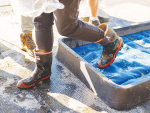
Biosecurity Ranked Top Priority In KPMG Agribusiness Agenda 2026
According to new research, industry leaders have ranked world-class biodiversity as the number one priority for the 16th year in a row.
 increase font size
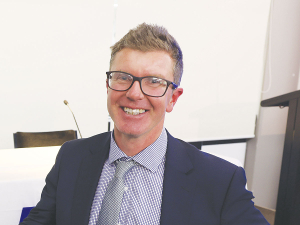
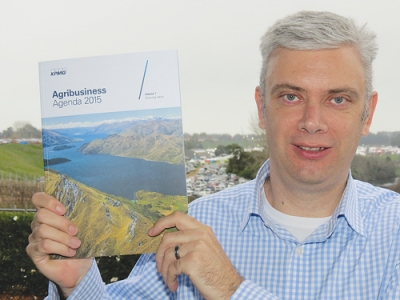 Report author KPMGs Ian Proudfoot.
The New Zealand primary sector is lacking in a whole lot of key areas, according to the latest KPMG Agribusiness Agenda.
These include the lack of a long term vision for the sector, quality broadband, a pan industry strategy to get more and better qualified people into the sector and a failure to understand the implications of the new regulatory environment – especially on health and safety.
KPMG’S latest ‘Agribusiness Agenda’ cites a number of problems for the New Zealand primary sector.
The 68-page report, by firm’s global head of agribusiness, Ian Proudfoot, for release at National Fieldays, points to the need for NZ to get closer to its consumers, that many New Zealanders don’t understand the meaning of ‘primary industries’, and that more work is needed to establish strong NZ brands.
It also says that developments in the dairy industry were top of mind for the 300 people who contributed to the report.
Proudfoot says it’s time for a conversation about the future of the primary sector – no more putting it off.
“Without some simple and engaging communication that explains what the primary sector does, how it does it, and how the community benefits, there is little prospect of making progress on the key issues for the industry.
“Without an engaging vision for the industry, it is challenging to ensure consistency of policies and initiatives throughout government. A vision can make it easier to attract talented people and farsighted long-term investors to the industry.”
Each year, respondents to the KPMG ‘Agribusiness Agenda’ are asked to rank the top issues facing the primary sector. Not surprisingly biosecurity is at the top of the list and food safety is second equal with the need for high speed broadband in rural areas. Broadband has jumped four places in the last 12 months and is seen by industry leaders as critical to the sector.
Proudfoot says people expect NZ agricultural businesses to deliver value from 21st century markets, yet we’re only providing them with 20th century communication services.
“Fast connectivity in rural areas not only supports economic growth. It enhances healthcare delivery, overcomes isolation and enables the unemployed to develop skills and become productive. In my view it was not surprising the issue rose up the priority ranking in this year’s survey.”
Proudfoot says a consistent view is that greater intervention is needed by national and local government to overcome a fundamental market failure and secure greater public benefits than are now being achieved by current rural broadband initiatives.
On food safety, the report refers to the need for NZ to be proactive in setting standards, which must be regularly reviewed to retain global leadership, deliver a competitive advantage to our companies and preserve consumer trust.
“In food safety, NZ cannot afford an average performance. Our economic prosperity relies on the trust we earn from being ahead of our competitors. Premium consumers are increasingly focused on the link between illness and residues and chemicals in their food, making it critical we fully understand what we are selling,” says the report.
According to new research, industry leaders have ranked world-class biodiversity as the number one priority for the 16th year in a row.

Biosecurity remains the top priority for agribusiness leaders, according to KPMG’s 2025 Agribusiness Agenda released last week.
Biosecurity remains the top priority for agribusiness leaders, according to KPMG's 2025 Agribusiness Agenda released last week.
OPINION: In the same way that even a stopped clock is right twice a day, economists sometimes get it right.
OPINION: Noted economist and self-promoter Cameron Bagrie took one look at KPMG's recently released Financial Institutions Performance Survey on banks and zeroes in one key number that suggests banks are so risk averse in this country that they are probably stifling growth and innovation.


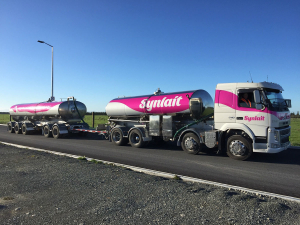
Synlait has swung to second-half profit as operations stabilise, but the dairy processor still posted a $75.4m annual loss.
LIC shareholders have elected a new North Island representative to the co-operative's Board, along with five representatives to its Shareholder Reference Group (SRG), following the company's Annual Meeting held in Invercargill.
Farmers across parts of Southland and South Otago are continuing to deal with difficult conditions after a prolonged run of wet weather, with pressure building around feed supply, stock management, pasture damage, farm infrastructure and everyday workloads.
Federated Farmers says it welcomes Labour's commitment to reviewing the Sharemilking Agreements Act, calling on other major parties to do the same.
For Canterbury dairy farmers Sian Meijer and Rick Wobben, wearable technology has become one of their most valuable on-farm tools - helping manage 1850 cows across an expansive, high-performing dairy operation while improving efficiency, mating outcomes and day-to-day decision making.
Fonterra has unveiled its annual results for the 2026 financial year, posting $27 billion in revenue and close to $20 billion returned to New Zealand farmer owners and unit holders.