
Feds Back National’s 19 Farming National Standards
National’s pledge to introduce 19 new national standards shows the party is serious about getting Wellington out of farming, Federated Farmers says.
 increase font size

Federated Farmers believes quantitative easing now would be incredibly bad for New Zealand.
"Printing $5 notes would set off an inflationary bomb that risks returning New Zealand to the dark days of double-digit interest rates," says Bruce Wills, Federated Farmers president.
"Our dollar's strength has been based on an economy 'less bad' than many others plus high levels of government borrowing.
"Just look at the way our dollar dropped off the back of improved US jobs figures. Better news from other countries will help to drive our dollar lower.
"This is why quantitative easing is and remains a 'break glass in case of fire' policy option - a last desperate option only.
"New Zealand is nowhere near such desperate measures because our Official Cash Rate is 2.5% versus 0.5% in the United Kingdom, 0.25% in the United States and 0.10% in Japan.
"As an export-led economy we need to keep a strong lid on our inflation because we import a fair slice of it from those we trade with. Low global inflation won't last forever and if we stoke domestic inflation by printing dollars, we will be hammered by importing more from overseas.
"We are not alone with a strong dollar because the Canadian is up 60% against the greenback. An article I read on Canada could apply to New Zealand, 'the strength of the economy in Great White North, which has in abundance what the rest of the world needs more and more of: commodities such as oil, basic materials and agriculture'.
"As for direct intervention, does anyone seriously believe our Reserve Bank can set then defend an exchange rate against all comers?
"Our solution is to ask if each dollar being spent by Government is the best use for that dollar.
"The dollar is being kept artificially high because of borrowing 'to smooth the rough edges' of recession.
"We must undertake reforms to strengthen our productivity and competitiveness. If exporters can generate greater revenue this means more money for our schools and hospitals.
"As a country we just need to stop borrowing so much money, we need to reduce government spending and return to surplus. This will take upward pressure off both interest rates and the currency," Wills says.
National’s pledge to introduce 19 new national standards shows the party is serious about getting Wellington out of farming, Federated Farmers says.

Mobile phone coverage and reliability are deteriorating in rural areas, and farming families are bearing the cost, according to a Federated Farmers survey.
Central Otago District Council (CODC) has voted against a plan to spread treated sewage sludge from Cromwell and Alexandra on farmland near Lauder, a decision Federated Farmers says reflects strong opposition from rural residents.
Federated Farmers has called on Central Otago District Council (CODC) to drop or vote down a plan to truck sludge from Alexandra and Cromwell to farmland near Lauder, warning it would compound an "outrageous" situation created by a separate council's decision weeks earlier.
Federated Farmers says new legislation replacing the Resource Management Act will cut red tape, unlock investment and help grow New Zealand's export-led economy, after the Planning Bill and Natural Environment Bill passed their third reading in Parliament yesterday.



National’s pledge to introduce 19 new national standards shows the party is serious about getting Wellington out of farming, Federated Farmers says.
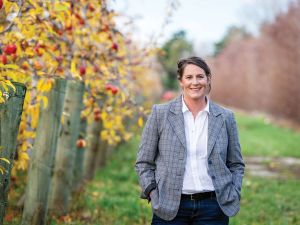
The National Party’s policies to make it easier to grow fresh vegetables, secure reliable water and energy and simplify farm planning are practical changes that will give growers the confidence to invest, according to Horticulture New Zealand (HortNZ).
Fonterra Co-operative Group chief financial officer Andrew Murray has resigned to take up a role outside the dairy giant.
A major move is about to get underway to improve the quality and viability of dairy beef and cattle in NZ.
Veterinarians say changes to the code of welfare for dairy cattle provides a positive foundation for improved cattle welfare across the country.
Today, 15 October, is the International Day of Rural Women, which recognises rural women’s contribution to farming, communities and the environment.