MPI’s latest Situation and Outlook Report (SOPI) sounds a positive note: primary exports are expected to rise 9.3% to $41.6 billion in the year ended June 2018.
And this rise should continue, to reach $42.5b by June 2019. Peter Burke reports.
New Zealand needs to redefine the word ‘commodity’, says MPI policy advisor Jarred Mair, director of sector policy.
He says what NZ’s current exports no longer fit the old definition of ‘commodity’. Rather, exports are all about ‘value-add’ and in some cases the best returns are obtained from goods that are not processed but are in fact natural.
Mair’s comments come in the light of MPI’s updated Situation and Outlook Report that predicts primary exports will rise by 9.3% to $41.6 billion in the year ended June 2018. MPI expects this trend to continue, with the value of primary exports reaching $42.5b by June 2019.
He says some exports, even in what NZ calls a natural or unprocessed state, are achieving premium prices greater than those of other countries, hence the need to redefine what commodity actually means.
“Admittedly some of the milk powders can be seen as a commodity, and some of our cheaper cuts of meats. But in terms of NZ as whole, we are not doing too badly in both our price position and our mix of products,” Mair told Rural News. “We are seeing a lot more of them starting to come through in that higher value-market capacity and that is beneficial for NZ.”
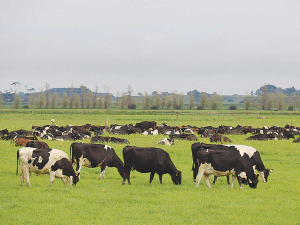
Dairy exports are rising, and MPI predicts returns of NZ$17.3b for the 2018 season (vs NZ$14.6b last season).
Driving this increase is a world-wide demand for butter and other fat products. Europe is short of butter, a far cry from the ‘butter mountain’ of the late 1970s and early 1980s.
Mair says butter is seen as a natural product.
“We are seeing great demand for butter in Asian countries which great for us. They are looking for more personal, natural nutrition and butter fits that criteria. There is also a demand for the products butter is going into, such as baked goods.”
He says there is a growing trend globally for products that fit into the niche called ‘personal nutrition’ and believes that NZ must take advantage of that trend.
Not surprisingly, horticulture, in particular kiwifruit, apples, pears and wine are leading the growth spurt. By 2019, horticultural exports are expected to be worth NZ$5.7b (NZ$5.1 billion).
“We are seeing increased plantings and, ironically, a lot of irrigation leading to greater use of crops and different forms of farming. I’d see horticulture growing exponentially for the next five to ten years,” Mair says.
By the numbers
Top five export markets by value (June 2017)
- China - $9.18 billion
- Australia - $4.27 billion
- USA - $4 billion
- Japan - $2.2 billion
- EU - $2.7 billion (the UK takes $1.1 billion).
Our biggest earners (as at June 2017)
- Dairy - $14.6 billion
- Meat and Wool - $5.4 billion
- Forestry - $5.4 billion
- Horticulture - $5.1 billion
- Seafood - $1.7 billion.