Fonterra FY26 Results: $9.69 Milk Price, $3.4bn Profit
Fonterra has unveiled its annual results for the 2026 financial year, posting $27 billion in revenue and close to $20 billion returned to New Zealand farmer owners and unit holders.
 increase font size
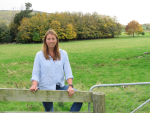
 Northland regional Federated Farmers dairy chair Matt Long says a record milk price this season would be a huge psychological boost for local dairy farmers.
A record milk price this season would be a huge psychological boost for Northland farmers, says the region's Federated Farmers dairy chair Matt Long.
He expects farmers to use the extra income to reduce debt and improve the environmental footprints of their business.
"I also expectsome to spend on productivity improvements and some well-earned spending on things to improve their lifestyle," Long told Rural News.
"The forecast payout is very positive, but necessary given soaring inflation of input costs."
Long points out that soaring costs and worker shortages remain the biggest challenges facing local farmers, who endured a severe drought in the previous two seasons.
Fonterra's latest milk price forecast for the season is in the range of $8.90 to $9.50/kgMS, with a mid-point of $9.20/kgMS.
For Northland, based on milk production of around 81 million kgMS at $9.20 payout would pump nearly $750 million into the region's economy.
BNZ economist Doug Steel notes that dairy prices have started the New Year in fine form, pushing higher from the already elevated levels reached in 2021.
"Prices are 28% above a year ago, nearly 38% higher than their 5-year average, and at their highest level since 2014," notes Steel.
An expected 4% drop in NZ milk production is one of the factors keeping the milk price at record levels.
"While there is some rain in the near-term forecast, we expect NZ milk production to remain below last year's strong late season outcomes over coming months such that the full season will be down in the order of 4% or more," he says. Milk production in key overseas markets - the US and Europe - is also spluttering. Tighter supply is also pushing prices up.
But Steel says there are some downward risks as well - China's growth could be slower than anticipated and Omicron is still looming large around the globe.
But for now, at least, milk price prospects are strong.
"For farmers facing such things as variable weather, higher costs, rising interest rates, proposed options to price agricultural emissions, an exceptionally tight labour market, and the possibility of significant disruption from Omicron circulating in the community - it is good to take one thing off the worry list."
Having been hit by a severe drought over the previous two seasons, Northland's milk production is tracking well.
Long says Northland's climate is highly variable.
"I think after a difficult start to the season most farms will be having at least average production," he says.
However, like most other growers, they are also facing soaring input costs.
On his farm at Matapouri, eastern Whangarei Long milks 200 cows and hopes to supply 65,000 kgMS this season.
"We are rebuilding after two years of quite intense drought," he says.
Fonterra has unveiled its annual results for the 2026 financial year, posting $27 billion in revenue and close to $20 billion returned to New Zealand farmer owners and unit holders.
Fonterra Co-operative Group has confirmed the independently assessed candidates standing for election to its board in 2026.
Fonterra has revised its Farmgate Milk Price forecast for the 2026/27 season, lifting the midpoint and narrowing the range on the back of improving global dairy commodity prices.
Outgoing Fonterra Co-operative Council chair John Stevenson says that it has been a privilege to represent the co-op's farmer shareholders.
OPINION: It seems Canterbury processor Synlait is still in the doldrums.


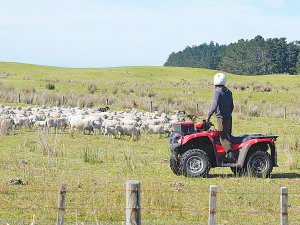
Farmers across parts of Southland and South Otago are continuing to deal with difficult conditions after a prolonged run of wet weather, with pressure building around feed supply, stock management, pasture damage, farm infrastructure and everyday workloads.

Federated Farmers says it welcomes Labour's commitment to reviewing the Sharemilking Agreements Act, calling on other major parties to do the same.
For Canterbury dairy farmers Sian Meijer and Rick Wobben, wearable technology has become one of their most valuable on-farm tools - helping manage 1850 cows across an expansive, high-performing dairy operation while improving efficiency, mating outcomes and day-to-day decision making.
Fonterra has unveiled its annual results for the 2026 financial year, posting $27 billion in revenue and close to $20 billion returned to New Zealand farmer owners and unit holders.
The first major update to the Dairy Cattle Code of Welfare in more than a decade has been released, marking what DairyNZ describes as an important step in ensuring animal welfare standards continue to evolve alongside scientific evidence and on-farm realities.
Ravensdown shareholders have elected Jane Montgomery and Kate Acland to the Ravensdown Board for three-year terms, following a closely contested director election.