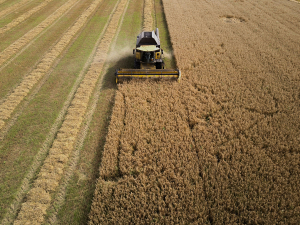
James Blair Named 2026 Young Grower National Champion
James Blair, an agronomist for AS Wilcox and the Pukekohe regional champion, has won the 2026 Young Grower national title.
 increase font size
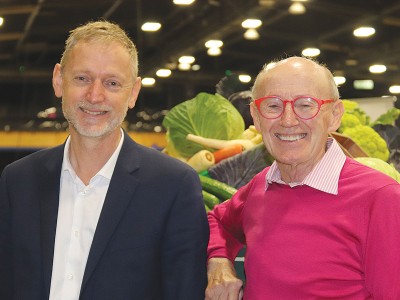 A couple of Davids... David Hughes (left) and colleague Professor David Hughes (right).
Robotics has moved out of the talking stage and into the early doing stages, says the chief executive of Plant and Food Research, David Hughes.
Keeping listeners attentive at the recent HortNZ conference, Hughes teamed up with namesake Professor David Hughes – emeritus professor of food marketing, Imperial College London, to discuss the topic.
Together they gave a futuristic view of technologies and ideas the horticultural sector can expect.
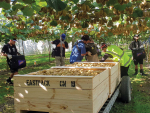
David Hughes, a New Zealander, says in just the last year, various robotic companies in different countries had done field trials on different crops -- strawberries, raspberries, tomatoes, lettuces and asparagus. And there had been plenty to interest NZ in trials of robotic picking of apples and kiwifruit.
But picking by hand still remains cheaper, he says.
“But the cost of robotics is coming down sharply and you can see a point where those two lines will cross and robotics will be the cheaper option.”
Hughes says the widely held view is that technology will reduce labour costs. True, he says, but other benefits may reduce costs over a whole sector and so improve producers’ returns.
For example, while using robotics for loading containers onto ships saves money, the real gain is that robotics enables shipping companies to more precisely schedule their ships to avoid having them wait to be loaded.
“Absolute precision in loading schedules saves a lot more money than just the cost of labour. So in the horticultural industry, yes there will be labour benefits, but I think there will be lots of secondary benefits we can’t see,” he says.
Hughes says a big benefit of robotics and technology for horticulture is its ability to gather and immediately act on information a human or handpicker cannot act on.
“If a robot is picking, it can be programmed to record and sort all the individual information about a single piece of fruit. This could be which bin it might go into, whether it be put on a vessel to go to Japan tomorrow because it is perfect for the Japanese market or whether it should be put into storage for six months and sold in another market.”
James Blair, an agronomist for AS Wilcox and the Pukekohe regional champion, has won the 2026 Young Grower national title.
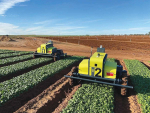
Claimed to be the first autonomous robot for New Zealand vegetables growers, the first Kilter AX-1 unit has arrived in the country.
Blueberries have the potential to become a major horticultural export, earning up to $150 million within the next three to five years.
New Zealand needs to make sure that it continues to focus on its own food security, according to HortNZ board member and blueberry grower Dermott Malley.
According to a progress report on the Aotearoa Horticulture Action Plan (AHAP), New Zealand's horticulture sector is making real progress on the big issues facing growers.


Farmgate lamb prices are down by 8%, beef cattle by 4.5% and farm expenditure up by 4.2%.
Kiwifruit growers are watchful but remain optimistic as concerns around the potential effects of the El Niño weather pattern this season.
Almond hulls sourced from Australian orchards may have the potential to help New Zealand cows reduce emissions, boost milk yield and lower input costs.
Striking a balance between meeting the needs of industry to speed up approval time for products but on the other hand ensuring that risks are properly assessed.
Surprised, humbled and quite thrilled. That’s the reaction of James Allen, one of the founding partners and now chief executive of AgFirst, on being made a life member of the Institute of Rural Professionals.