DairyNZ Resilient Pastures Trial Expands Across North Island
Farms across the upper North Island are trialling different pasture mixes as part of a research programme that aims to build greater resilience into farming systems.
 increase font size
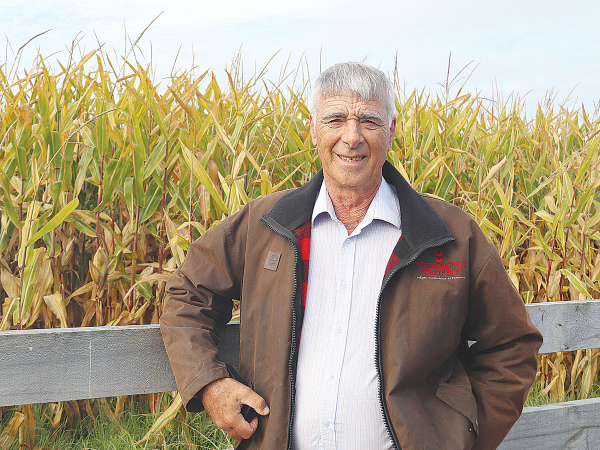 Doug Leeder
The former chair of the Bay of Plenty Regional Council and farmer, Doug Leeder, says rural communities' biggest fear right now is the lack of long-term certainty over environmental regulations.
His comments follow what amounts to an edict from the present Government for regional councils and unitary authorities to effectively stop approving consents or setting rules that may not align with the new Regional Management Act (RMA), the details of which will be revealed later this year.
As present opinion polls show, there is a possibility of a change of government in a year's time and Leeder says there is every chance that a new government could reverse some of the changes. He says you have a situation where a government can come in and get people on board with their changes and then three years later the process can start all over again.
"That is the absolutely last thing that the rural community and primary industry needs," he told Rural News.
"They want some form of certainty, and we cannot continue to have chop and change because, should it happen, it will kill the confidence of rural NZ.
"Let's be clear, the primary industry - which includes horticulture, beef and lamb, dairy and forestry - are keeping the lights on in our country in terms of their earnings and contribution to the GDP," he says.
Leeder says there needs to be a bipartisan approach.
In terms of the present Government's edict to regional councils and unitary authorities, Leeder says they should comply with that request. He says while technically councils could stick with the present law until a new one comes into effect, pragmatism should prevail. He says if councils ignored the government edict, they could incur huge unnecessary costs and waste peoples' time for no real benefit.
Earlier this month, Parliamentary Commissioner for the Environment Simon Upton made a similar call, seeking cross-party consensus on the country's overarching environmental goals.
In his annual report, Upton says that over the last year, he travelled widely in regional New Zealand listening to what farmers and rural communities had to say about his report on land-use change, Going with the Grain.
"A common message I received was that our lurching, stop-start approach to policy development is not just a significant barrier to making progress on environmental outcomes, but a real turn-off for many people who want to get on with improving things."
Upton says solutions to envrionmental challenges will never be available within the three year term of a government and if every government feels compelled to start from scratch, even making a start is "well-nigh impossible".
"This is why broad, cross-party consensus on our overarching environmental goals and wide support for our environmental management system is so important.
"Building an enduring consensus is no easy task - but there are at least three points that I hope all politicians should be able to agree on if we are to have any chance of at least maintaining, and hopefully improving, our environment."
Meanwhile, Leeder says he's heard commentary from several government ministers about the role and value of regional councils as delivery agents for environmental rules and regulations. He says the pushback against them has come from landowners, the primary sector and others affected by the administration of the rules.
He concedes there has been a lack of consistency in the application of rules with some councils taking a harder line than a neighbouring one - a factor causing angst with farmers.
"There can be a situation where a farm is split and the part on one side of the road will have to comly with different rules that part on the other side," he says.
Leeder says while there may be catchment differences, it seems the only way to overcome such inconsistencies is to have more national environmental standards set by government.
Farms across the upper North Island are trialling different pasture mixes as part of a research programme that aims to build greater resilience into farming systems.

Zespri says it welcomes the recently signed Western Bay of Plenty Regional Deal, describing it as an important step towards supporting growth in the region and for New Zealand's kiwifruit industry.
Farmers are unhappy with the Government's replacement legislation for the Resource Management Act (RMA).
OPINION: The release of the Natural Environment Bill and Planning Bill to replace the Resource Management Act is a red-letter day for the agricultural sector, kicking to touch the single biggest handbrake on agricultural productivity and rural economies – the much-hated RMA.
OPINION: Metaphorically, the funeral arrangements are being put in place to bury one of the largest and most complex pieces of legislation – the 34-year-old Resource Management Act (RMA).


In Dacre, near Invercargill in New Zealand’s South Island, Bruce Dinnington is running a dairy operation unlike any other.

A free online platform aggregating governance vacancies across rural and regional New Zealand has been launched.
Environment Minister Nicola Grigg has announced details of a new rural plastics recycling scheme.
Agricultural drone operators say that a government decision to allow lower-risk drone work without certification won’t lower standards but drive innovation and efficiency.
OPINION: Warning bells are ringing in the arable sector.
Farmgate lamb prices are down by 8%, beef cattle by 4.5% and farm expenditure up by 4.2%.