It's The Margins That Matter
OPINION: It appears to be difficult for people who haven’t tried to run a business to understand the difference between assets and cash.
 increase font size
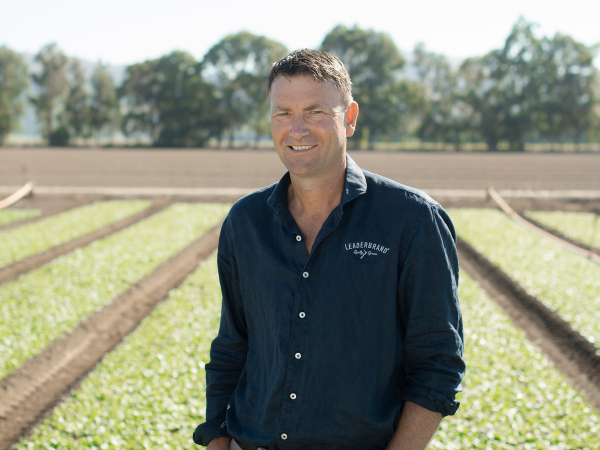 Richard Burke
Recent storm damage to roading infrastructure around New Zealand has prompted a call for the Government to change the settings for funding rural roads - with the aim of providing more money to make them more resilient to adverse events.
A leading Gisborne businessman, Richard Burke, who once headed up a large vegetable growing operation in Tairawhiti, had to deal with the difficulties of getting product to market because of countless road closures. He says today the roads around Tairawhiti are in fact worse than they were fifty years ago.
Burke says the present settings for funding roads are based around use - in other words, the number of vehicles using them - rather than the opportunities they offer and particular needs of the primary sector.
"The consequence of the present settings is that regions like Tairawhiti, Northland, the West Coast and Taranaki miss out on the big funding because they don't have the high vehicle use," Burke told Rural News.
"The present settings don't make sense to me because high export earners such as the primary sector and tourism miss out," he says.
Burke says, aside of the settings the other problem with infrastructure is having a long-term plan and taking this out of the political arena. He says under the present system, infrastructure bounces around due to political influence - the Cook Strait ferries issue being case in point.
"If we had, say, a 100-year plan, that would make a huge difference. In that scenario, the politicians would still control the purse strings, but there would be... a long-term plan," he says.
According to Burke, "commercial settings" should be applied to infrastructure - roads, water, etc. He says knee-jerk reactions are common with what infrastructure is needed and how to deal with adverse weather events.
For example, he says that the pine trees in Tairawhiti are not necessarily in themselves the issue and legislating against them may not be the answer. Rather, better settings or rules could manage the problem and ensure that the environment is not damaged.
"We need to accurately measure potential environmental impacts and not second guess what these may be, because in some cases we overdo stuff in areas and underdo it others," he says.
Burke says in Gisborne there is talk about the need for better water infrastructure. He says this in itself won't attract investment to the region. He maintains that roading is still the big issue and roads need to be able to cope with bigger trucks. He points to what Northland has done to improve its roads and the benefits that have flowed from this.
"Look at Northland and you see how much quicker they will recover from an event than what we will do down here. Most of that is because the infrastructure that they have built up gives them the ability to bounce back.
"We keep asking for more money, but there is a question about whether we are spending it in ways that resolve the problems in the long term."
Finally, Burke says there is a big focus on increasing production to drive export returns, but there is a need to invest in both the market and in the infrastructure to match this.
OPINION: It appears to be difficult for people who haven’t tried to run a business to understand the difference between assets and cash.

The Opportunity Party has faced criticism during the election campaign that its policies are too urban-focused and offer little for rural communities.
OPINION: Good governance is critical to the primary sector. Whether it is a rural business, a levy-payer organisation or a research body, we need a pipeline of capable directors with a passion for, and knowledge of, the sector.
Pioneering Gisborne winery Matawhero Wines is marking half a century of influence in New Zealand's modern wine story.
The Good Carbon Farm has partnered with Tolaga Bay Heritage Charitable Trust to deliver its first project in Tairāwhiti Gisborne.


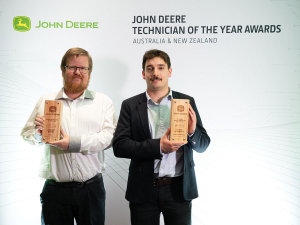
Leading John Deere technicians and apprentices from New Zealand and Australians were recognised at the recent sixth annual JD Technician of the Year Awards, held in Brisbane.
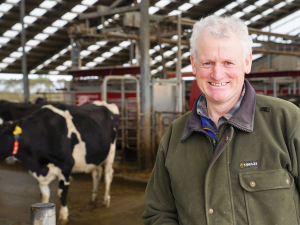
In Dacre, near Invercargill in New Zealand’s South Island, Bruce Dinnington is running a dairy operation unlike any other.
A free online platform aggregating governance vacancies across rural and regional New Zealand has been launched.
Environment Minister Nicola Grigg has announced details of a new rural plastics recycling scheme.
Agricultural drone operators say that a government decision to allow lower-risk drone work without certification won’t lower standards but drive innovation and efficiency.
OPINION: Warning bells are ringing in the arable sector.