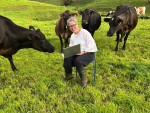
International Day of Rural Women: Two DairyNZ Farmers’ Stories
Today, 15 October, is the International Day of Rural Women, which recognises rural women’s contribution to farming, communities and the environment.




 increase font size
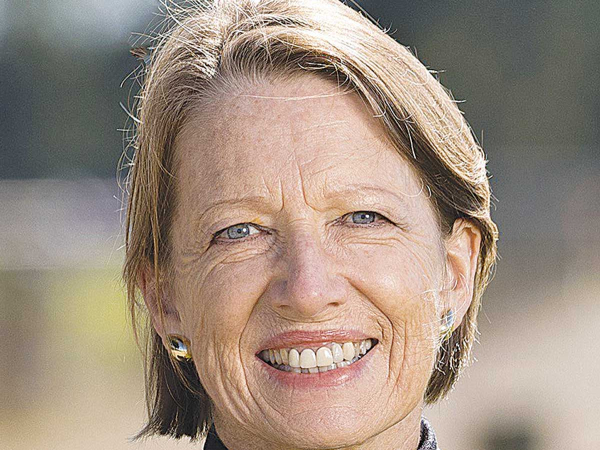 Dr Jacqueline Rowarth
OPINION: It appears to be difficult for people who haven’t tried to run a business to understand the difference between assets and cash.
Nor do they understand that record payouts and schedules aren’t the same thing as record profits – it is the margins that matter. Or that the risk in farming is such that interest rates are higher than for housing, and that if something goes wrong, it is the house as well as the business that might be lost.
Farmers and growers understand all these factors, but somehow the message is not getting through to society in general and some groups in particular.
Economists have tried to explain that farming is hard work with variable returns on the investment – and that the payoff isn’t in farming, it is when the farm is sold and capital gains banked that the farmer benefits. But strangely, the capital gains that are expected to be part of selling the family home are considered to be ‘unfair’ in farming.
Even more strange is the adoption of the phrase ‘farming is a lifestyle’ by those outside the industry. Although farmers use the phrase to justify the challenges of working in the industry, and to try and encourage the young to consider that they might have a future in farming, when people outside of the industry start using the phrase it tends to be in justifying why farms aren’t businesses.
New Zealand is not unique in the lack of understanding.
UK farmers are battling the Inheritance Tax. Many farm businesses are marginal or loss-making, with families surviving on subsidies (which are reducing) and off farm income. Despite this they will soon be hit with unaffordable inheritance tax bills, which in many cases will dwarf their annual profit. The television programme, Clarkson’s Farm, has been helpful in bringing the issues to the fore, but the ever-changing UK government leadership has not indicated any relief. Although Andy Burnham has pledged to “safeguard” farming and declared it a “critical sector”, the statement appears to be more about national manufacturing and food security than assistance for farmers.
Food security has also been in the news here, with statements that ‘food should be cheaper’. These statements overlook the costs of production.
Margins matter.
percentage of revenue) help pump the economy for the benefit of everybody as the money goes round. It is the rising tide floating all boats, and the tax paid to the government by profitable businesses is invested in education, health, infrastructure and other public services.
These good messages are lost in the hype about the ‘crisis’ in the cost of living.
A crisis is something that is short lived; inflation escalated during 2021 and although it has reduced at various stages since then, various weather events and global disruptions have combined to continue uncertainty and price fluctuations.
The reality with the cost of living, at least according to the Reserve Bank Inflation Calculator, is that in the last year to Q1, wages and food increased by 4%.
And despite the ongoing gloom about crises, public happiness, safety and ‘being surrounded by such diverse, breathtaking scenery’ all help to improve the country’s score.
Despite this, ‘crisis’ continues to be top of mind for people living here and food is considered to be part of the problem.
Whose job is it to explain that when the minimum wage goes up, everything increases in price at every stage?
Whose job is it to explain that record prices do not equal record margins? And who should try and explain the difference between assets and cash?
Should NZ on Air consider the equivalent of Clarkson’s Farm to raise issues while providing information and education? Some of our kiwi farming personalities could be hosts. Perhaps different episodes could be presented by past presidents of Federated farmers of New Zealand, interspersed with past Young Farmers of the Year?
Whatever the solution, kiwi ingenuity should be able to think of something to assist general understanding.
Margins matter, cashflow is important, and food inflation matches wage increases. Everybody has a part to play in getting the message through.
Dr Jacqueline Rowarth, Adjunct Professor Lincoln University, is a director of DairyNZ and Ravensdown. She is also a member of the Scientific Council of the World Farmers’ Organisation. This email address is being protected from spambots. You need JavaScript enabled to view it.
Today, 15 October, is the International Day of Rural Women, which recognises rural women’s contribution to farming, communities and the environment.
OPINION: New British Prime Minister Andy Burnham has said that farming and food production is a matter of ‘core national resilience’ and must be spoken about in Whitehall at the same level as issues with ‘defence, energy, water and steel’.
The Royal New Zealand College of General Practitioners (the College) and Hauora Taiwhenua Rural Health Network are calling for investment in a proposed new training pathway for rural GPs, warning that many rural practices are struggling to recruit while a large share of the existing workforce nears retirement.
The first major update to the Dairy Cattle Code of Welfare in more than a decade has been released, marking what DairyNZ describes as an important step in ensuring animal welfare standards continue to evolve alongside scientific evidence and on-farm realities.
Ravensdown shareholders have elected Jane Montgomery and Kate Acland to the Ravensdown Board for three-year terms, following a closely contested director election.


National’s pledge to introduce 19 new national standards shows the party is serious about getting Wellington out of farming, Federated Farmers says.
The National Party’s policies to make it easier to grow fresh vegetables, secure reliable water and energy and simplify farm planning are practical changes that will give growers the confidence to invest, according to Horticulture New Zealand (HortNZ).
Fonterra Co-operative Group chief financial officer Andrew Murray has resigned to take up a role outside the dairy giant.
A major move is about to get underway to improve the quality and viability of dairy beef and cattle in NZ.
Veterinarians say changes to the code of welfare for dairy cattle provides a positive foundation for improved cattle welfare across the country.
Today, 15 October, is the International Day of Rural Women, which recognises rural women’s contribution to farming, communities and the environment.



OPINION: The same mainstream media muppets that brought you Jacindamania in 2017 have been flat out pimping for the Opportunities…
OPINION: Your old mate reckons the atrocious way farmers in the UK are treated by their lords and masters in…




