Federated Farmers Backs Year 11 Agricultural Science
Federated Farmers is backing Feilding High School’s call to keep Agriculture and Horticultural Science as a standalone subject in Year 11.
 increase font size
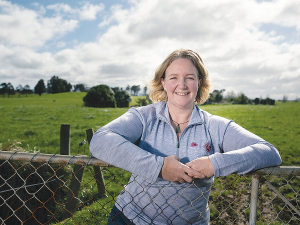
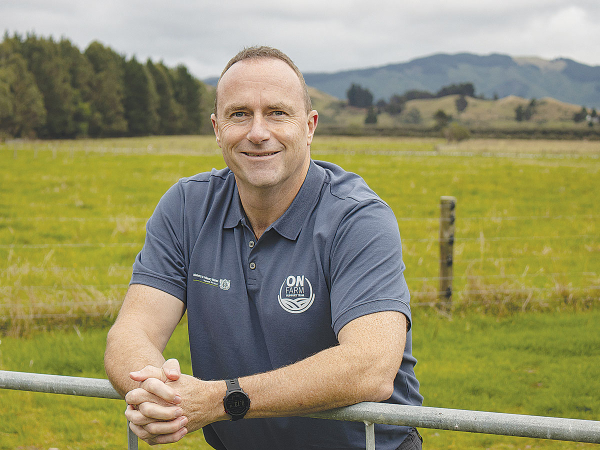 MPI director of On Farm Support Dr John Roche.
The Ministry for Primary Industries (MPI) is expanding a scholarship programme for tertiary students as part of its efforts to boost on-the-ground support for farmers and growers.
MPI director of On Farm Support Dr John Roche says that ensuring farmers and growers are assisted to adapt to change will help contribute to the Government's goal of doubling the value of exports within 10 years.
“Farmers’ ability to access support hinges on having a highly skilled primary industry advisory sector with the capacity to provide specialised on-the-ground extension services and advice,” says Roche.
“We have decided to offer our On Farm Support Science Scholarships for a second year and to widen eligibility for the programme,” he adds.
Six scholarships, valued at a total of $30,000 are available for the 2025 academic year to tertiary students enrolled in relevant agriculture, horticulture, science, or viticulture degrees.
Roche says MPI is seeking applications from students who have a genuine interest in joining the agricultural and horticultural advisory sector.
“Applicants must be studying at Massey, Lincoln, Otago, or Waikato universities, or the Eastern Institute of Technology or Nelson Marlborough Institute of Technology and have completed their first year of study,” he says.
“The profession can be hugely rewarding, especially if you like getting out in an orchard or paddock and supporting farmers to improve business performance with advice backed by science and analysis.”
Scholarship recipients receive mentoring and development opportunities from MPI’s On Farm Support team as part of the programme.
One of the inaugural 2024 scholarship recipients, Nerissa Edwards, is studying a Bachelor of Agricultural Science at Massey University in Palmerston North. She urges students to apply.
“I have found the scholarship programme hugely beneficial,” Edwards says.
“My On Farm Support mentor has helped me build connections within the advisory sector, leading to an internship with a local advisory company. I am grateful for these relationships and excited to see what opportunities arise when I graduate this year.”
Another 2024 scholarship recipient, Jed McCready, is studying a Bachelor of Agricultural Science at Lincoln University in Canterbury. He says the scholarship has had unexpected benefits.
“Having the majority of my tuition fees covered this year has removed a huge amount of pressure and enabled me to focus on my studies,” McCready says.
“Being mentored by a member of the On Farm Support team has been a valuable part of the scholarship. I’ve been fortunate to attend events, talk with farmers, and grow my networks. It has shown me the importance of applying theoretical knowledge to practical situations in the field.”
Applications for the MPI On Farm Support Science Scholarships opened on 19 August 2024 and close at 5pm on 16 September 2024.
Successful recipients will be chosen by an evaluation panel made up of representatives from across MPI.
Further information, including how to apply, is available on MPI’s website: https://www.mpi.govt.nz/about-mpi/our-work/mpi-scholarships-and-awards/on-farm-support-science-scholarships/
Federated Farmers is backing Feilding High School’s call to keep Agriculture and Horticultural Science as a standalone subject in Year 11.

Pāmu has welcomed Taranaki student Paige Burston as its newest First Foundation Scholar, supporting her journey towards a career in agriculture and animal science.
Election years are always a concerning time for farmers, according to DairyNZ chair Tracy Brown.
Kaikōura families affected by July's severe storm have found a practical solution to a problem that's kept some children away from regular schooling for weeks: a washed-out section of Inland Kaikōura Road, which has stopped the local school bus from running its usual route.
Testing confirms H5 bird flu in a single northern giant petrel, found dead on a remote Cape Palliser beach in the Wairarapa, says Dr Mary van Andel, the Ministry for Primary Industries' (MPI) Chief Veterinary Officer.


As part of its Election 2026 coverage, Rural News asked political parties how they would help pull the arable sector out of the doldrums. Here's what they said:
Farmers are being encouraged to rethink how they manage waste on farm with the launch of ruralwastesorted.co.nz, a new website bringing together practical tips, real farmer experiences and resources.
New Zealand Winegrowers (NZW) is celebrating the India-New Zealand Free Trade Agreement (FTA) coming into force today, bringing New Zealand wine improved access to one of the world’s fastest-growing economies.
New Zealand’s red meat sector has welcomed the India-New Zealand Free Trade Agreement taking effect, which removes India’s 33% tariff on New Zealand sheepmeat.
More than 95 per cent of New Zealand’s forestry and wood exports to India can now enter tariff free as the New Zealand-India Free Trade Agreement comes into force today.
Federated Farmers is backing Feilding High School’s call to keep Agriculture and Horticultural Science as a standalone subject in Year 11.