True Reflection?
A fair question has been raised about how member-funded organisations should conduct themselves when taking a public position on any given issue.
 increase font size
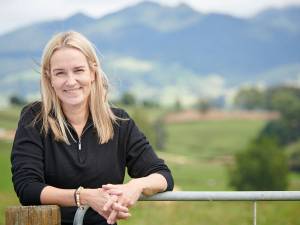
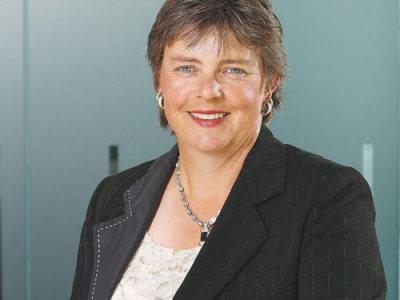 Fiona Gower.
Rural Women NZ’s new president Fiona Gower says she wants to stimulate communication and shake off any stuffiness in their image.
She wants RWNZ to be one of the main rural organisations people turn to.
“We have a very powerful voice in Parliament, we do great charitable work and we have a strong network,” she told Rural News.
The theme for the coming year is ‘C to the Power of three – Communication, Connection and Collaboration’. Then there’s the fourth ‘C’ -- community.
“Those are the really important things… communication between our members and other organisations, connecting with other people and within ourselves,” says Gower, who lives at Port Waikato.
“With collaboration – we are keen to get partnerships going, using the synergies of the organisations we are already involved with to move things forward.”
They will be working with Young Farmers, Federated Farmers, Dairy Women’s Network, Agri Women’s Development Trust and the Country Women’s Institute, to name a few.
“We will look to get some good partnerships going, and some financial partnerships, to help drive everything else forward.”
She does not agree with the perception that women’s rural groups are dated. They are rejuvenating and simply need to communicate more to get that message out.
“Some of the women we have in our organisations who are really enjoying it are learning and they’ve got connections because many have moved from different districts and don’t know anyone.
“We are picking them up and being the ‘aunties’ and mentors and providing a social network for them and the social support they need.”
RWNZ needs to better communicate so people understand they are doing a great job in that space.
Gower had a literally shaky start to her term: the Kaikoura earthquake struck on the night of her becoming president.
RWNZ has resurrected and is reworking the aftershocks fundraiser launched after the Canterbury earthquake; it then raised $130,000. The fundraiser is red-and-white socks (Canterbury colours) bearing the Richter scale picture of the earthquake.
Gower refers to RWNZ’s “amazing” members doing great work on the ground in the Marlborough and Kaikoura regions. They want to support the women and children to make sure they have what they need.
RWNZ now has a new board rather than a council. This will help formulate good strategies to take out to members.
“I can go anywhere in the country and never feel lonely. Wherever I go I can find members, whether individual or a branch; there is someone there you can always call on and say ‘hello’.”
People can be members without being part of a branch. Not all people can get to meetings but they can still be part of the organisation and involved in the work it does.
“The support and growth I have got out of it has been incredible.”
A fair question has been raised about how member-funded organisations should conduct themselves when taking a public position on any given issue.

Rural Women New Zealand (RWNZ) says it is delighted by the Government’s announcement that it would invest $250,000 in the organisation.
OPINION: About as productive as a politician's taxpayer-funded trip to Hawaii, as cost-effective as an OSPRI IT project, and as smart as the power-company pylon worker, the Hound gives you the NZ Post business strategy:
OPINION: Rural services such as banks, health and postal services have been declining for years, so this mutt was tickled pink to hear Rural Women NZ on national TV slamming the impact of post office closures in rural areas.
Rural Women New Zealand (RWNZ) and Massey University are joining forces to help raise awareness and funds to combat leptospirosis.


Minister of Conservation Hon Tama Potaka has appointed Susan O'Regan as Chair of the Queen Elizabeth II National Trust (QEII) for a three-year term.
Red meat farmers are welcoming Labour’s plan to review the Emissions Trading Scheme and not to campaign on pricing agricultural emissions.
Where any worker in the kiwifruit industry is mistreated, we expect the authorities to take action.
Mid Canterbury Federated Farmers arable chair, Bevan Lill, said Beef + Lamb NZ data indicated that for the last six years, the average arable return on investment was about 0.8% while inflation ran about 4% - so the average arable farm was going backwards at about 3% a year.
Seed and grain companies share the concerns of arable farmers about the viability of their sector, says Seed and Grain New Zealand chief executive Dr Sarah Clark.
The New Zealand Institute of Forestry (NZIF) says unnecessary changes to New Zealand’s Emissions Trading Scheme (NZ ETS) will seriously erode investor confidence and result in significant reductions in forest planting rates.