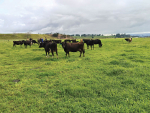
Northland Study: Emissions Cuts "Unsustainable" for Dairy
A five-year study has found that the cost of reducing emissions without technology may be significant and unsustainable for Northland dairy farmers.
 increase font size
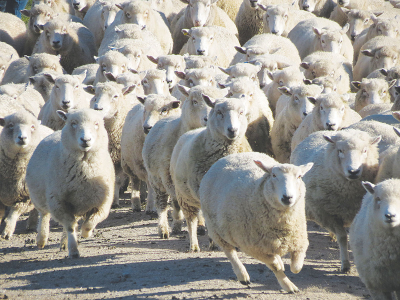
No increase in stock numbers in the sheep and beef sector is anticipated as the industry moves towards carbon neutrality, says Beef + Lamb NZ head of nutrition Fiona Windle.
She told the Climate Change and Business Conference in Auckland this month that the sector is very clear on where it is heading on the environment.
“We acknowledge it is very much a journey and a stepwise process to bring all the farms on board. By 2021 all 11,000 farms should have an environmental plan in place,” she said.
Half of these have been achieved already.
She says carbon neutrality will be achieved by a combination of factors including improved technology, advanced animal genetics and improved on farm practices she told the conference, organised by the Environmental Defence Society.
“A big chunk of that is a reduction in sheep numbers. In the 1990s numbers were at 50 million. That is now down to 27 million. So that is a huge chunk of the emissions pie and we are not planning to increase livestock numbers at this point.
“Another factor on carbon sequestration is that we have quantified the trees on our sheep and beef properties. There are currently 1.4 million hectares of native forest on our farms as well as 180,000ha in pines,” Windle explained.
“That needs to be factored into the equation when we look at our whole emissions profile. We are just currently quantifying how much of our other emissions will be offset or sequestered by those trees. It is looking to be well over half.”
Questions have been raised about whether the sector could convert some land to crops to support the growing plant protein sector.
“We have had that measured. AsureQuality quantified it and 7% of our land that is currently growing beef and sheep could be converted. But the majority of that is already in [some form of] plant growing. It is all about that right land purpose,” Windle said.
She says the sheep sector is a true value added story. While sheep numbers have been reducing since 1990 the value of export lamb has doubled in that time.
“So it’s a very efficient system and that has been recognised on the world stage.”
Windle says the wider sector employs 80,000 people.
“A strong component of that is as our rural communities.
“And as a reminder about our production of beef and lamb: we aren’t increasing production at this point so we now feed 40 million people around the world. That is about 0.5% of the global population.
“We’re not going to increase production so we won’t increase emissions anymore.
“There is a huge, growing demand for grass-fed beef. So there’s an opportunity for our product particularly in the US where we have opened up more markets in California.”
A five-year study has found that the cost of reducing emissions without technology may be significant and unsustainable for Northland dairy farmers.
OPINION: With the winter months officially here, I trust all is well at your place.
OPINION: The global crusade against fossil fuel is gaining momentum in some regions.
Specialist horticulture and viticulture weather forecasters Metris says the incoming Cyclone Vaianu is likely to impact growers across the country.
OPINION: Your old mate has long dismissed the Greens as wooden bicycle enthusiasts with their heads in the clouds, but it looks like the ‘new Greens’ may actually be hard-nosed pragmatists when it comes to following voters.

Organics Aotearoa New Zealand (OANZ) spent two days in Wellington last week meeting political parties and key stakeholders to press the case for a National Organic Policy and dedicated investment.

Ravensdown has reported a net profit before tax and rebate of $50.1 million for the year ended 31 May 2026.
Potatoes New Zealand has congratulated Peter Reynolds of TA Reynolds Ltd in Pukekohe on being awarded the Horticulture New Zealand Bledisloe Cup, recognising a lifetime of service and contribution to New Zealand horticulture.
Signing up to a benchmarking tool is not about competition, but about improving collectively, says Ximena Puig and Alvaro Luzardo who are 50-50 sharemilkers at a 164-hectare (effective) dairy farm in Eketāhuna in the Lower North Island.
A leading British farming politician says he's impressed with the positive attitude of New Zealand farmers that he met during his recent trip here.
OPINION: With 10,500 dairy farms, New Zealand continues to punch above its weight around the world.