Rural Mobile Coverage Worse After 3G Shutdown, Survey Finds
Mobile phone coverage and reliability are deteriorating in rural areas, and farming families are bearing the cost, according to a Federated Farmers survey.
 increase font size
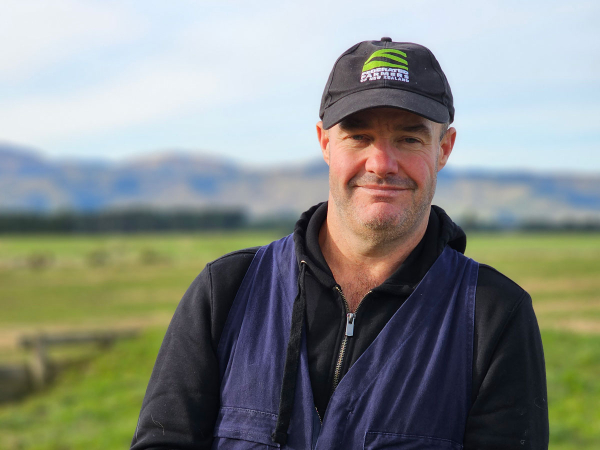 Federated Farmers Southland president Jason Herrick.
Southland Farmers will be breathing a sigh of relief that central Government is stepping in to stop Environment Southland from introducing unworkable and expensive new farming rules.
"This is a pragmatic, commonsense decision that will be well received by local farmers," says Federated Farmers Southland president Jason Herrick.
"We’ve been asking Environment Southland to put the brakes on new freshwater rules for some time."
The council had agreed it would wait for the Government’s new National Policy Statement - Freshwater Management (NPS-FM) before notifying Plan Change Tuatahi but would push on to introduce other changes next year.
This week, the Government announced they will be amending the Resource Management Act (RMA) to give councils and communities more certainty when it comes to freshwater.
This change will restrict councils’ ability to notify new freshwater rules until the new NPS-FM is in place.
Herrick says it never made any sense for the council to be trying to introduce new water quality rules when they knew the Government was changing the national direction.
"That’s a waste of council resources, and ratepayers’ money."
Herrick says changes to NPS-FM signalled by the Government made it very clear to regional councils that they need to down tools and wait for further clarification on the national direction.
"This clarity will prevent needless duplication of effort, the wasting of council staff time, and possible confusion for farmers with constantly changing rules."
With the RMA amendment, council won’t be able to bring in freshwater aspects of any plan change until 31 December 2025 - unless the Government settles its new freshwater policy earlier.
Herrick says reality is that there has been already massive change to land use and management practices to better mitigate environmental effects in Southland.
"That won't stop because of this pause, and in fact it may give some breathing space to allow focus on practical, on-the-ground efforts that will make a difference for the environment, rather than getting bogged down in costly bureaucratic planning processes."
Herrick says farmers need rules that are fair and practical, but also an element of certainty so that they can make business decisions and get on with farming.
"Council should do it once and do it right, guided by national direction.
"We don’t need constant flip-flopping or shifting of the goal posts that undermines farmers’ confidence to invest in their businesses."
"What taking a little more time is likely to mean in practice is that we end up with much clearer and more consistent water quality rules that everyone in our community can support.
"From my perspective, that can only be a good thing."
Mobile phone coverage and reliability are deteriorating in rural areas, and farming families are bearing the cost, according to a Federated Farmers survey.

Managing feed by sticking to a firm plan has helped the Southern Dairy Hub (SDH) demonstration farm survive an extremely wet winter, says the farm's acting general manager Greg Delaney.
Central Otago District Council (CODC) has voted against a plan to spread treated sewage sludge from Cromwell and Alexandra on farmland near Lauder, a decision Federated Farmers says reflects strong opposition from rural residents.
Federated Farmers has called on Central Otago District Council (CODC) to drop or vote down a plan to truck sludge from Alexandra and Cromwell to farmland near Lauder, warning it would compound an "outrageous" situation created by a separate council's decision weeks earlier.
Farmers across parts of Southland and South Otago are continuing to deal with difficult conditions after a prolonged run of wet weather, with pressure building around feed supply, stock management, pasture damage, farm infrastructure and everyday workloads.


Safer Farms is urging farmers to make sure everyone working on farm has safe, suitable footwear for the job.

The Government is backing work on a community-led water storage scheme that could irrigate up to 11,000 more hectares of the Poverty Bay flats, Agriculture Minister Todd McClay says.
Agri-tech company Herd-i has become a new all-region sponsor of the New Zealand Dairy Industry Awards (NZDIA), the largest nationwide celebration of excellence in the dairy sector.
Four candidates have been confirmed for two director positions on Fonterra’s board.
Returning to the family dairy farm after playing 20 years of professional rugby around the world is no easy task.
After delivering another record farmgate milk price to 100 supplying farms, independent milk processor Tatua is entering thee new financial year with a positive outlook.