The parsnip people of Karioi
The supermarkets say they want them straight and white and that's exactly how the Motts family grow their parsnips at Korioi near Ohakune.
 increase font size
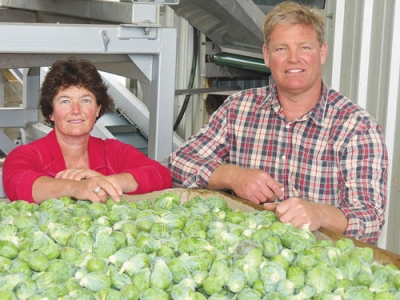 Stephanie and Bruce Rollison.
Consumer preferences have moved from taste to looks. That’s the view of Ohakune commercial vegetable grower Bruce Rollison, growing Brussel sprouts and parsnips for the domestic market.
Rollison and his wife Stephanie sell about two-three tonnes of these vegetables every day and he says it’s the appearance that counts.
“It’s a shame because we have shifted from taste to looks. Everything has to look good. That’s what the retail market wants,” he told Rural News.
Bruce and Stephanie are graduates of Lincoln University: Bruce did an ag commerce degree and Stephanie one in ag science. Initially, Bruce worked in the tourism sector and Stephanie as a fertiliser and agronomy rep around Ohakune.
Both come from farms: Bruce off a South Canterbury arable property and Stephanie a Hawkes Bay sheep and beef farm. Their farming backgrounds drew them back to the land to raise their children.
Ohakune is well known for growing carrots and potatoes. But now sheep and beef, and even dairying, as well as sprouts and parsnips, are prominent. The decision to buy this particular business came somewhat out of left field, Bruce says. It was owned by a family who decided it was time to move out of the industry.
“We were looking at purchasing a house locally and we went past this place, which Stephanie knew well because of her job. It was let slip that it was for sale and she arrived home that night and said, ‘do we want to grow Brussel sprouts and parsnips?’ I couldn’t believe what had come out of her mouth and that was the last thing I expected. But, to cut long story short, we ended up purchasing the operation from people we knew and they were involved in the first year of our operation which was great.”
That was 15 years ago and since then they have been planting a bigger area – 40ha each of parsnips and Brussel sprouts – and sell these to the supermarket chains Progressive Enterprises and Foodstuffs. Unlike some other growers they don’t have contracts, instead taking orders day by day.
“We get phone calls for product. The supermarkets chains have relationships with our wholesaler, in our case mainly Turners & Growers, and they say ‘we need this many crates of whatever’,” Rollison explains.
“That happens on a daily basis so we are out in the morning picking those vegetables. We still hand pick Brussel sprouts and the parsnips are machine lifted then hand-picked.”
It’s a five-day-a-week operation, but they also pack on Sundays to get product to the supermarkets on Mondays.
Pick, pack, process
Picking is done in the morning and afternoon, with staff in the packhouse grading the product.
The larger sprouts grow at the bottom of the vegetable and small ones near the top; often the top ones are left a few weeks longer to grow bigger.
There are three grades: larger or ‘table size’, medium and very small. The table size sprouts are usually found loose on supermarket shelves. The very small ones go to restaurants. But there is increasing demand for the medium-small sprouts.
“We put these in pre-packed bags and that is becoming an important and larger part of our business. Five years ago we’d be lucky to sell 5% of our product that way, today it would be 40% of our market,” Rollison explains.
“People just want to pick a bag off the shelf, know it’s fresh and… walk, unless they have time to look and fill up a bag of loose product. This is the same in all product lines – not just ours. People do the same with potatoes, carrots and other vegetables.”
The supermarkets say they want them straight and white and that's exactly how the Motts family grow their parsnips at Korioi near Ohakune.
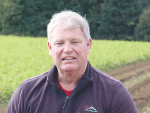
A cold growing season has thrown something of a spanner in the works for many commercial growers around Ohakune in the Central North Island.
Consumers’ demands are driving the way Ohakune commercial vegetable growers Bruce and Stephanie Rollinson produce and package their Brussel sprouts and parsnips.


Alliance is calling for final applications for its 2027 Graduate Programme, with applications closing on Sunday 25 October.
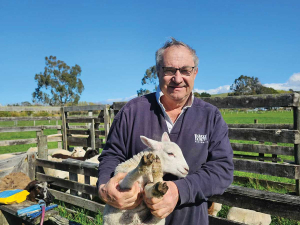
Decades piloting planes has ensured vet and farmer David Hayes is focused on safety. So, after a serious accident while welding on farm, he is sharing his experience so others can learn from it.
Canterbury milk processor, Synlait Milk has confirmed Leon Fung as its chief executive officer.
OPINION: Making it easier to collect rainwater and use it to grow crops and livestock is a no brainer.
As part of its Election 2026 coverage, Rural News asked political parties how they would help pull the arable sector out of the doldrums. Here's what they said:
Farmers are being encouraged to rethink how they manage waste on farm with the launch of ruralwastesorted.co.nz, a new website bringing together practical tips, real farmer experiences and resources.