When buying supplementary feeds, farmers need to consider the entire package on offer – service, freight and all the components in a feed mix – not just focus on the price of the cheapest component – palm kernel meal, according to J. Swap Stockfoods sales manager Joe Hardman.
After a few years out of the industry, Hardman is coming back to his true passion, agriculture. He has years of experience in dairy farming here and in the UK, where his father was involved in the agfeed industry.
He says there is a tendency to focus on the price of PKE, especially around Fieldays time, but people often forget about the rest of the package – like mixing fees, freight cost and service.
And of course, the other components in a blend, which are often twice the cost per tonne of PKE and have a greater impact on the overall cost of feed.
“It pays to not just focus on one aspect,” says Hardman. “You’ve got to look at what’s the average price, and what’s the best time to buy, which is not always around Fieldays.
“Compare your full cost of a blend delivered to farm. Don’t focus on one product and pay over the top on others.”
Hardman says he finds it interesting, coming back to the industry after a break, how we have a race to the cheapest price on PKE, where companies may be selling at cost or below but making up the difference on other products.
“We at Swaps are in it for the long run and the pricing needs to be sustainable for both us and the farmer – we are both purchasers – and we want to be able to offer the best blend and straight prices without inflating cost on other products. We want to be able to offer great pricing over an average of a season and follow this up with great service.”
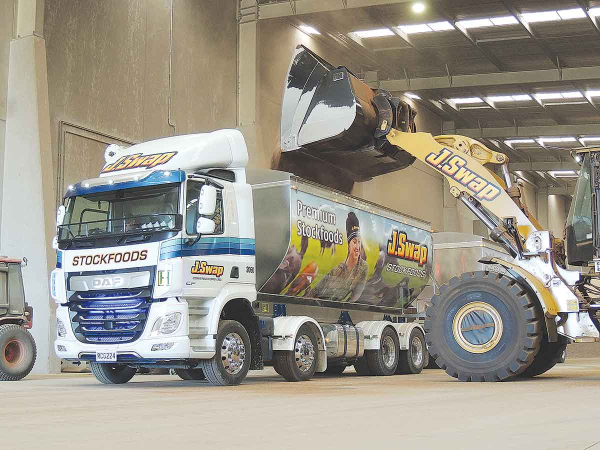
J. Swap Stockfoods have been a key player in the expansion of the dairy feed industry and have the advantage of large storage capacity, a broad range of feed and mineral options, and their own fleet of trucks, which reduces the chances of delivery delays and means farmers only have to deal with one company.
“We are more than a seller,” says Hardman. “We manage and control the full operation. We have the trucks and control the delivery so you don’t run short and we get product to farm when needed.”
Back to Ag
Joe Hardman is coming back to the industry he really loves, agriculture, after a few years in the police, then a stint in the building industry. His father worked in the ag-feed industry and the family had close ties to farming near his hometown.
 |
|---|
|
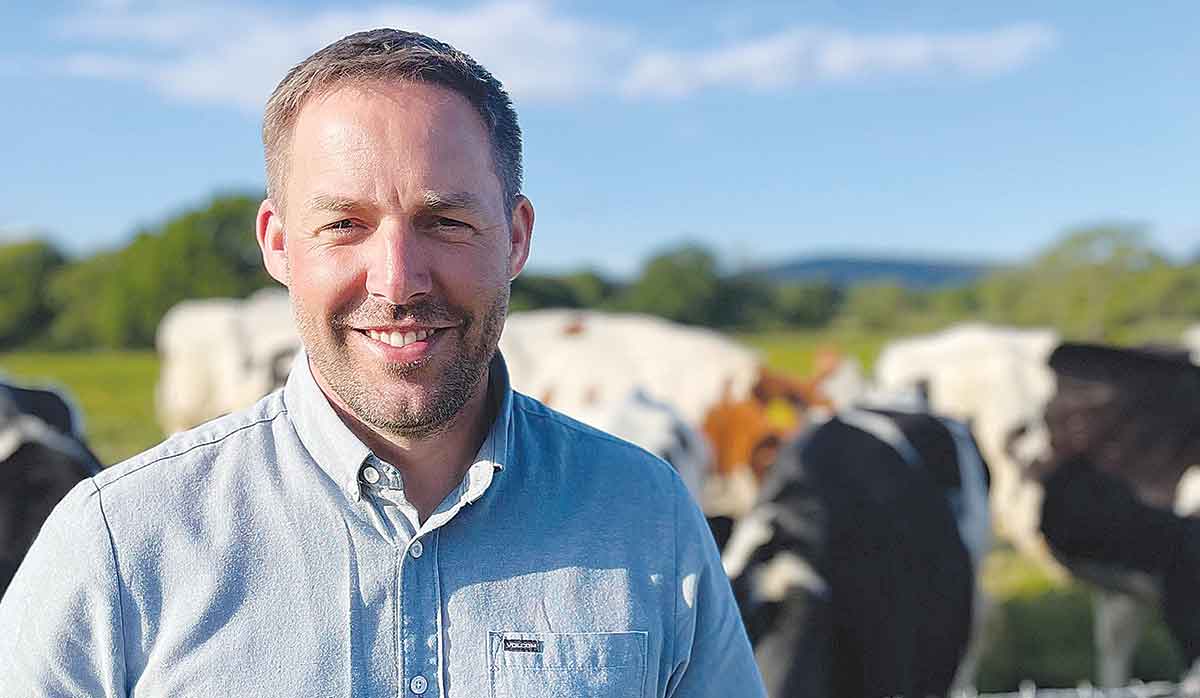
J. Swap Stockfoods sales manager Joe Hardman.
|
Originally from Preston, Lancashire, in the UK, Hardman worked on a local dairy farm there from the age of 13, then later moved onto a high intensity robotic dairy farm, which did three milkings a day and fully fed the cows through in-shed systems – aiming for very high litreage.
He then did about seven years as a bobby in the UK police force, before moving to New Zealand in 2014 with his Kiwi wife, to work on her family’s 300- cow dairy farm near Rotorua.
After a four-year stint there, which included building a Bennett Homes house, Bennett Homes offered him a job. He did seven years there, helping expand the business in a sales and management role. He dealt with J. Swap’s civil division while working in housing, so had good contacts with the Swap family.
Now he’s returned to his true passion, the farming industry, as sales manager for J. Swap Stockfoods.