What Would Synlait Be Worth to Fonterra or a2 Milk?
Speculation of a possible joint move by Fonterra and a2 Milk to buy Synlait raises a much bigger strategic question, says agribusiness expert Dr Nic Lees.
 increase font size

A Lincoln University PhD student has carried out a study that uses computer modelling to understand more about how plants respond to drought.
Pramuditha Waidyarathne, who recently completed her thesis, says this knowledge can help us improve plants’ capacity to withstand the effects of severe climatic conditions.
“One of the biggest global problems is freshwater scarcity. Plants account for 65 per cent of global freshwater use,” says Waidyarathne.
“When drought occurs, plants quickly adapt at a cellular level. Understanding these mechanisms is crucial for us to enhance plants’ ability to protect themselves during a drought.”
Professor Sandhya Samarasinghe, of Lincoln University’s Department of Informatics and Enabling Technologies, supervised Waidyarathne’s project.
Samarasinghe says the thesis has lifted scientists’ understanding of plant drought response to a new level.
When a plant is under stress, the small pores on the surfaces of its leaves close, allowing it to retain water. This gives the plant a much better chance of surviving drought conditions.
A factor playing a large role in the closure of the pores is a hormone called phytohormone abscisic acid (ABA), which plants produce to regulate growth, development and stress responses.
ABA triggers the closure of the pores.
However, information about how a plant’s related cell-signalling networks communicate during this process is not yet properly understood, says Waidyarathne.
Her study made the first attempt at computer modelling the ABA signalling network from a holistic perspective, by looking at all data and evidence already available in existing literature on the subject.
“ABA signalling involves a large number of proteins and other molecules that are interconnected to form a complex network,” she says.
“My study uses computer modelling to develop an easy-to-digest system that shows how the protein-signalling pathway leads to rapid pore closure in plants. This has generated new insights into how these proteins are connected and why.”
Waidyarathne says the last attempt at computer modelling ABA signalling was reported in 2006, but it lacked current knowledge, depth and a holistic perspective.
“Since then, the discovery of the ABA receptor complex highlighted a new era for this research, but a systems biology approach has not yet been made to discover how these findings affect our current view of the signalling.
“My study was an advanced systems biology approach that revealed a number of novel insights into the functioning of the ABA signalling network, and provides a clearer picture of the process.
“The model can be used to find ways to improve plant drought stress response, which is crucial in the face of prevailing climate change.”
Speculation of a possible joint move by Fonterra and a2 Milk to buy Synlait raises a much bigger strategic question, says agribusiness expert Dr Nic Lees.

Lynnette Hudson's 30-year obsession with Pinot Noir was sparked working vintage in Burgundy, seeing how subtle changes in terroir were expressed in the glass. It was, she says, "an elightening moment in every way".
A four year trial has reaffirmed that mixing plantain into dairy pastures can help reduce nitrogen losses to freshwater while maintaining milk production and profitability, say researchers.
Twenty five secondary school students from around New Zealand recently completed a three day residential programme designed to explore career opportunities across the food and fibre production supply chain.
A Lincoln University student is set to become the first person to contest both the Young Viticulturist and the Young Winemaker national titles in one year.

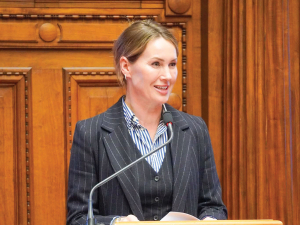
The Government is introducing a new nationwide rural recycling scheme that will significantly increase the recovery of farm plastics from March next year, Minister for the Environment Nicola Grigg announced today.
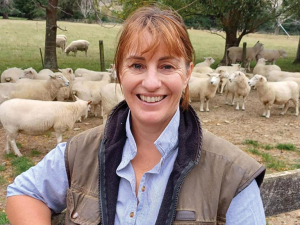
B+LNZ's Wormwise veterinarian Mary Bowron has won the Best Sheep and Beef Vet of the Year Award in recognition of her outstanding contribution to New Zealand’s sheep and beef sector.
Researchers at Massey University are using a special piece of scientific equipment to improve the measurement of greenhouse gas emissions from pasture soils.
More signs of a booming kiwifruit sector.
OPINION: David Seymour and James Meager's plan to make it easier for farmers and orchardists to operate drones can best be described a 'courageous' move.
New Zealand wool is reaching new heights as air filtration companies move away from synthetic products to biodegradable alternatives.