China No Longer Just A Commodity Story - Luxon
China remains New Zealand’s biggest market, taking $23 billion of our exports, but it’s no longer a commodity story, says Prime Minister Christopher Luxon.
 increase font size
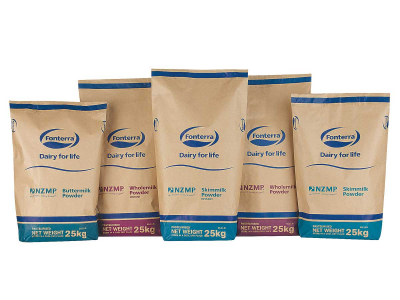 Whole milk powder prices were down 6.2% in last week’s GDT on the back of coronavirus.
Demand for dairy products in China hangs on what further steps the Chinese Government takes to stem the spread of coronavirus.
Westpac market strategist Imre Speizer says there are risks to near-term demand which could be affected by coronavirus developments.
The steps that China has taken to contain the outbreak – such as extending the Lunar New Year holiday period, and limiting the movements of people – has kept many factories closed.
Speizer told Rural News has meant less demand for their inputs, including milk powder.
“These disruptions might prove to be short-lived, but that depends on what further steps the government might take to contain the spread of the virus.”
Last week, global prices tumbled; whole milk powder price dropped 6.2% to hover just above the US$3000/MT mark.
Speizer says the obvious explanation for last week’s decline is uncertainty regarding the coronavirus outbreak.
“Financial markets have been reacting to those developments for around two weeks, with global equities, interest rates, industrial commodities and risky currencies falling sharply,” he says.
“Moreover, whole milk powder futures prices had been falling since late January. It was unsurprising, then, that last week’s GDT auction followed suit.”
The forecast milk price also hinges on supply coming out of New Zealand: persistently dry conditions in the upper North Island and eastern South Island could see milk production fall short of what the market is expecting.
Fonterra figures show in December 2019, the co-op collected 184 million kgMS from farmer suppliers: 0.6% down for the same month in 2018, according to its monthly global dairy update.
Season to date collection was over 909m kgMS, 0.5% down on the previous season.
North Island milk collection in December was 106.4 million kgMS, down 2.5% on last December. Season to date collection was 564 million kgMS, down 0.4% on last season.
Fonterra says December weather had some impact on pasture quality in some northern regions, however grazing crops are doing well, and cow condition remain very good.
South Island milk collection in December was 77 million kgMS, up 2.2% on last December. Season to date collection was 345 million kgMS, down 0.6% on last season.
“Favourable weather conditions across Canterbury continued, allowing for excellent pasture growth rates,” it says.
Westpac is still maintaining its $7.40/kgMS forecast milk price for Fonterra suppliers.
China remains New Zealand’s biggest market, taking $23 billion of our exports, but it’s no longer a commodity story, says Prime Minister Christopher Luxon.
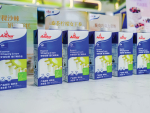
Fonterra is strengthening its foodservice presence in China with the launch of a new cream for professional bakeries at Bakery China 2026 in Shanghai.
OPINION: What does the birth rate in China have to do with stock trading? Just ask a2 Milk Company.
Additional tariffs introduced by the Chinese Government last month on beef imports should favour New Zealand farmers and exporters.
One of the most galling aspects of the tariffs whacked on our farm exports to the US is the fact that, now more than ever, US farmers are being propped up by government welfare – a direct result of Trump’s hardline on its trading partners.

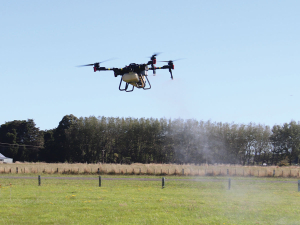
OPINION: David Seymour and James Meager's plan to make it easier for farmers and orchardists to operate drones can best be described a 'courageous' move.

New Zealand wool is reaching new heights as air filtration companies move away from synthetic products to biodegradable alternatives.
Opuha Dam's ability to protect South Canterbury communities from major flooding has taken a significant step forward, with Opuha Water Limited (OWL) successfully commissioning a new outlet valve capable of releasing record volumes of water from the dam ahead of a weather event.
There's been widespread support from the primary sector for the Government's announcement on changes to freshwater farm plans that come under the Natural Environment Bill, which is now set to replace the existing RMA.
A partnership between state-owned enterprise Pāmu (Landcorp Farming Limited) and charity Meet the Need is putting more than quality New Zealand beef into food bank parcels this year.
The Opportunity Party has faced criticism during the election campaign that its policies are too urban-focused and offer little for rural communities.