Keratin extracted from New Zealand wool could soon find its way into products used to minimise osteoporosis, promote gut health, and other anti-inflammatories, says Keraplast chief executive Howard Moore.
Recently published research from Otago University also suggests it could help in minimising insulin resistance, he says.
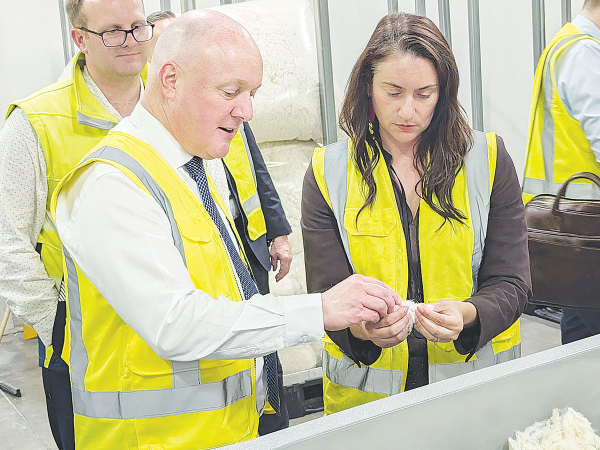
The biotech company recently hosted a visit by Prime Minister Christopher Luxon to its new facility in Christchurch, where it extracts keratin from wool and processes it into a range of unique, branded ingredients, most of which are exported for use in a variety of beauty and personal care products. It is now aiming to expand into nutraceuticals and pharmaceuticals.
The company began at Keratec, a portfolio company of the then New Zealand Wool Board's commercial arms, and was acquired in 2009 by American company Keraplast Technologies.
Moore told the Prime Minister that Keratec brought New Zealand wool and Keraplast brought a range of patents to a "marriage made in heaven".
Although now 100% US-owned, the company totally operates within New Zealand, said Moore.
"We've been developing novel keratin products for over 25 years and applying a lot of science and doing a really great job.
Read More
"We're really proud of the fact that we lead the world in Keratin research."
Moore said Luxon's visit highlighted the critical role of New Zealand's innovative manufacturing sector and the substantial contributions the industry makes to both local and global markets.
"Our dedication to research and development ensures that we continue to lead in keratin technology, driving innovations that benefit consumers in our international markets."
A key component of Keraplast's sustainability strategy was that all its wool comes from regeneratively farmed New Zealand sheep.
Regenerative farming is said to offer numerous environmental benefits, such as improved soil health, increased biodiversity, carbon sequestration, and enhanced water management.
Moore said the global market for keratin was worth about $2 billion, most of it being commodity products made in Brazil, China and Mexico and much of it manufactured from chicken feathers.
"We certainly are quite unique in the added value keratin products which we manufacture from wool."
It processed 77 tonnes of wool last year. The new facility, where it has been operating since July, could handle up to 300 tonnes a year.
Luxon congratulated the company on its achievements because of the country's need to get more added value out of its products.
The value Keraplast was extracting from wool was "vastly different from what others are going to get, doing carpet or insulation, frankly, or anything else," said Luxon.
"Wool has been challenged over the last 30 years for not innovating sufficiently."
Luxon said New Zealand probably spent an average amount on R&D but had a lot of siloed R&D where universities, businesses and the research institutes did their own thing.
He praised the connections Keraplast has made with researchers and universities.
"It's really inspiring because I'm looking for positive stories from wool to talk about and this is one that I can now talk about," he said.