Lanaco and Blueair Launch World-First NZ Wool Air Filter
New Zealand wool is reaching new heights as air filtration companies move away from synthetic products to biodegradable alternatives.
 increase font size

The 9400 bales on offer in the South Island this week saw a 91% clearance and an overall stronger market, says NZ Wool Services International Ltd's general manager, John Dawson.
The weighted indicator for the main trading currencies was 0.71% lower than the last sales on February 21, adding impetus to local price levels.
Dawson says a small offering of Mid Micron wool 25 to 29 microns were nominally 2% dearer.
Fine Crossbred Fleece 32 to 35 micron were firm to 3% stronger with the Second Shears firm to 1% dearer.
Good style coarse carpet fleece were 1.5 to 2.5% stronger with the poorer styles 2.5 to 4% dearer. Longer coarse shears increased 1.5 to 4% with the shorter types firm to 2.5% dearer.
First Lambs Fleece 31 micron and finer were 1 to 3% dearer with coarser types 3% stronger.
Combing oddments lifted by 3 to 4% with shorter oddments firm to 2% dearer.
Competition was good among China, India and Australasia principals, supported by Middle East, Western Europe and the United Kingdom.
The next sale March 7 comprises about 16,000 bales from the North Island and 8800 bales from the South Island.
New Zealand wool is reaching new heights as air filtration companies move away from synthetic products to biodegradable alternatives.

Will a stronger, more coordinated voice help rebuild confidence and improve returns in the wool sector?
OPINION: Confidence in the wool sector is rebounding as prices hit levels not seen in more than 15 years.
The recently signed free trade agreement with India is an invitation to strengthen relationships between the New Zealand and Indian strong wool industries, says Wool Impact chief executive Andy Caughey.
Strong competition and tightening supply have seen wool reach its highest prices paid at auction since 2011.


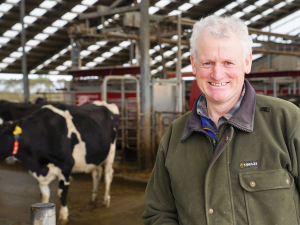
In Dacre, near Invercargill in New Zealand’s South Island, Bruce Dinnington is running a dairy operation unlike any other.

A free online platform aggregating governance vacancies across rural and regional New Zealand has been launched.
Environment Minister Nicola Grigg has announced details of a new rural plastics recycling scheme.
Agricultural drone operators say that a government decision to allow lower-risk drone work without certification won’t lower standards but drive innovation and efficiency.
OPINION: Warning bells are ringing in the arable sector.
Farmgate lamb prices are down by 8%, beef cattle by 4.5% and farm expenditure up by 4.2%.