Federated Farmers Backs Year 11 Agricultural Science
Federated Farmers is backing Feilding High School’s call to keep Agriculture and Horticultural Science as a standalone subject in Year 11.
 increase font size
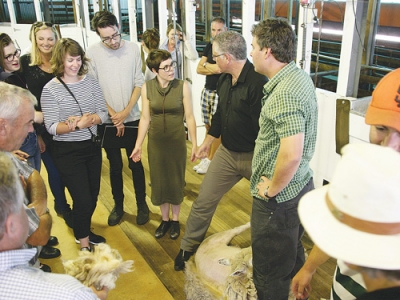 Students have gone away ecstatic about wool.
Young design and architecture students who spent a weekend in a woolshed in the central North Island have gone away ecstatic about wool.
The students are determined to use it in their projects when they go into the workforce.
The NZ Campaign for Wool arranged for the nine students to visit Ngamatea Station, near Taihape, where they spent time with wool experts. They also got around the station to get an understanding of the wool production cycle.
The station runs 40,000 sheep and produces 180,000kg of strong wool every year.
Gaylene Hoskings, who arranged the trip, says some of the students had farming backgrounds, others had none.
One objective was to make the students advocates for wool and to encourage their colleagues to specify wool in design projects. She succeeded.
Comments from the students included:
- "I didn't realise how aesthetically versatile it is. There are so many scientific reasons why wool works so well but at its core it is simply a beautiful thing.
- "It fascinates me that wool protects a living animal but plant fibres don't; this is why it works so well to protect us in our built environments.
- "The fact that wool absorbs and neutralises harmful volatile organic compounds is so interesting. Especially when synthetics are advertising low VOC levels and we have a fibre that actually neutralises them."
Last year, the Campaign for Wool promoted the product to school children.
Federated Farmers is backing Feilding High School’s call to keep Agriculture and Horticultural Science as a standalone subject in Year 11.

Pāmu has welcomed Taranaki student Paige Burston as its newest First Foundation Scholar, supporting her journey towards a career in agriculture and animal science.
With lambing underway in many regions, Beef + Lamb New Zealand is encouraging farmers to put together a wellequipped lambing kit to help minimise lamb losses, particularly in bad weather.
New Zealand wool is reaching new heights as air filtration companies move away from synthetic products to biodegradable alternatives.
Will a stronger, more coordinated voice help rebuild confidence and improve returns in the wool sector?


As part of its Election 2026 coverage, Rural News asked political parties how they would help pull the arable sector out of the doldrums. Here's what they said:
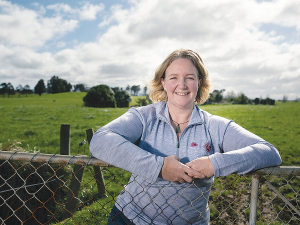
Farmers are being encouraged to rethink how they manage waste on farm with the launch of ruralwastesorted.co.nz, a new website bringing together practical tips, real farmer experiences and resources.
New Zealand Winegrowers (NZW) is celebrating the India-New Zealand Free Trade Agreement (FTA) coming into force today, bringing New Zealand wine improved access to one of the world’s fastest-growing economies.
New Zealand’s red meat sector has welcomed the India-New Zealand Free Trade Agreement taking effect, which removes India’s 33% tariff on New Zealand sheepmeat.
More than 95 per cent of New Zealand’s forestry and wood exports to India can now enter tariff free as the New Zealand-India Free Trade Agreement comes into force today.
Federated Farmers is backing Feilding High School’s call to keep Agriculture and Horticultural Science as a standalone subject in Year 11.