Ballance Farm Environment Awards Launch on West Coast
The Ballance Farm Environment Awards are coming to the West Coast of the South Island.
 increase font size

THE MAN heading Power Farming Group predicts a new golden era for New Zealand farming.
Geoff Maber, managing director of the Morrinsville-based family owned company, says growth in global demand for quality food and an inevitable fall in farm subsidies in Europe and the US will usher in a new era.
“The next few decades will be amazing for New Zealand agriculture, driven by a huge population increase in developing countries and growing demand for bio-fuels. I also believe farm subsidies in Europe and the United States are unsustainable at current levels and must eventually come down.
“By 2030, four of the world’s ten largest economies will be in our region and Asia’s middle class – the fastest growing in the world – is expected to represent 65% of the world’s entire middle class. That’s about 3.2 billion people on our doorstep with the money to afford a richer, higher-protein diet. The next 17 years will be the best period that we’ve ever seen in farming in New Zealand.
“In June we were talking about $7/kg for milk solids and people were saying then that wasn’t sustainable. Now Fonterra has announced $7.50/kgMS and we’ll see that go higher, notwithstanding the current short-term blip regarding contaminated powder.”
Maber says dairying is the standout performer, but sheep and beef still have plenty of potential and the demand for meat will increase for the same reasons as growth in dairying. He predicts returns for sheep and beef will rise 25-50% in the next few years.
“The world wants our sheep meat and beef, kiwifruit, horticulture and dairy products. I’m confident of export receipts doubling over the foreseeable future.”
He believes the strong increase in demand for our primary products is the main reason Chinese companies are keen to invest here, and dairy farm prices will continue to climb.
Meeting the big increase in demand for dairy products must be by more efficient farming and higher production per animal – the biggest challenge the industry will face, Maber says.
“Large-scale Kiwi dairy farmers are good at what they do, and are the most efficient in the world, operating on a scale unheard of anywhere else.
“We’ve got a thousand herds in New Zealand with more than a thousand cows each – huge by world standards.
“If dairying is to grow to its potential, we’re not going to get there just by increasing cow numbers. The secret to higher production is to feed them better and farm them better, and clever farmers are now realising it’s worth spending 10-20% more on inputs to get a 20-30% more output.”
Maber says a lot of credit is due to Fonterra and other dairy companies for the industry’s move away from butter and low-end products to premium products such as milk powder and casein.
Currently the New Zealand dairy industry feeds about 30 million people with its products. Maber says conceivably that could double to 60-70 million, but the current demand is 10 times that number, a demand New Zealand will never be able to meet.
The Ballance Farm Environment Awards are coming to the West Coast of the South Island.

The challenges of high-performance sport and farming are not as dissimilar as they may first appear.
OPINION: In the 2023 election, 77.5% of the 3.69 million people eligible to vote took the privilege of making their wishes known about the governance of New Zealand.
Farmer-led charity Meat the Need has expanded its offerings, following a new partnership.
Synlait is hoping that its proposed recapitalisation plan will help retain its spooked farmer supplier base.


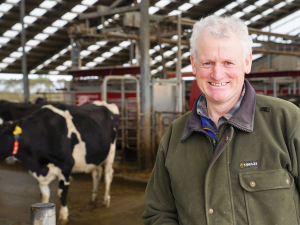
In Dacre, near Invercargill in New Zealand’s South Island, Bruce Dinnington is running a dairy operation unlike any other.

A free online platform aggregating governance vacancies across rural and regional New Zealand has been launched.
Environment Minister Nicola Grigg has announced details of a new rural plastics recycling scheme.
Agricultural drone operators say that a government decision to allow lower-risk drone work without certification won’t lower standards but drive innovation and efficiency.
OPINION: Warning bells are ringing in the arable sector.
Farmgate lamb prices are down by 8%, beef cattle by 4.5% and farm expenditure up by 4.2%.