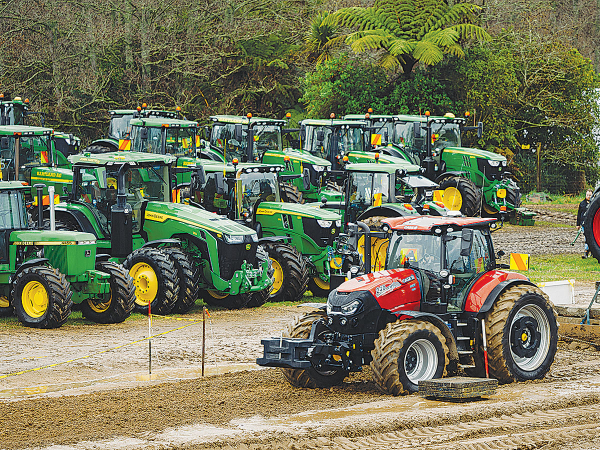
With 2023 behind us, the global market for agricultural tractors closed with a decline in terms of units, but with growth in terms of value.
The total number of tractors sold reached around 2.2 million units, marking an 8% decline compared to 2022, while revenue rose to $57 billion, representing a 2% increase.
Looking at the broader picture, complementing that $57 billion related to tractors, other types of farm machinery notched up $73 billion (+2%) and farm machinery components delivered sales of $34 billion (+5%), for a total industry revenue of $164 billion, up 3% compared to 2022. The increases were driven by higher price lists, in turn, driven mainly by inflation and the increased cost of raw materials.
Globally, individual markets showed varying results, primarily due to the performance of harvests and agricultural incomes. India confirmed a total of 915,000 tractors sold, a result like the record volumes reached in 2022, while China stalled at around 380,000 units, a significant 28% decline compared to the previous year.
The United States recorded a total of 250,000 tractor sales, an 8% decline, attributed to the contraction of agricultural incomes, partly due to reduced exports of commodities to the Chinese market and increased competition from other producing countries in international markets.
Europe achieved sales of 158,000 tractors, a 5% decrease said to be a consequence of insufficient agricultural profitability and partly due to unfavourable weather conditions that negatively impacted some crops. Within the market, France saw a 2% increase to 36,400 tractors registered, Germany remained stable with 28,900 units, while in contrast, Italy dropped by 13% to 17,600 units, and Spain an even steeper decline of 18%, finishing at 7700 units.
Beyond the four major markets, Turkey grew by 16% to nearly 78,000 tractors, Canada was back by 10% at 28,000 tractors and Russia recorded 36,000 units sold, in line with the registrations of the previous year. Sales in Japan remain unchanged at 34,000 units.
Industry forecasts for the near future still predict high global demand, although the market is likely to be increasingly exposed to climatic and geopolitical variables. Globally, declines in cereal production in Ukraine and Russia have tended to be offset by increases in Brazil, Australia and India. Industry sources suggest that this might result in a new “geography” for the machinery and technology industries, with a decline in tractor sales, but with an increase in horsepower and revenues.