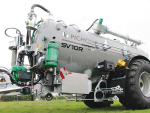
Pichon Adds SV10R and SV14 to SV Slurry Tanker Range
French manufacturer Pichon has expanded its SV slurry tanker range with the launch of two new models.
 increase font size
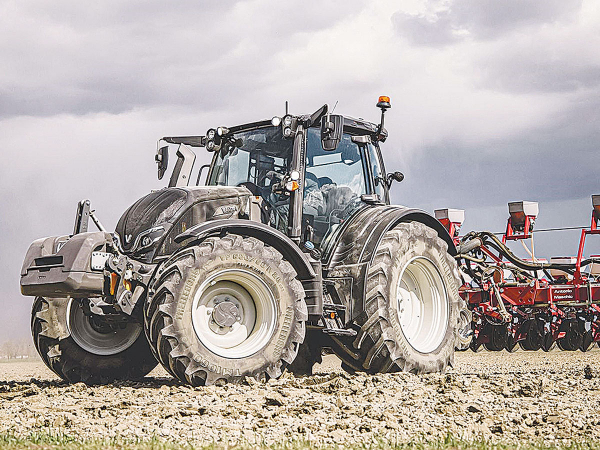 Valtra’s SmartTurn software allows all field operations to be carried out without the driver touching the steering wheel.
A software update for Valtra tractors combines Auto U-Pilot headland management and Valtra Guide automated steering to help deliver automated headland turns.
SmartTurn is the final piece of the puzzle that allows all field operations to be carried out without the driver touching the steering wheel.
The technology is said to improve precision, save time, fuel and prevent soil compaction. Valtra notes that the system also enables the driver to focus on the quality of work and it improves safety and accuracy in dark, foggy and dusty conditions.
Working with SmartTurn begins by defining the field boundary and headland from where the required turning radius is calibrated, according to the implement width and by turning the tractor sharply to the right and left.
The operator then chooses between the U-turn and part-field automatic turning mode. The former sees the tractor make a small U-shaped turn on the headland into the adjacent undriven way line. In the case of the latter, a smaller headland is required, as the tractor turns back into the third, fourth or further way line.
Available now for fifth generation N and T Series tractors, the software update will be available for fourth generation models and for other fifth generation models later this year, without the need for any mechanical modifications to tractors equipped with Valtra Guide.
In other Valtra news, until now Valtra tractors have only been able to offer section control, working in conjunction with ISOBUS-compatible machines such as sprayers, to divide the working area into 24 or 36 sections.
But now the company’s latest version increases this to as many as 96 sections. Meanwhile, its MultiBoom feature makes it possible to simultaneously control up to three different booms automatically.
Valtra says this makes the system ideal for controlling the likes of ISOBUS-compatible seed drills, sprayers, fertiliser spreaders and row crop cultivators. The sections on the new version can also be controlled by separate feeders in one, two or three consecutive rows.
Alternatively, operators can automate control of one implement at front of the tractor and the other at the rear.
Using a seed drill as an example, fertiliser can be spread in the first feed system, seed in the next and starter fertiliser or small seed in the third.
“Depending on the implement, the seed and fertiliser hoppers are often divided between two or more sections,” the company claims. “Section control 96 can command each of these sections and feeders with centimetre accuracy.”
Operated from the touchscreen on the SmartTouch armrest, the interface is similar to the existing one. It requires the tractor to be equipped with auto guidance and ISOBUS implement control.
Users of fourth and fifth generation Valtra tractors with section control 36 will have free access to the new features once their tractor software is updated at the next scheduled maintenance.
Those using section control 24 can purchase an upgrade to the new version, which is available now for fifth generation Valtra tractors.
French manufacturer Pichon has expanded its SV slurry tanker range with the launch of two new models.
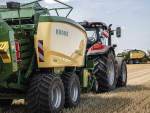
Recently revealed, Krone’s new Series Six, BiG Pack Plus and Pro balers are designed to use standardised components, interfaces, and control concepts, including pick-up, knotter systems and user interfaces.
Consuming around six years and more than 35,000 hours of physical and digital testing, the new sixth-generation Valtra T Series is being described as the most significant new release in the company’s history.
Strautmann has introduced a new Hay Edition auger for its Verti-Mix feed mixer wagons, aimed at operators using rations with larger proportions of hay or other long-fibre materials.
Twin rotor swathers have become the ‘go-to’ for forming swaths to feed hungry harvesters and balers, however, the design layout often means that crop located between the two rotors is not picked up, turned over or incorporated into the swath formed for subsequent harvesting.



The New Zealand-India Free Trade Agreement entered into force today, improving market access for New Zealand businesses across a wide range of sectors.

Vetekina Pau'u is the first Tongan to win the William Gearish Memorial prize and sadly she will also be the last recipient.
Things are looking up in the dairy goat sector.
Mark Hooper has been appointed the new chair of NZPork, the industry organisation representing New Zealand pig farmers.
As the India-New Zealand free trade agreement enters into force, New Zealand’s apple industry has reaffirmed its commitment to the long-term development of India’s apple sector.
Fonterra shareholders can begin voting on Tuesday 20 October in the 2026 Board of Directors’ election, a Co-operative Council election in one Ward, and seven Annual Meeting resolutions.