New Zealand agritech start-up Cropsy Technologies is leading a $1.3 million SFF Futures/ AGMARDT co-funded project to help growers identify and replace grapevines that are missing, dead, dying or otherwise unproductive Ñ also known as 'Ghost Vines'.
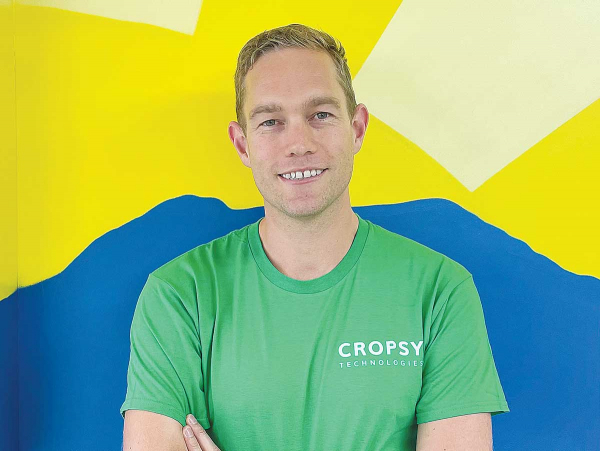
"This project will develop tools to help growers understand the health and productivity of every vine in their vineyards in order to identify missing, dead, dying or otherwise unproductive grapevines,” says Cropsy’s head of product & innovation Dr Gareth Hill.
The company has been awarded a $534,000 project grant through the Ministry for Primary Industries’ (MPI’s) Sustainable Food and Fibre Futures (SFF Futures) fund and a $200,000 AGMARDT Agribusiness Innovation grant to lead a project titled, ‘You know I can’t harvest your Ghost Vines: Vineyard-scale monitoring of unproductive vines’.
“These vines receive all the labour, water, and other vineyard inputs that other vines do without contributing to the overall productivity of the vineyard. For all intents and purposes these vines are either missing or may as well be, which is why we call them ‘Ghost Vines’,” Hill explains.
“There are over 40,000 hectares of New Zealand vineyards with many tens-of-millions of vines, so ghost vines pose a hidden threat to the sustainability of the industry. This is both environmentally inefficient through land use and financially through lost production and avoidable vineyard expansion. Monitoring the health and productivity of this number of vines reliably right now is simply impossible.”
Cropsy’s current vision system can measure the current state of grapevines.
However, by also measuring and analysing the state of every vine and its neighbours over time, the Ghost Vines project will enable the diagnosis of declining productivity and disease at the earliest possible stage.
“We are building up a ‘patient history’ of all the vines in a vineyard,” Hill adds. “By putting each vine’s performance into context we’ll be able to make more accurate forecasts about its productivity and the future of the vineyard as a whole.”
The two-year project is a collaboration with prominent wine companies Pernod Ricard Winemakers, Indevin Group, and Cloudy Bay Vineyards and viticultural consultancy Fantail Consulting.
Pernod Ricard Winemakers believes the collaboration offers benefits for the whole industry.
“Improving the utilisation of resources such as land and water is something that would benefit the entire industry,” says David Allen, viticulture transformation manager. Indevin’s group technical viticulturist Rhys Hall believes the project will push the boundaries of agritech in New Zealand vineyards.
Cloudy Bay is also part of the project.
“It has the potential to provide us with the tools we need for decision making regarding longterm productivity and re-development,” says Cloudy Bay viticulturist John Flanagan.
MPI’s director of investment programmes Steve Penno claims this innovation is unprecedented in New Zealand vineyards.
“The technology-based and data-driven services developed through this project will enable the wine industry to manage their vineyards in a way that’s not currently possible and has the potential to lift productivity significantly – that’s a very exciting prospect.”
About Cropsy Technologies
Founded in 2019, Cropsy is a New Zealand-based start-up, unlocking the full potential of vineyards and orchards with a unique and scalable AI-enabled vision system.
Each of Cropsy’s hardware units attaches to an existing tractor. The system sees and understands every single plant while a grower runs their daily crop operations; profiling every leaf, fruit, shoot, cane, and trunk in real-time as the tractor passes by.
The result is a ‘digital twin’ of the vineyard or orchard; a map clearly showing areas of concern and patterns across the entire crop, so growers know precisely how their crop is performing and changing over time. With an initial focus on grapevines, the product development roadmap will see Cropsy branch into apples and oranges.