fbpx
Print this page
Friday, 21 May 2021 09:55

Stalkbuster eliminates maize pest

Written by  Staff Reporters
The Stalkbuster System controls the corn borer problem without needing to use pesticides or biological plant protection agents. The Stalkbuster System controls the corn borer problem without needing to use pesticides or biological plant protection agents.

Corn Borer has become a serious issue in maize growing regions.

According to the Food and Agriculture Organization of the United Nations, the pest causes yield losses up to 50%. The FAO also estimate that the borer’s caterpillar destroys 4% of corn harvests globally.

Borer caterpillars damage corn by chewing tunnels through the corn plant, thereby restricting its water and nutrient supply and making the stems easy to snap. This means the plant is more susceptible to diseases – such as the common corn smut and fusarium infections that can also go on to affect subsequent crops.

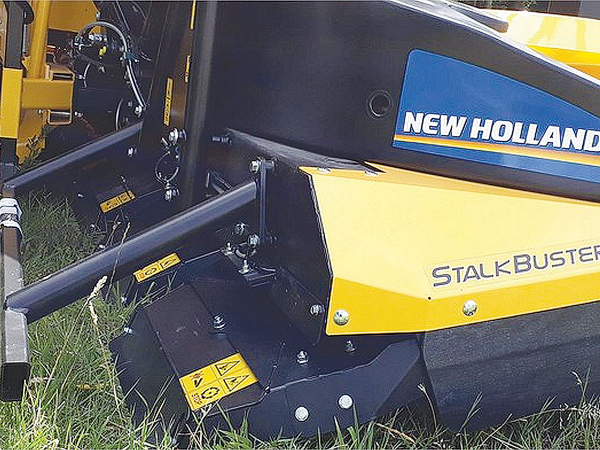
To help alleviate the problem, New Holland Agriculture is introducing a new 8-row maize header fitted with the Stalkbuster System. This system controls the borer problem without needing to use pesticides or biological plant protection agents.

Working with header supplier Kemper, the system is integrated into the base frame of the rotary 8-row corn header and breaks up the stubble before it can be flattened by the harvester’s wheels.

Consisting of a swinging gearbox with an integrated ratchet clutch that swings the specially shaped Buster flail, each row of stubble is broken up individually. The special swinging gearbox ensures optimum ground adjustment for every single row, while a pneumatic pressure system provides for additional soft tracking of ground contours.

If the self-propelled forage harvester needs to reverse, the Stalkbuster units are automatically lifted when the drive lever is actioned, preventing any damage.

The action of the units sees stubble smashed into small pieces down to the ground level, destroying the overwintering habitat for the corn borer. This also reduces the fusarium risk and lowers lessens any bulky residues for post-harvest cultivation operations.

With a power requirement said to be only 4hp per row, the system uses much less power than traditional post-harvest mulching. It also has the additional benefit that stalks are “chopped’ before they are flattened by the harvester wheels or those of a tractor powering a conventional mulcher, making the process cost effective.

More like this

New CLAAS Swath Turner Fixes Twin-Rotor's Blind Spot

Twin rotor swathers have become the ‘go-to’ for forming swaths to feed hungry harvesters and balers, however, the design layout often means that crop located between the two rotors is not picked up, turned over or incorporated into the swath formed for subsequent harvesting.

Motueka Farm Machinery Sold as Sturgeons Retire After 44 Years

Close to the Abel Tasman and Kahurangi National Parks, Motueka is known for apples, pear and kiwifruit orchards, alongside specialised crops such as hops. Indeed, that specialisation, saw the area being the New Zealand centre of the tobacco growing, until the early 1980s.

Can-Am Unveils 2027 SSV, ATV Range With New Defender HD10

Can-Am has introduced its 2027 range of side-by-side vehicles (SSV) and all-terrain vehicles (ATV), including the industry leading Defender, the Maverick R and the hugely capable Outlander ATV, incorporating a host of advancements designed to deliver an exceptional riding experience.

Featured

Applications open for 2027 Zanda McDonald Award

Applications are set to open for the 2027 Zanda McDonald Award, a trans-Tasman award recognised for identifying and fast-tracking talented young leaders in agriculture and agribusiness.

GP Rural: New Pathway Proposed to Fix Rural GP Shortage

The Royal New Zealand College of General Practitioners (the College) and Hauora Taiwhenua Rural Health Network are calling for investment in a proposed new training pathway for rural GPs, warning that many rural practices are struggling to recruit while a large share of the existing workforce nears retirement.

CODC Sludge-to-Lauder Plan Slammed by Federated Farmers

Federated Farmers has called on Central Otago District Council (CODC) to drop or vote down a plan to truck sludge from Alexandra and Cromwell to farmland near Lauder, warning it would compound an "outrageous" situation created by a separate council's decision weeks earlier.

National

Machinery & Products