Turley Farms is a Canterbury-based, family-owned enterprise that grows vegetable, seed and pasture crops – including wheat, barley, potatoes, white clover, onions, grass seed and carrot seed.
Also on the agenda are hybrid radish, spinach, canola, sunflowers and peas for processing. During winter the business finishes store lambs, winters dairy cows and finishes some beef cattle.
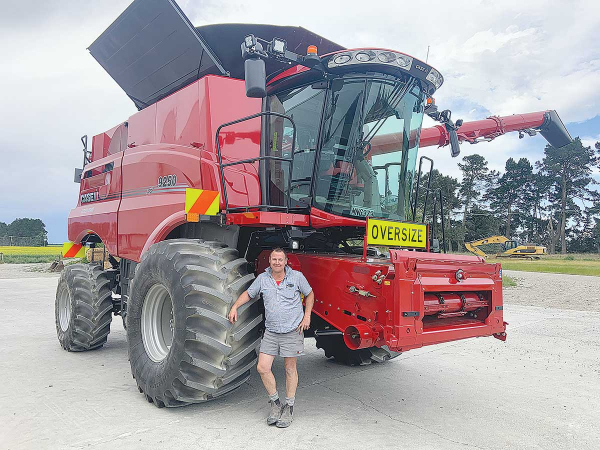
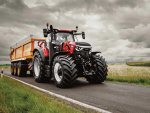
The business is largely self-contained, backed by technology to keep the many wheels of its 12 prime movers rolling. Case IH tractors on the properties run from 75 to 550hp, many fitted with Case IH Advanced farming systems automated guidance, offering precision seed placement down to 2cm, delivered by Trimble RTK.
With this technology available, real-time data monitoring from the Vantage system – offered by Trimble – gives the operation insight into areas such as soil moisture levels, then by comparing the results from a weather station reading, it can calculate soil deficit and crop demand.
For fertiliser application, each paddock is grid referenced and soil tested. From this information a variable application map is created, then sent to a suitably equipped spreader, that might deliver the expensive product at variable rates from 50 to 200kg per hectare.
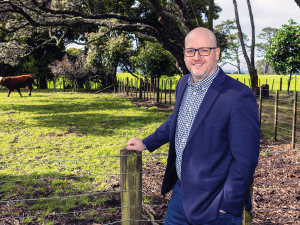
Manager Andrew Smith says his bottom line is cab comfort and strong support from the dealership.
“It doesn’t matter what colour the machine is, or what bit of machinery it is, they’ve all got the risk of breakdowns,” he explains.
“For us, the key question is how well the problems are addressed when they arise.”
Turley Farms’ Case IH equipment is supported by the local dealer Cochranes, who in turn are backed by Case IH NZ.
When it comes to machinery and technology, Turley Farms looks for ease of operation.
“Last year, during harvest we ran 17 fulltime and 13 overseas staff working on the farms,” Smith explains.
“Five combines might be working simultaneously in different crops at the peak, feeding different crops or varieties of the same crop back to multiple drying and storage facilities – so attention to detail is paramount.”
Preventing crop contamination is a real focus for the team, from the farm managers, agronomists, permanent staff, and seasonal harvest staff. Crop hygiene starts with the agronomists in the paddock, moves onto harvesting, drying and storage, then away to market.
Given what’s at stake, particularly in the case of high value vegetable seed crops, hygiene is king. Turley Farms uses a large air compressor and an industrial vacuum cleaner to clean the combines, during crop or variety changes and at the end of the season.
www.caseih.co.nz