Lanaco and Blueair Launch World-First NZ Wool Air Filter
New Zealand wool is reaching new heights as air filtration companies move away from synthetic products to biodegradable alternatives.
 increase font size
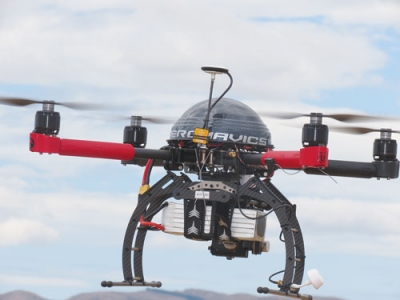 UAVs (drones) are playing a bigger part in farming technology.
Imagine being able to walk into a field with your tablet or iPhone and be guided to a particular area or a plant not growing well.
It’s not a dream and is in fact now possible, says precision agriculture consultant, Jim Wilson.
Technology is playing a greater role in precision agriculture especially overseas, but also in New Zealand. This includes the use of unmanned aerial vehicles (UAV’s) and satellites. Already satellite technology is used for precision ag tools such as auto steer. But Wilson says satellite technology imagery will soon get better.
“We are involved in a project with a European space agency which is launching a new series of satellites called Sentinel Two Series, which should be available later this year or early next,” he told Rural News. “The satellite is designed specifically to monitor vegetation as in crops; it will be hugely powerful in giving us better imagery to monitor things at a very low cost.”
UAV use is likely for gathering images for transfer to a tablet or iPhone. But while the equipment is there to do the job, dealing with the huge amount of data generated is the big problem, Wilson says.
“We are looking at developing a method of processing those images and feeding them back to tablets, computers and/or phones in a way that you can actually utilise them in the field and look at the individual plant and be guided to the plant by the GPS on your tablet.”
An eye in the sky
Wilson when he first came to New Zealand in 2000, little or no precision agriculture was then used here.
While he acknowledges the country has come a long way in the ensuing 15 years, he’s surprised farmers here are not taking greater advantage of simple tools such as EMI scanning of fields to measure soil texture.
Wilson says more Kiwi farmers could also use soil sampling to determine fertiliser rates and irrigation use. New Zealand farmers are now behind Europe in the use of precision agriculture, he says.
“Looking around the world it seems farmers adopt things when they are forced to by economic or legislative pressure. In Europe we have had various periods of hard economic times and greater legislative pressure from the European Union, which has fast tracked change.”
Wilson has a simple message for New Zealand farmers: get out and try it. They should look at the big costs on their farms, such as machinery and fertiliser, to see if they can reduce costs via precision agriculture.
New Zealand wool is reaching new heights as air filtration companies move away from synthetic products to biodegradable alternatives.

Generative AI in the workplace, trials in the field, and industry-relevant research took centre stage at this year’s Grape Days events in Central Otago, Hawke’s Bay and Marlborough.
Bradley Wadsworth lives on the family farm – Omega Station – in the Wairarapa about 30 minutes’ drive east from Masterton.
Virtual fencing company Halter is going global but for founder Craig Piggott, New Zealand farmers will always remain their main partners.
Felton Road Wines is using an electric drone sprayer to apply organic fungicides and monitor crops, cutting emissions and transforming management.


Pāmu has released its FY26 Integrated Annual Report, reporting a Net Operating Profit of $113 million, more than double the $49 million recorded in FY25.

Meat Industry Association data, released alongside the Red Meat Sector conference in Wellington, shows export value climbing across the US, China, UK and Canada.
Applications are set to open for the 2027 Zanda McDonald Award, a trans-Tasman award recognised for identifying and fast-tracking talented young leaders in agriculture and agribusiness.
The Royal New Zealand College of General Practitioners (the College) and Hauora Taiwhenua Rural Health Network are calling for investment in a proposed new training pathway for rural GPs, warning that many rural practices are struggling to recruit while a large share of the existing workforce nears retirement.
Federated Farmers has called on Central Otago District Council (CODC) to drop or vote down a plan to truck sludge from Alexandra and Cromwell to farmland near Lauder, warning it would compound an "outrageous" situation created by a separate council's decision weeks earlier.
Synlait has swung to second-half profit as operations stabilise, but the dairy processor still posted a $75.4m annual loss.