Lanaco and Blueair Launch World-First NZ Wool Air Filter
New Zealand wool is reaching new heights as air filtration companies move away from synthetic products to biodegradable alternatives.




 increase font size
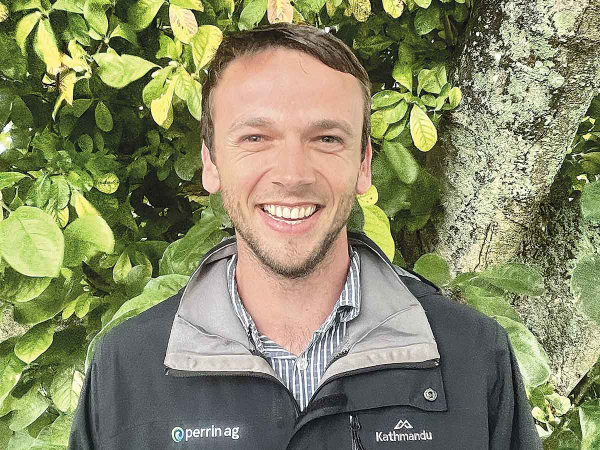 Michael Booth
OPINION: New technologies can promise the world but how do we know if they are delivering?
It’s exciting to see so many new tools being developed in the quest to make life easier for farmers, from AI-driven pasture measurement systems and inline mastitis detection to AI-powered cow condition scoring, to name a few.
Arguably, one of the most disruptive innovations is virtual fencing. But is its full potential being realised, or are there still opportunities to enhance its performance and return on investment?
Even for those who have embraced technology, evaluating its impact can be challenging in an industry with so many variables. After Covid, soaring fertiliser and grain prices, on-farm inflation, and fluctuating milk prices have made it even harder to assess the financial returns associated with technology adoption.
On top of that, the effects of floods, droughts, and shifts in farming systems make it challenging to attribute changes in financial performance solely to technology adoption.
With so many moving parts, it’s no surprise that farmers often tell us they struggle to determine whether technology is truly delivering a return – even after they’ve implemented it.
Virtual fencing is particularly difficult because it touches so many aspects of the farm business, from pasture and feed utilisation, to labour, and maintenance, right down to how much fuel you need to top up the four-wheeler.
Then there’s the intangible benefits of a 30-minute sleep in, and the ability to check where the cows are simply by looking at the screen in your pocket.
Unlock benefits
But with all this capability, have we unlocked the full benefits of virtual fencing yet?
To do so requires farmers to rethink their entire farm layout, removing internal fences and in some instances redesigning infrastructure.
That’s not a decision made lightly. It’s a classic chicken-and-egg dilemma: farmers often want proof of its benefits before committing to irreversible changes, but the true value of virtual fencing only becomes clear once the system is fully integrated.
Until they take that leap of faith, many will remain on the fence – pun intended.
Then there’s the elephant in the room: cost. Implementing virtual fencing can cost tens of thousands of dollars per year – a significant investment. But I’ve seen some farmers double their return.
Ultimately, it comes down to whether the technology is being used effectively. Can potential savings in labour, improved grazing efficiency, and better herd management justify the price tag?
For some, the answer is a clear yes. For others, the numbers are yet to add up.
Evaluating impact
Assessing the impact of virtual fencing on farm can be challenging. In response, Perrin Ag is introducing a new, independent expert evaluation service for farmers who have adopted it.
This service examines both financial and operational performance over multiple years while considering variables like inflation, milk price fluctuations, and seasonal shifts.
The goal is to offer a clearer understanding of the technology’s benefits by distinguishing its effects from external influences and identifying where opportunity still exists on farm to take advantage of the benefits virtual fencing offers.
Virtual fencing has the potential to revolutionise farming, but in an industry where every dollar counts, it’s not an easy decision. For some, it represents the future of farming, for others, it’s perceived as a costly experiment.
The reality? Like many new technologies, its success depends on individual circumstances, a farmer’s willingness to embrace change and having an effective way to assess its true impact.
Michael Booth is a senior consultant with Perrin Ag
New Zealand wool is reaching new heights as air filtration companies move away from synthetic products to biodegradable alternatives.

Generative AI in the workplace, trials in the field, and industry-relevant research took centre stage at this year’s Grape Days events in Central Otago, Hawke’s Bay and Marlborough.
Virtual fencing company Halter is going global but for founder Craig Piggott, New Zealand farmers will always remain their main partners.
Use of agricultural drones by contractors in New Zealand is soaring.
PGG Wrightson has launched a new stock-counting service using drones and Artificial Intelligence (AI), which it says removes all the hassle for farmers, while achieving 99.9% accuracy.


LIC shareholders have elected a new North Island representative to the co-operative's Board, along with five representatives to its Shareholder Reference Group (SRG), following the company's Annual Meeting held in Invercargill.
Farmers across parts of Southland and South Otago are continuing to deal with difficult conditions after a prolonged run of wet weather, with pressure building around feed supply, stock management, pasture damage, farm infrastructure and everyday workloads.
Federated Farmers says it welcomes Labour's commitment to reviewing the Sharemilking Agreements Act, calling on other major parties to do the same.
For Canterbury dairy farmers Sian Meijer and Rick Wobben, wearable technology has become one of their most valuable on-farm tools - helping manage 1850 cows across an expansive, high-performing dairy operation while improving efficiency, mating outcomes and day-to-day decision making.
Fonterra has unveiled its annual results for the 2026 financial year, posting $27 billion in revenue and close to $20 billion returned to New Zealand farmer owners and unit holders.
The first major update to the Dairy Cattle Code of Welfare in more than a decade has been released, marking what DairyNZ describes as an important step in ensuring animal welfare standards continue to evolve alongside scientific evidence and on-farm realities.





OPINION: The same mainstream media muppets that brought you Jacindamania in 2017 have been flat out pimping for the Opportunities…
OPINION: Your old mate reckons the atrocious way farmers in the UK are treated by their lords and masters in…