Pain relief for lame cows a game changer
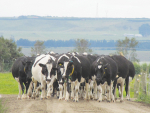
The traditional method to approach lameness involves corrective trimming of the affected area.
 increase font size
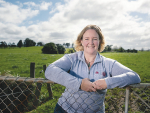
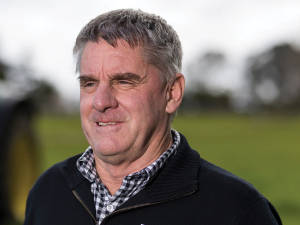
 WelFarm Ltd general manager Samantha Tennent says data and benchmarking is needed to show farmers where opportunities to improve lie.
Without data and benchmarking, farmers are in the dark about their performance, particularly when it comes to animal health and welfare.
Samantha Tennent, the new general manager for WelFarm Ltd, says data and benchmarking is needed to show what ‘good’ looks like and where opportunities to improve lie.
“One tool we have available to give us that benchmarking is the WelFarm programme,” she explains.
“With the increased scrutiny on our dairy sector to prove our farmers are operating sustainably, and to continue our access to export markets, it is even more important we have the evidence that we are looking after our animals to a high standard.”
She says animal health is also a big cost on-farm and good herd health is crucial to optimise performance.
Tennent has a background in veterinary technology and has worked in the dairy sector across a variety of roles, recently as an animal developer for DairyNZ managing the InCalf programme.
“The opportunity to help drive WelFarm intrigued me given my background and passion for dairy and I’m really excited to raise awareness across the sector and get more farmers into the programme,” she says.
WelFarm is an assurance programme developed by XLVets and has been used on-farm since 2014. It is available to all farmers and veterinarians and utilitises data collected throughout the season to benchmark farms nationally and regionally.
This helps identify areas where farm productivity and animal wellness could be optimised through effecting change. It also supports farmers who are making improvements towards goals, showing them whether their efforts are succeeding.
“We know small shifts in in-calf rates, reducing somatic cell counts, reducing mastitis and increasing milksolids all have significant impact on performance and profitability, and how we use antibiotics and other drugs is continually under the microscope,” Tennent explains.
Greg Lindsay, of Franklin Vets, has been using the programme with farmers for several seasons.
“Through the reporting at the end of the season, I was able to have a valuable discussion with one farmer [about] how they were using lower levels of antibiotics, which was great, but they were also using significantly less anti-inflammatories than others in the area.”
He says since anti-inflammatories are useful tools to manage pain. The discussion covered how these can be used on-farm to support animals, which can improve performance outcomes and animal welfare.
“They started using it for more procedures after that conversation,” Lindsay says. “I think that’s a great win. I had the evidence to show them where they sat, and they were receptive to discussing ideas.”
He says farmers regularly come to us for advice and WelFarm reporting provides a great pathway to develop plans towards their goals.
Tennent encourages farmers to discuss with their vets whether they are already offering the programme and vets to get in touch if they want more information and support to implement it in their clinic.
“It’s a great initiative and the only one of its kind in New Zealand. Without the data and benchmarking we don’t know what good actually looks like and whether our efforts to improve are having an effect.”
The traditional method to approach lameness involves corrective trimming of the affected area.
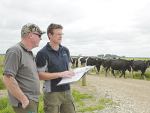
A solution to help farmers complete the animal wellbeing part of their on-farm assessments will be available from this month thanks to a new relationship between WelFarm and Fonterra.
Antibiotic use is under increased pressure because any time we use antibiotics there is an increased risk of bacteria developing resistance.
A negative energy balance (NEB) is when the energy demands for lactation, maintenance and activity are not met by dietary intake and the cow is forced to mobilise its fat and muscle to provide energy to meet the deficit.
The pain scale medical professionals use with people isn’t applicable to animals. They can’t tell us whether they’re experiencing a 5 or a 9 out of 10. But that doesn’t mean they are not impacted by pain.


Federated Farmers has welcomed new rural policies released by ACT, saying they align closely with its own election priorities.

Rural Contractors NZ says proposed changes to land transport rules for agricultural vehicles are a welcome response by the Government to out of date regulations which have seen members hit with huge fines.
Alliance is calling for final applications for its 2027 Graduate Programme, with applications closing on Sunday 25 October.
Decades piloting planes has ensured vet and farmer David Hayes is focused on safety. So, after a serious accident while welding on farm, he is sharing his experience so others can learn from it.
Canterbury milk processor, Synlait Milk has confirmed Leon Fung as its chief executive officer.
OPINION: Making it easier to collect rainwater and use it to grow crops and livestock is a no brainer.