MPI Opens $3m Greenhouse Gas Research Funding Round
The Ministry for Primary Industries (MPI) has announced has opened applications for the 2026/27 funding round of the Greenhouse Gas Inventory Research (GHGIR) fund.
 increase font size

A QUARANTINE grow-out requirement for imported grass seeds has been removed by MPI.
The move has been welcomed by AgResearch which lobbied MPI to make the rule change on the grounds it will accelerate forage cultivar development.
"It will enable researchers and plant breeders to gain quicker and less expensive access to germplasm, but still ensure a rigorous level of biosecurity is maintained," says Zane Webber of the Margot Forde Germplasm Centre, who led the negotiations for AgResearch.
"It reduces the upfront financial costs and time involved in using material from the Centre, and will break down what has, up until now, been a major barrier to exploratory research."
Webber says the Centre is not a museum of seeds but an active collection, and the rule change means it can be used at such.
"We now have regulations that ensure a good level of access for people that need it while mitigating the risks."
Seed can only be released to bona fide researchers and plant breeders who sign an agreement to undertake monitoring and documentation of the plants derived from the seed, and to report any anything unusual.
"Ensuring researchers have continued access to these seeds is critical as the New Zealand pastoral sector, and therefore a major part of our economy, is wholly reliant on them," says Webber.
MPI standards spokesperson Kathryn Hurr says the new regulations strike the right balance between enabling critical research and maintaining high levels of biosecurity.
"This project is a real win–win. Breeders now have faster access to this amazing collection of seeds which they can evaluate, looking for those new traits that will help keep our pastoral industries at the top of their game."
The Ministry for Primary Industries (MPI) has announced has opened applications for the 2026/27 funding round of the Greenhouse Gas Inventory Research (GHGIR) fund.

New import standards could put New Zealand’s blueberry industry and the wider horticulture industry at risk.
AMINZ and the Ministry for Primary Industries (MPI) have partnered to develop a new Farm Debt Mediation video series aimed at farmers, creditors, and advisors.
Dairy continues to be the mainstay of the country's primary export earnings.
Don’t worry about it but just be aware - that’s the message from Ministry for Primary Industries (MPI) director-general Ray Smith as the H5N1 strain of bird flu is found in Australia.

New Zealand dairy farmers are set to be the first in the world to receive access to a new digital physical milk pricing tool that enables them to fix the price for their physical milk.
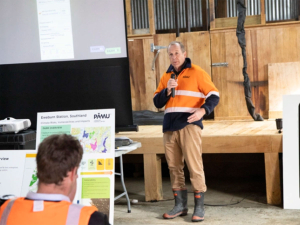
State farmer Pāmu is opening its farm gates this summer in an effort to give the rural sector the opportunity to see how large-scale, multi-system farming is delivering productivity and profitability across New Zealand.
A five-year study has found that the cost of reducing emissions without technology may be significant and unsustainable for Northland dairy farmers.
DairyNZ says Waikato farmers need certainty on Plan Change 1, but they say that certainty must be matched with practical, workable rules and a clear transition that doesn't get ahead of the new resource management system currently under review.
While the Government has moved quickly to make commercial hauliers' lot easier during the current fuel crisis, they appear to be stuck in the creep box when it comes to the agricultural industry.
Waikato farmers have been told that the Government’s new planning system legislation and the region’s Plan Change 1 (PC1) “won’t mesh together very well”.