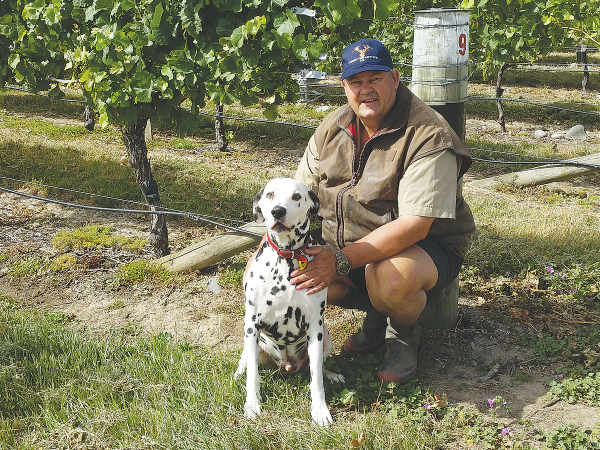
Marlborough deer farmer Justin Stevens has the records of all his deer dating back to 2016.
He uses a livestock scanner and a book to keep on top of his NAIT account. He’s always ready to replace tags and uses his mobile phone to keep track of tag numbers.
Where is your NAIT location?
Near Seddon, in Marlborough, on 180-hectares.
What is your farming operation?
I manage around 600 deer: 300 velvet stags, 70 spikers, and 230 hinds. Velveting and venison is our focus. Some of the deer are up to 10 years-old.
How do you manage your NAIT obligations?
I check my NAIT account every two weeks to ensure it is up to date with deer that have been killed or died. If you leave it longer, it’s harder to go back and update and this undermines animal traceability too.
Sam, our dog, helps flush out stags that have ventured into the scrub. We apply visual tags first to the deer and then once the fawns have run with the mothers we’ll fit the NAIT tags at about 80 days old.
It’s easier to identify the deer with visual tags because the tag is larger and has only four digits, and this helps if the NAIT tag becomes unreadable or is lost.
How do you register the deer in NAIT?
We use a Gallagher TSI livestock reader to capture the tag numbers. I’ll then transfer that information into my NAIT account. When tagging, we select the NAIT RFID tags in sequence, that way you can easily match the tags in your NAIT account to the deer you’ve recently tagged.
We also have a book we started back in 2016, where all the animals we’ve produced are recorded. This is good backup to compare used NAIT tag numbers with which deer.
Is tag retention an issue for you?
No, not really. We don’t have a deer crush, but if I’m velveting, I’ll tag them when they’re asleep. We have a catwalk at the race which is set up so we can tag there too.
Obviously older hinds tend to lose tags, and they might go through three tags in their lifetime. But you expect that with pokers [deer] pushing under fences. If they keep doing this and losing tags, it’s best to offload them and request an unsafe to tag (UTT exemption) from OSPRI before sending them to the works.
Have you ever sent an ‘unsafe to tag’ deer to the works?
Not from memory. I’ll check the night before and then again on the day, before the stock truck arrives. I send only around 140 a year to the works, so perhaps that’s why I’ve never had that issue.
What are your impressions of NAIT since it became mandatory for deer farmers in 2016?
It’s fine, though I have a background with using computers so that helps. I’m not sure deer farmers are utilising the system enough and getting the benefits. For deer management you can track the weight, grades and the progeny using a scanner.
I believe NAIT and traceability are going to become especially important in the future. Farmers just need to get on with it and get it done. If you need help call the OSPRI Contact Centre, they’re friendly and know how to speak to farmers.
Any NAIT tips for deer farmers?
When replacing a NAIT tag, take a picture on your cell phone of the new RFID tag you’re using. This is ideal, because it also records the actual date you changed the tag, so that if you forget, you can always check your phone and update it in your livestock reader or book.