NZ Rural Contractors Push for Urgent VDAM Rule Reform
While the Government has moved quickly to make commercial hauliers' lot easier during the current fuel crisis, they appear to be stuck in the creep box when it comes to the agricultural industry.
 increase font size
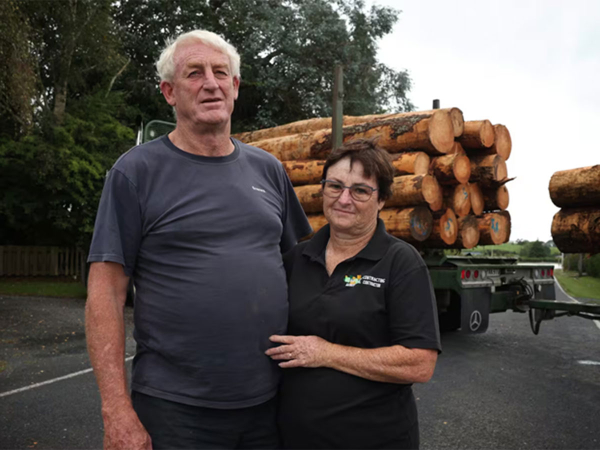 John and Julie photographed near their home after the flood.
Ensure your insurance is fully comprehensive and up to date because as a rural contractor you don’t know what’s around the corner.
That’s the strong advice from Julie Clark, a Rural Contractors New Zealand (RCNZ ) board member, who with her husband John runs a contracting business in Ōtorohanga which was hit hard in February’s flood.
The company is now amid the maize harvest as well as undersowing, spraying and ground cultivation.
Julie says it’s been a very busy few weeks for her staff after the mid-February deluge saw up to 300 millimetres of rain dropped on the town in a few hours.
John and their son Matthew both drove tractors around midnight on Friday February 13 to rescue family and friends from the rising flood waters and returned them to their home on Kio Kio Station Rd in water about 1.5m deep.
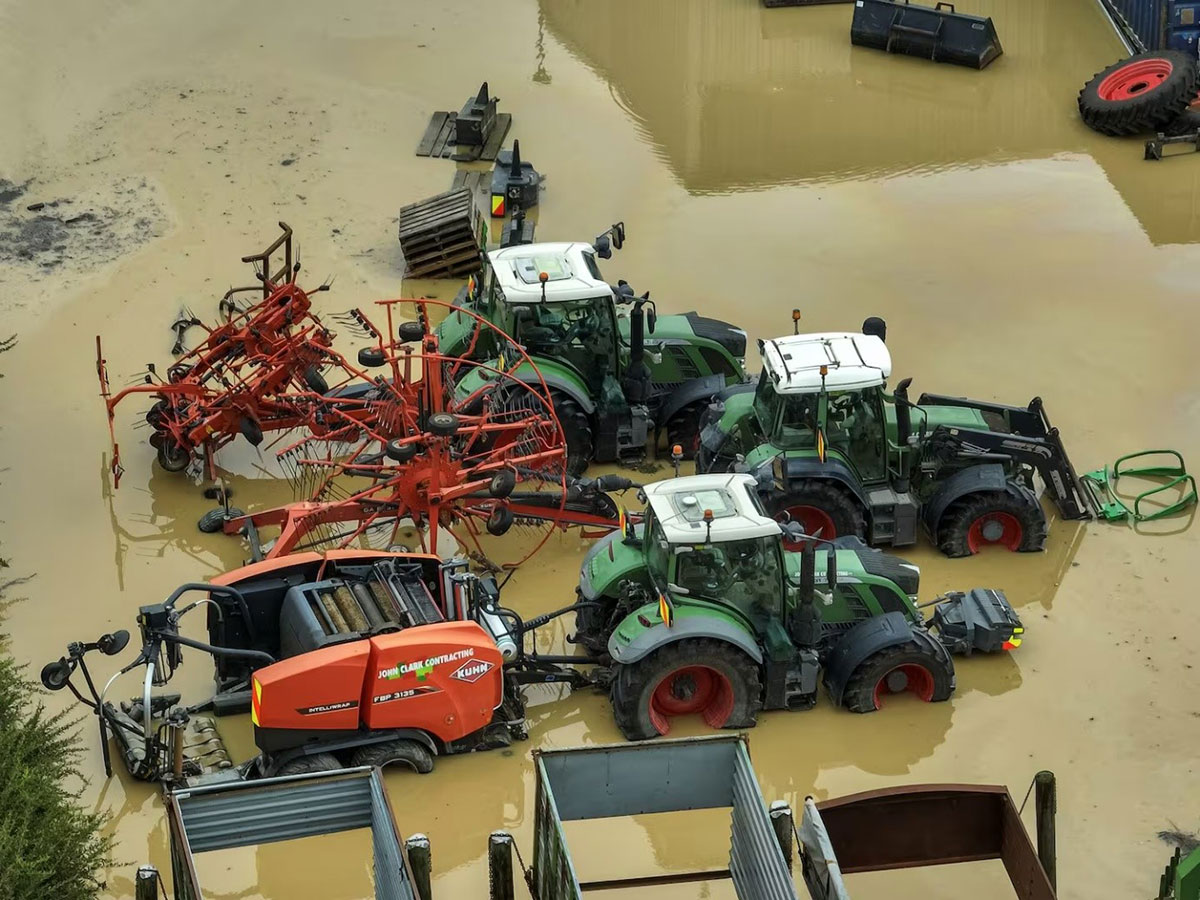
At dawn, they were all evacuated to higher ground with the water having reached 1m high in their nearby workshop.
Julie rang her local insurance agent on the Saturday morning and started lodging multiple claims for the couple’s own home, that of their son, workshop contents and stock, cars and machinery.
She asked the agent who was away in the South Island, to come on Monday to see the damage. He was later supported by two assessors. In the interim she took photos.
“We had a dozen of our 15 tractors affected with four having to be transported to town. The staff from Giltrap AgriZone and Waikato Tractors were great in getting the gear sorted and mobile.”
The repair costs started at $5,000. One vehicle was written off as was anything electrical in the workshop. In the compound, hay and silage wrap was lost among other stock.
Julie and John have been on the property for 30 years and considered they were outside any flood risk.
“If you’d asked me if I would have a claim on a flood, I would have laughed at you.”
 |
|---|
|
The flooded farm. |
Now her insurer is working through seven different claims. She is grateful the company has, at her request, appointed a dedicated person to work with her rather than having to deal with multiple staff.
Julie says the total cost will run into the hundreds of thousands of dollars and she expects most, though not all of this, will be covered.
She says rural contractors need to check they have full, comprehensive insurance.
“While it’s been a very trying time, we’ve had the support of our family and our friends. Our staff have also been amazing with all the hard work they put in cleaning up the damage.
“We also knew we had full cover with an insurer we’ve been with for a long time. Without all that, we’d have been knocked flat rather than being up and running again.
“I’m urging all RCNZ members to dig out that policy and check it gives you the cover you might need.”
While the Government has moved quickly to make commercial hauliers' lot easier during the current fuel crisis, they appear to be stuck in the creep box when it comes to the agricultural industry.

Rural contractors want the Government to include a national standard for air plans as part of its Resource Management Act reforms.
2025 marks 120 years of FMG Advice and Insurance in New Zealand's rural communities.
Rural Contractors NZ have launched a campaign today against the risks of fatigue in their industry.
Concern about fatigue impacts during a busy season prompted Rural Contractors New Zealand to launch a campaign about the risks. Chief executive Andrew Olsen explains.



As the India-New Zealand free trade agreement enters into force, New Zealand’s apple industry has reaffirmed its commitment to the long-term development of India’s apple sector.
Fonterra shareholders can begin voting on Tuesday 20 October in the 2026 Board of Directors’ election, a Co-operative Council election in one Ward, and seven Annual Meeting resolutions.
National’s pledge to introduce 19 new national standards shows the party is serious about getting Wellington out of farming, Federated Farmers says.
The National Party’s policies to make it easier to grow fresh vegetables, secure reliable water and energy and simplify farm planning are practical changes that will give growers the confidence to invest, according to Horticulture New Zealand (HortNZ).
Fonterra Co-operative Group chief financial officer Andrew Murray has resigned to take up a role outside the dairy giant.
A major move is about to get underway to improve the quality and viability of dairy beef and cattle in NZ.