Beef + Lamb NZ's Lambing Kit Checklist for a Tough Season
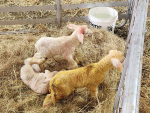
With lambing underway in many regions, Beef + Lamb New Zealand is encouraging farmers to put together a wellequipped lambing kit to help minimise lamb losses, particularly in bad weather.
 increase font size
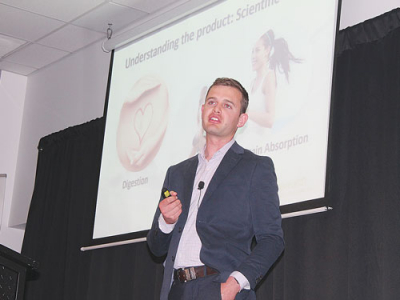 Spring Sheep Dairy’s Thomas MacDonald.
It is an exciting time to be talking sheep milking, says Thomas MacDonald, business manager for Spring Sheep Dairy, in Taupo.
The company has commissioned one of two new milking parlours in Waikato, its sales staff are signing new agreements in two countries and a second generation of specifically bred New Zealand dairy sheep have been born, he says.
All this happened in the first week of August when MacDonald spoke at the NZ Institute of Primary Industry Management.
MacDonald says when you try something new there’s a lot of criticism. Sheep milking is now “almost acceptable” and he is now getting emails every week from companies who told them at the start it wouldn’t work.
They are starting to see significant pull and demand from customers demanding better digestion, better tasting milks and more toddler products.
“At the farmer end, we are starting to see new genetics born – never before seen in New Zealand – which have the capacity and potential to take us to the next level,” he explains.
After a breeding programme, the company will have sheep available this year to go wider than Spring Sheep Dairy, MacDonald says.
“The beauty of sheep is you get 1.8 of them a year and the generation interval is only 12 months so we are now milking the European sheep which came into the country in 2016.”
To go beyond Waikato, where manufacturing is based at Food Waikato facilities, they would need to see investment in small to medium scale manufacturing facilities that were export registered.
“There is plenty of money it would seem sloshing around in the regional development fund and others, so I hope we would start seeing people put forward cases for export registered manufacturing sites which will enable the growth of sheep milking in new regions.”
On June 1, Spring Sheep converted a 200-cow, 50ha Waikato dairy farm to sheep dairy milking, bringing in 550 sheep.
“With very limited capital exposure we will be taking what I call a stranded asset, an old dairy parlour that probably wasn’t making much money -- it had probably lost its environmental capacity to farm on that bit of land -- and we have given it a second life,” MacDonald says.
And in a greenfield farm development near Cambridge where the company has taken an arable farm, it had put its first row of sheep through milking the morning of the conference.
They now have dairy parlours in three locations, having started in Taupo.
Spring Sheep started about three years ago with Landcorp as a 50% shareholder with SLC Group – which represents a range of private equity investors – and the Ministry for Primary Industries.
MacDonald says early on they realised sheep milking was critical to NZ agriculture in representing a significant opportunity in land-use change.
They put forward a successful case for a Primary Growth Partnership named Sheep Horizon Three which, beyond Spring Sheep, aimed to develop a sustainable sheep milking industry in NZ. The aim is to build an industry of $200-$700 million of gross sales in the next few years.
MacDonald says Spring Sheep aimed to learn from these experiences to build a successful sheep milking industry, with a consumer-driven model. He says sales people spend a lot of time overseas talking to customers and ‘socialising’ the concept of sheep milking.
They won’t necessarily stick with just traditional or liquid formats. An example is a line of ‘chews’ targeting calcium absorption for Malaysia, Taiwan and Viet Nam where they “are going great guns”.
After an initial study with rats fed sheep milk showing higher bone density, protein absorption and digestion qualities, Spring Sheep – with AgResearch and the Liggins Institute – now have human clinical studies underway.
With lambing underway in many regions, Beef + Lamb New Zealand is encouraging farmers to put together a wellequipped lambing kit to help minimise lamb losses, particularly in bad weather.
Will a stronger, more coordinated voice help rebuild confidence and improve returns in the wool sector?
The vineyards at Pyramid Farm in Marlborough’s Avon Valley have never been run of the mill, with plantings that follow the natural contours of the land, 250 metres above sea level.
Sheep and cattle numbers continue to decline, and this year's drought hasn't helped, according to Beef + Lamb New Zealand (B+LNZ).
High quality feed, reduced stocking rates and shelter will all help enhance triplet lamb survival and ultimately benefit the bottom line.


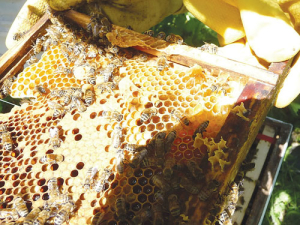
New Plymouth-based Manuka honey exporter Egmont Honey has completed its acquisition of Taihape beekeeping business Tweeddale's Honey, with settlement finalised on Friday, 18 September.
Westpac NZ is calling on farmers and growers to start preparing now for the possibility of a dry summer, as likely El Niño conditions raise the risk of drought across parts of the country.
Fonterra Co-operative Group has confirmed the independently assessed candidates standing for election to its board in 2026.
Fonterra has revised its Farmgate Milk Price forecast for the 2026/27 season, lifting the midpoint and narrowing the range on the back of improving global dairy commodity prices.
New Zealand's citrus growers were challenged to build their future on the value embedded in their fruit rather than the volume they produce, at Citrus New Zealand's annual gathering in Gisborne on 17 September.
Leading John Deere technicians and apprentices from New Zealand and Australians were recognised at the recent sixth annual JD Technician of the Year Awards, held in Brisbane.