Paris Agreement: What Are the Costs and Returns to NZ?
OPINION: We are only weeks from the election, and my vote is looking for a home.
 increase font size
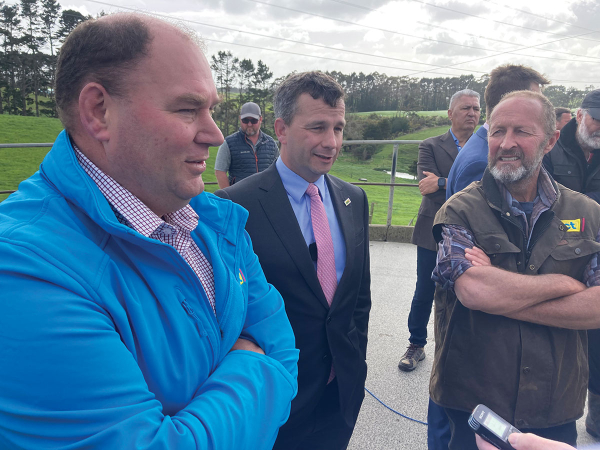 David Seymour (centre) with ACT MPs Andrew Hoggard (left) and Mark Cameron.
OPINION: Everyone wants to go to heaven, but nobody wants to die.
That's the line Deputy Prime Minister and ACT leader David Seymour used on a windy South Auckland dairy farm as he launched his party's position on climate change.
For so long, NZ's mighty hydro lakes and geothermal wells let New Zealanders have it both ways.
"We could go to heaven for having low emissions, but we didn't have to die by having the lights go out. Unfortunately, that golden age of easy choices is over," Seymour says.
ACT is taking a middle ground approach to the Paris Agreement - it's not advocating for leaving the climate change pact, not yet anyway.
It is demanding changes, failing which, we exit the deal, adopted in the French capital in 2015.
New Zealand's 2050 climate target of cutting methane emissions by 24 to 47% of 2017 levels was set by the previous Labour government.
The current Government is being urged by farmer lobby groups to lower the target, and back away from any plans to put a price on methane. A scientific panel, appointed by National, found cutting methane 14-24% of 2017 levels by 2050 would achieve no added warming, but Cabinet has not said whether it will adopt that range as a target.
By seeking changes, ACT is seeking a better deal for farmers - meaning a fairer, more scientific approach to methane.
It has never made sense to treat cow burps the same way as emissions from coal-burning.
The farming community is warming to ACT's potion.
The problem may not be the Paris Agreement itself, but how it's being applied in New Zealand that is hurting farmers and rural communities. Overly ambitious methane reduction targets, whole-farm conversions to carbon forestry, and plans to price agricultural emissions are all homegrown policies.
While not everyone may be willing to put the 'Quit Paris' sticker on their car bumper, they agree on one thing - changes are needed.
OPINION: We are only weeks from the election, and my vote is looking for a home.
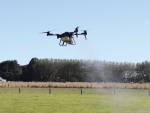
OPINION: David Seymour and James Meager's plan to make it easier for farmers and orchardists to operate drones can best be described a 'courageous' move.
The agricultural aviation industry has reacted angrily to government plans to cut regulations to make it easier for farmers to buy drones and use them on their farms.
OPINION: It really is getting harder to lampoon government bureaucrats when they do such a good job of it themselves.
Anyone in the primary sector will know about the clowns covering the countryside in the red tape we all have to wade through.
Spare a thought then for media outfit Stuff who were threatened with fines up to $200,000 by a snivelling civil servant from the MoH for illustrating a quiz question with a photo of part of the cover of a 45-year-old copy Playboy.
As Stuff notes, “It wasn’t the Playboy cover which caused offence. No, it was the back page which… featured an advert for a cigarette brand”.
As Regulations Minister David Seymour notes, “The real scandal here is, well, no wonder we’ve got problems in healthcare when they’re doing the Stuff quiz during work time.”
Deputy Prime Minister and ACT Party leader David Seymour says advocacy group Rural Women New Zealand (RWNZ) has submitted against a controversial bill without consulting its members.


Three and a half years on from when Cyclone Gabrielle hit Hawke's Bay, some orchardists in the region are still receiving counselling to help them deal with the trauma they suffered.
South of the central Hawke’s Bay town of Waipukurau is Taniwha Station – a highly successful 550ha bull beef farming operation.
Beef + Lamb NZ funded research has shown that some simple changes to pasture management could help farmers make better use of rainfall and build resilience before dry conditions hit.
OPINION: There could hardly be a more appropriate theme for a conference than the one chosen by the red meat sector - Navigating Volatility.
When Northland leather worker Vernon Suckling started making horse saddles 50 years ago, quad bikes and side-by-side vehicles were unheard of.
Alliance Group has confirmed that eligible farmer-shareholders who supply and continue to back the business will receive up to $20 million later this year, following the strategic investment partnership with Dawn Meats.