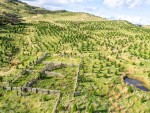
Forestry Companies Held Accountable After Coromandel Logging Truck Death
Two forestry companies have been sentenced for road failures that led to the death of Coromandel truck driver Greg Stevens.
OPINION: The Hound notes that the foreign-owned and controlled NZ forestry industry is starting to feel the pressure of the growing anti-tree sentiment springing up all around the country.
The excellent work done by groups such as 50 Shades of Green is opening the public’s eyes to this Government’s stupid policy settings, which are seeing far too much good farming land being lost to overseas-owned corporations planting trees.
Now the paid mouthpieces for the tree sector are trying to justify this loss of good farmland and decimation of rural communities by claiming that any restrictions on conversions of farms to forestry will “dangerously jeopardise the fight against climate change and New Zealand’s hope of achieving its greenhouse gas emission targets”.
Let’s hope this desperate spin campaign by the foreign-owned tree speculators does not lessen the drive by the farm sector.
Āta Regenerative is bringing international expertise to New Zealand to help farmers respond to growing soil and water challenges, as environmental monitoring identifies declining ecosystem function and reduced water-holding capacity across farms.
Yili's New Zealand businesses have reported record profits following a major organisational and strategic transformation.
Owners and lessees of certain Hino Trucks New Zealand diesel vehicles have just 10 days remaining to register or opt out of a proposed $10.9 million class action settlement.
Silver Fern Farms has successfully produced and delivered 90 tonnes of premium chilled New Zealand lamb and beef to the United Arab Emirates via airfreight.
For the first three months of 2026, new tractor deliveries saw an increase over the previous two months, resulting in year-to-date deliveries climbing to 649 units - around 5% ahead of the same period in 2025.
QU Dongyu, director-general of the Food and Agriculture Organization of the United Nations (FAO), has issued a warning saying that global fertiliser scarcity caused by disruptions in the Strait of Hormuz will lead to lower yields and tightening food supplies into 2027.