NZ Nature Fund Welcomes Active Investor Plus Visa Philanthropy Changes
The New Zealand Nature Fund (NZNF) has congratulated the government on recently announced changes to the Active Investor Plus (AIP) Visa Growth category.
 increase font size
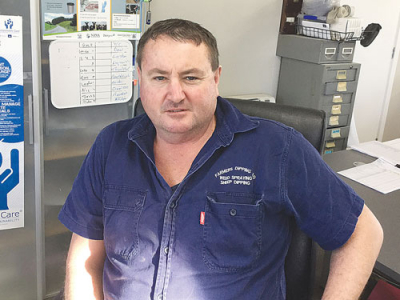 David Kean.
OPINION: Recent proposals by the Government to make it easier for regions to get workers look like a step — if not a leap — in the right direction.
Our members help farmers get in enough winter feed, stay on top of weeds and a host of other tasks which allow our nation’s farms to stay productive. Just like industries such as pipfruit and kiwifruit, we struggle every year to get enough workers locally.
Unlike those industries which are stretched for a few weeks over harvest, we need skilled people to drive our machinery from spring to autumn; getting approval to employ such people from overseas through the hoops of WINZ and Immigration is an annual and frustrating nightmare.
So the proposals, one week before Christmas, by Immigration Minister Iain Lees-Galloway to introduce a simpler, employer-led system for temporary work visas for skilled regional workers seems, at face-value, capable of enabling the sorts of changes which are desperately needed.
The RCNZ understands the Government’s wish to stop some of the rorts that go on with migrant labour. That said, this largely applies to lower-skilled people where often English is an issue; our imports are skilled machinery operators who are mostly from English-speaking countries or have good fluency. Our members are so keen to have them that often they become part of an extended family for a few weeks or months.
We also share the Government’s wish to employ as many New Zealanders as possible.
Our 500 members regularly provide opportunities for Kiwis to train to drive machinery. Unfortunately, ours is a seasonal industry with long hours when conditions allow; you need the aptitude to drive big machinery day in, day out and many aren’t cut out for it.
I trust this will all be taken into account as the Government considers submissions on its new regional work visa proposals. RCNZ will be making a submission by the March 18 deadline. We will be asking officials to recognise the particular demands rural contractors face.
The Cabinet paper has Minister Lees-Galloway wanting to implement the new Regional Skills Shortages lists in April this year.
He also wants three-year sector agreements in place by this time next year for key shortage areas – residential aged care, dairy farming, tourism and hospitality, road freight and transport. Other sectors such as forestry, fishing and meat may be included.
RCNZ will shortly engage with allied organisations, such as Federated Farmers, to assess the case for rural contracting to be put alongside the dairy farming, forestry and meat industries in the first sector-wide agreements.
There’s potential for win-win in these immigration proposals and RCNZ will do its best to ensure its members – and New Zealand – get the best outcomes.
• David Kean is president, Rural Contractors NZ
The New Zealand Nature Fund (NZNF) has congratulated the government on recently announced changes to the Active Investor Plus (AIP) Visa Growth category.

OPINION: At a time when farmers are advocating for less government spending and no new taxes, the dairy sector is rightly concerned by ACT's new immigration policy.
ACT's new immigration policy has come under fire from farmers and the Government.
We are encouraged that employers are already engaging with two new visas for seasonal workforce recruitment.
New figures show dairy farmers are not only holding on to their international workforce, but are also supporting those staff to step into higher-skilled roles on farm.


Safer Farms is urging farmers to make sure everyone working on farm has safe, suitable footwear for the job.
The Government is backing work on a community-led water storage scheme that could irrigate up to 11,000 more hectares of the Poverty Bay flats, Agriculture Minister Todd McClay says.
Agri-tech company Herd-i has become a new all-region sponsor of the New Zealand Dairy Industry Awards (NZDIA), the largest nationwide celebration of excellence in the dairy sector.
Four candidates have been confirmed for two director positions on Fonterra’s board.
Returning to the family dairy farm after playing 20 years of professional rugby around the world is no easy task.
After delivering another record farmgate milk price to 100 supplying farms, independent milk processor Tatua is entering thee new financial year with a positive outlook.