Where Is The Honesty Among Our Representatives?
OPINION: A founding principle of Groundswell NZ is that farmers, and people generally, should be provided with full and accurate information about regulations that directly affect them.
 increase font size
 RMA Reform Minister, Chris Bishop.
OPINION: The Government's decision to stop local authorities going ahead with reviews of district and regional plans makes sense for several reasons.
As Chris Bishop says, the details of the 'new RMA' are still being worked out, but it's clear major changes are in the wind.
Of late, government ministers have weighed in against local authorities for straying from core business such as providing essential utilities and throwing money at other dubious activities - dare we say, cycleways that clog up cities such as Wellington.
There is rightly frustration in the primary sector over the actions of both district and regional councils, who, in the eyes of the present coalition, have placed unnecessary and unworkable restrictions on farmers and growers.
Two things now are clear. Firstly, silly restrictions will have no place in the new RMA, although the Government says it will not back away from rules that protect the environment or in any way compromise New Zealand's high quality primary exports.
Secondly, and one can almost see worry wrinkles appearing on the faces of politicians and staff in local government, is that with the new RMA there will be significant changes to the roles and responsibilities of local government.
The last major changes in this area were in 1989 and it's clearly time for another shakeup. To be fair, some of the problems that local government get blamed for are the result of previous governments' edicts.
But don't be surprised to see change of the like we saw nearly 40 years ago. While the new RMA will make allowances for regional and district differences, central government will tighten up the powers of these organisations.
There may even be a move to abolish regional councils and replace them with unitary authoritaries throughout the country. These already exist in places such as Gisborne, Nelson and Marlborough.
So, watch this space and get ready to ride the new roller coaster.
OPINION: A founding principle of Groundswell NZ is that farmers, and people generally, should be provided with full and accurate information about regulations that directly affect them.
OPINION: The stats speak for themselves.
OPINION: David Seymour and James Meager's plan to make it easier for farmers and orchardists to operate drones can best be described a 'courageous' move.
Despite political shenanigans in Wellington, farmers are confident that Resource Management Act (RMA) reforms will get over the line in this term of Parliament.



LIC shareholders have elected a new North Island representative to the co-operative's Board, along with five representatives to its Shareholder Reference Group (SRG), following the company's Annual Meeting held in Invercargill.
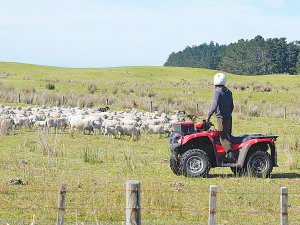
Farmers across parts of Southland and South Otago are continuing to deal with difficult conditions after a prolonged run of wet weather, with pressure building around feed supply, stock management, pasture damage, farm infrastructure and everyday workloads.
Federated Farmers says it welcomes Labour's commitment to reviewing the Sharemilking Agreements Act, calling on other major parties to do the same.
For Canterbury dairy farmers Sian Meijer and Rick Wobben, wearable technology has become one of their most valuable on-farm tools - helping manage 1850 cows across an expansive, high-performing dairy operation while improving efficiency, mating outcomes and day-to-day decision making.
Fonterra has unveiled its annual results for the 2026 financial year, posting $27 billion in revenue and close to $20 billion returned to New Zealand farmer owners and unit holders.
The first major update to the Dairy Cattle Code of Welfare in more than a decade has been released, marking what DairyNZ describes as an important step in ensuring animal welfare standards continue to evolve alongside scientific evidence and on-farm realities.