OPINION: Soil carbon is important.
It makes up approximately 58% of organic matter, which is the first of seven soil quality indicators in the New Zealand assessment. The prime position of organic matter is because of the attributes associated with it. It holds water and nutrients; soil organisms live in it and decompose it for energy (and nutrients) for their own growth and multiplication; the organisms and the organic matter aid soil structure which in turn assists aeration, infiltration and percolation of water.
A considerable amount of research has been done on building up soil carbon, and on what to avoid in order to prevent a decrease. Some of the results appear to be conflicting. Should we cultivate, strip till or notill to do our best for the environment? Should we flip soils? Can we actually sequester carbon in our soils as other countries are promising to do and so benefit from becoming part of the ETS?
The answer, as so often, is ‘it depends’ – on starting point, soil type, season, crop and all the other usual variables. Context is vital, but sometimes overlooked in enthusiasm for a technology.
The effect on soil carbon of conventional cultivation or conservation (reduced) tillage depends on the measurement depth. It is generally understood that conservation tillage (mintill, strip-till or no-till) will conserve soil carbon in the top 300mm of soil in comparison with traditional cultivation. Measure deeper, to greater depths than 300mm, and the balance is towards conventional ploughing conserving more carbon than min-till.
This is because the surface vegetation and stubble has been buried where the soil is cooler and less aerated. This means biological activity is slower than at the surface.
Full Inversion Tillage (FIT) is the extreme example of burial. It recognises that permanent pastures reach an equilibrium with the top 150mm of soil being rich in soil organic carbon, but the 150-300mm layers holding lower quantities. Research involving Massey University and Plant and Food found that FIT can increase the depth of soil organic carbon and allow new grass to build organic matter at the exposed subsoil surface. The researchers suggested that FIT could be of benefit where the soil organic carbon was at least two times higher in the topsoil than subsoil, and that it was probably appropriate only every two to three decades.
Of importance is that reduced tillage is often associated with a lower yield of crop, due in part to a lower soil temperature for seed germination and hence slower growth and shorter growing season. Reduced yield affects productivity data – how much resource used or environmental impact per unit of food.
A recent meta-analysis showed that there was no difference between conventional and reduced tillage for nitrous oxide generation per hectare. But because of lower yields from the reduced tillage plots, nitrous oxide was higher per unit of food produced than from the conventionally cultivated area.
There are many good reasons to reduce tillage including minimising potential erosion, reducing production costs, and decreasing fossil fuel use (and the associated greenhouse gases). Weed and pest control is, however, easier with cultivation. The increasing frequency of the Australian mouse plague has been associated with surface trash and spilt grain that used to be buried on a regular basis with conventional cultivation.
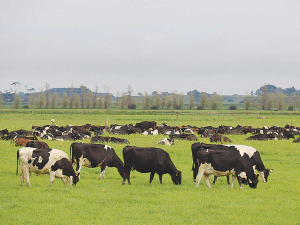
New Zealand has large quantities of soil carbon in the top 300mm, built up over decades of pasture management including fertiliser application, irrigation in some areas, and appropriate animal management. Speaking at the New Zealand Agricultural Greenhouse Gas conference in June, Maanaki Whenua Landcare scientist Dr Peter Millard warned that the challenge ahead is maintaining soil organic matter in the face of warming temperatures and increasing drought in some areas.
Conservation tillage has a part to play, but so does FIT and conventional ploughing for some crops in some seasons.
Context is always important!
Dr Jacqueline Rowarth, Adjunct Professor Lincoln University, is a farmerelected director of DairyNZ and Ravensdown. The analysis and conclusions above are her own. This email address is being protected from spambots. You need JavaScript enabled to view it.