Fonterra's New Roadmap Targets Climate, Nature, Animals
Climate, nature and animal wellbeing make up Fonterra's refreshed sustainability roadmap released last week.




 increase font size
 Jacqueline Rowarth
OPINION: The Financial Times, a major international newspaper, featured New Zealand on its front page at the beginning of June. It wasn't for the right reasons.
The headline, created to excite interest, was "Scientists accuse New Zealand and Ireland of trying to cover up livestock emissions".
The article was referring to an open letter to Prime Minister Christopher Luxon. The scientists, some of whom are from New Zealand, explained the issues clearly. It was the journalists or sub-editors who appeared to be the source of the emotive words 'accuse', 'cover up' and also the term 'accounting trick'.
The scientists did state: "Adoptinf targets consistent with 'no additional warming' ignores the scientific advice. It implies that current methane emissions levels are acceptable. They are not."
The scientists also explained why, citing both the Paris Agreement of 2015 and the Methane Pledge of 2024.
In the confusion of different models, metrics, targets and politics, the economics are being lost. The overall goal seems to be suffering similarly.
The Government wants the country to be economically viable, and the primary sector is the foundation.
The various statements made about the primary sector during the lead up to and at the Fieldays at Mystery Creek made that clear.
New Zealand farmers need and want to be economically viable. That means being efficient.
Efficiency gains, made in the absence of producer support (subsidies) are what have put New Zealand in pole position for producing the most high-quality protein (meat and milk) for fewest greenhouse gases (GHG).
Speaking at the DairyNZ Farmers' Forum at the end of May, Vangelis Vitalis, Deputy Secretary, Trade and Economics for the Ministry of Foreign Affairs and Trade, explained that over 85% of the discussion on trade agreements have climate at their heart.
What is New Zealand doing to reduce its impact and keep playing on the global stage?
The answer lies in the Paris Agreement: "in a manner that does not threaten food production".
Whilst we debate about the metrics and targets and whether a different model should be used to calculate, effect, what are we doing to calculate our contribution of high-quality protein to the world?
Can we calculate how many of the essential amino acids that make up accessible protein are supplied through meat and milk for how many GHG?
StatsNZ data released at the beginning of May showed sheep numbers had decreased 3% in the year to June 30th 2024 to 23.6 million. Numbers of beef cattle had increased by 3% to 3.7 million, and deer numbers were down 4% to 709,000. Total dairy cattle numbers had decreased by 1% to 5.8 million, but production of milksolids had increased slightly (less than 0.5% from DCANZ data, reflecting a similar increase in the size of the milking herd (DairyNZ and LIC data)).
What is the effect overall on food being supplied to the global market?
The open letter from scientists to the Prime Minister reminded us that developed countries have a commitment under Article 4 of the Paris Agreement: their responsibility is that Nationally Determined Contributions (to GHG reductions) reflect their highest possible ambition.
The reduction pledge recognises the conclusion of the Intergovernmental Panel on Climate Change (IPCC) Sixth Amendment report "that swift reductions in methane pollution are a key component of actions to limit warming in line with the long-term temperature goal of the Paris Agreement..."
This statement acknowledges that methane is a short-lived gas, and that bringing emissions down will have a relatively rapid effect.
Bearing in mind the Paris Agreement phrase "Without threatening food production" gives us a path forward for staying with the developed countries (doing everything we can) while enabling farmers to continue supporting the economy (increasing efficiencies in producing high-quality protein).
And keeping the social licence to operate.
All farmers know that the best way of moving animals calmly is to open the gate, step back, and let the leaders think that going through is their own idea. This technique has been known to work on partners and children. Perhaps it is time to consider the benefits of this tactic when we are working with politics.
Dr Jacqueline Rowarth, Adjunct Professor Lincoln University, is a director of DairyNZ, Ravensdown and Deer Industry NZ. She is also a member of the Scientific Council of the World Farmers' Organisation. This email address is being protected from spambots. You need JavaScript enabled to view it.
Climate, nature and animal wellbeing make up Fonterra's refreshed sustainability roadmap released last week.
OPINION: It appears to be difficult for people who haven’t tried to run a business to understand the difference between assets and cash.
OPINION: In the 1980s, concern was expressed in West Germany about the falling birth rate. Some simple analysis was performed by Professor Helmut Sies, physician and biochemist at Dusseldorf University. His letter ‘A new parameter for sex education’ was published in Nature in 1988:
A five-year study has found that the cost of reducing emissions without technology may be significant and unsustainable for Northland dairy farmers.
OPINION: With the winter months officially here, I trust all is well at your place.

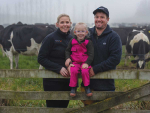
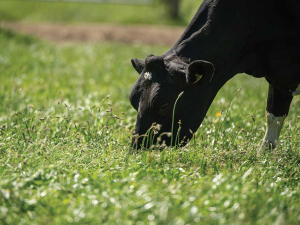
Farms across the upper North Island are trialling different pasture mixes as part of a research programme that aims to build greater resilience into farming systems.
Election years are always a concerning time for farmers, according to DairyNZ chair Tracy Brown.
The Ballance Farm Environment Awards are coming to the West Coast of the South Island.
Most dairy regions around the country have had a pretty good season so far says Tracy Brown.
Rural leader Mark Hooper has been appointed as an independent director to the NZPork board, bringing extensive farming, governance and advocacy experience to the role.


OPINION: The same mainstream media muppets that brought you Jacindamania in 2017 have been flat out pimping for the Opportunities…
OPINION: Your old mate reckons the atrocious way farmers in the UK are treated by their lords and masters in…