China No Longer Just A Commodity Story - Luxon
China remains New Zealand’s biggest market, taking $23 billion of our exports, but it’s no longer a commodity story, says Prime Minister Christopher Luxon.
 increase font size
 Trade expert Stephen Jacobi says New Zealand should not be affected by Australia's disagreements with China.
A deepening trade spat between China and Australia shouldn’t impact New Zealand, according to trade analyst Stephen Jacobi.
He says NZ and China have a strong relationship, but “from time to time, there will be things on which we disagree”.
“New Zealand has made its views known in a careful and diplomatic way,” he told Rural News. “That should not affect our trade relations.”
China/Australia relations have been deteriorating since Australian Prime Minister Scott Morrison called for an international inquiry into the origins of the Covid-19 pandemic in April, a move that Beijing called “political manipulation”.
Since then the two sides have fought over several issues, particularly trade. China has slapped Australian winemakers with heavy tariffs, and banned, delayed or taxed exports of other products, including beef and barley. Australian exporters are worried that tariffs could spread to dairy exports.
Jacobi believes there is always potential for things to get worse if care is not taken.
“We hope Australia and China can get back to talking directly to each other as soon as possible,” he told Rural News.
“It does no good for New Zealand to see close friends and partners at odds with each other. Both China and Australia have recently signed the Regional Comprehensive Economic Partnership (RCEP), as has New Zealand – we should all focus more on deepening our co-operation in this way.”
China remains New Zealand’s biggest export market.
In 2020, New Zealand’s exports to China exceeded $16.7 billion, which was more than double that of our next biggest export market, Australia. The top three exports were dairy products (milk powder, butter, and cheese), wood (logs, wood, and wood articles), meat (meat and edible offal).
Last week, Fonterra chief executive Miles Hurrell said the dairy co-operative has a strong reliance on China and is watching geopolitical tensions closely.
“But we don’t get our nose involved in such disputes,” he says.
Jacobi doesn’t expect China to target NZ companies or products.
“There would be no reason for China to do this,” he says.
He also points out that NZ products enjoy a great reputation in China.
“We maintain positive political relations despite occasional disagreements. There is no reason for this to change.”
Earlier this month, the NZ Government raised concerns about China’s use on social media of a doctored image of an Australian soldier holding a knife to a child’s throat.
Last month, NZ signed a Five Eyes statement critical of a Chinese Government resolution, which led to the disqualification of four pro-democracy lawmakers in Hong Kong.
China remains New Zealand’s biggest market, taking $23 billion of our exports, but it’s no longer a commodity story, says Prime Minister Christopher Luxon.
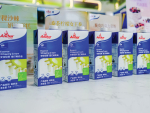
Fonterra is strengthening its foodservice presence in China with the launch of a new cream for professional bakeries at Bakery China 2026 in Shanghai.
OPINION: What does the birth rate in China have to do with stock trading? Just ask a2 Milk Company.
International trade expert Stephen Jacobi says Winston Peters' objections to the Indian free trade deal are "ridiculous".
Leading trade analyst Stephen Jacobi has rubbished claims that New Zealand could have got a better free trade deal with India if it had prolonged the negotiations.

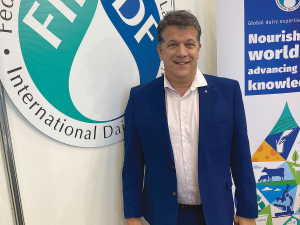
The global dairy industry is fighting back against alternative proteins masquerading as dairy products.
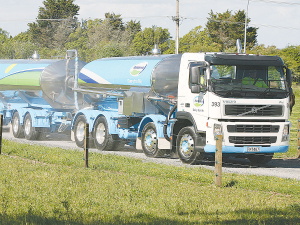
Fonterra farmers are happy to see the board tackle the issue of shares from former milk suppliers.
New Fonterra Co-operative Council chair Greg Collins says they will continue to ask questions and encourage suppliers to connect with their co-operative.
Milk powders are continuing their merry run on the Global Dairy Trade (GDT) platform, firming up a $10-plus milk price for this season.
This year's Rural Medical Immersion Programme (RMIP) students have finished their placement year in South Taranaki, and all three are staying in Taranaki for their next placement.
Groundswell is welcoming the resignation of Rob Hewett as Farmlands chair, saying the agribusiness leader has made the right call.