Lanaco and Blueair Launch World-First NZ Wool Air Filter
New Zealand wool is reaching new heights as air filtration companies move away from synthetic products to biodegradable alternatives.
 increase font size
New Zealand Wool Services International CEO John Dawson says the strengthened New Zealand dollar has negatively impacted at this week's South Island sale with most types easing in local terms.
The weighted indicator for the main trading currencies has lifted 2.97 percent compared to the last North Island sale on 1st October and 4.67 percent against the previous South Island sale.
Of the 8,423 bales on offer 75.4 percent sold.
Dawson reports that compared to the South Island sale on 24th September, Merino Fleece 17 to 23.5 microns were 2 to 6 percent cheaper in-line with currency movements and high seasonal volumes.
Mid Micron Fleece 24 to 27 microns were 2 to 4 percent cheaper with 28 to 30.5 microns down 7 to 9 percent.
Compared to the North Island sale on 1st October, Fine Crossbred Full Fleece 31.5 and 32 microns were 3 to 4 percent dearer with 32.5 and 33 microns up to 9.5 percent dearer as limited volumes pressured this segment. Fine Crossbred Second Shears 32 to 35 microns were generally 1.5 to 5 percent cheaper with shorter types under continued pressure.
Coarse Crossbred Fleece were up to 1 percent easier.
Coarse Second Shears were 1.5 to 2.5 percent cheaper.
Short Oddments were down 1.5 to 3.5 percent.
Well spread interest with Western Europe and China dominating the Fine Wool sector with Australasia and China strong on the fine and coarse crossbred wools, supported by Middle East, United Kingdom and India sparingly.
Next sale on 15th October comprises approximately 5,000 bales down 30 percent on anticipated roster volumes.
New Zealand wool is reaching new heights as air filtration companies move away from synthetic products to biodegradable alternatives.

Will a stronger, more coordinated voice help rebuild confidence and improve returns in the wool sector?
OPINION: Confidence in the wool sector is rebounding as prices hit levels not seen in more than 15 years.
Rising strong wool prices are finally returning the sector to profitability.
The recently signed free trade agreement with India is an invitation to strengthen relationships between the New Zealand and Indian strong wool industries, says Wool Impact chief executive Andy Caughey.


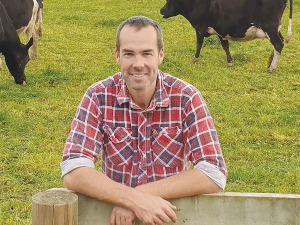
DairyNZ deputy chair Cameron Henderson has been re-appointed unopposed for another term.
Farms across the upper North Island are trialling different pasture mixes as part of a research programme that aims to build greater resilience into farming systems.
Election years are always a concerning time for farmers, according to DairyNZ chair Tracy Brown.
The Ballance Farm Environment Awards are coming to the West Coast of the South Island.
Most dairy regions around the country have had a pretty good season so far says Tracy Brown.