Fonterra Elections 2026: Voting Opens Tuesday 20 October
Fonterra shareholders can begin voting on Tuesday 20 October in the 2026 Board of Directors’ election, a Co-operative Council election in one Ward, and seven Annual Meeting resolutions.
 increase font size
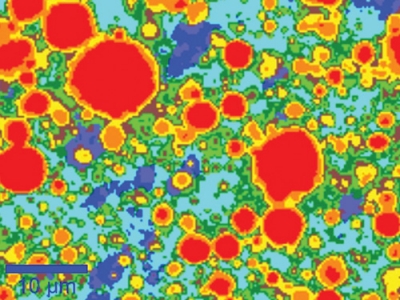 Raman confocal image.
Fonterra researchers have made a breakthrough chemical imprint for the dairy industry.
Their latest development uses Raman spectroscopic imaging to reveal the "product fingerprint" in food structures, which could speed up product development and help in the hunt for healthy new foods. This is the first use of this technology by the dairy industry internationally, the co-op believes.
Research was supported by the Transforming the Dairy Value Chain Primary Growth Partnership, co-funded by MPI, Fonterra, DairyNZ and others in the industry.
Fonterra manager, food structure design, Christina Coker, says the researchers' work is a "major step forward for new technology development, being able to know where your components are sitting in a structure so Fonterra's manufacturing operation can get the properties they want and for new product development".
The innovation will help researchers know more about the makeup of the food structures they are studying and the chemical interactions of any additions and changes. And this can happen in near-real time, much like Fonterra's milk fingerprinting breakthrough, which won a national innovation award last year.
"A day doing this is worth months of trial and error," says Coker of chemical fingerprinting.
The result is the culmination of six years research by Fonterra senior technical officer Elizabeth Nickless, supported by colleague Dr Steve Holroyd and professor Keith Gordon's team at Otago University, and the University of Auckland, which has the only Raman instrument in the country.
It was also made possible by advances over the past couple of years in high-resolution imaging.
The spectroscopic technique builds on traditional confocal laser microscopy and analyses the distribution of chemical bonds to give a clearer, unprecedented picture of structures and interactions in samples.
The confocal process uses lasers to create high resolution images with depth. The Raman spectroscopy, named after Indian physicist Sir C. V. Raman, analyses vibrational, rotational and other low-frequency modes to clarify the picture even more.
Fonterra shareholders can begin voting on Tuesday 20 October in the 2026 Board of Directors’ election, a Co-operative Council election in one Ward, and seven Annual Meeting resolutions.

Fonterra Co-operative Group chief financial officer Andrew Murray has resigned to take up a role outside the dairy giant.
Four candidates have been confirmed for two director positions on Fonterra’s board.
A record farmgate milk price and strong global demand is laying the foundation for continued growth of organic dairy farming in New Zealand.
Sam Whitelock is an All Black rugby great, Farmstrong Ambassador and working dairy farmer in the Manawatu. Having stepped away from professional sport and returned to his roots on the family farm, he talks about balancing farm life with advocating for rural wellbeing.


Alliance is calling for final applications for its 2027 Graduate Programme, with applications closing on Sunday 25 October.
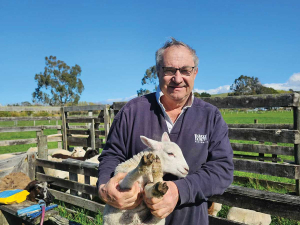
Decades piloting planes has ensured vet and farmer David Hayes is focused on safety. So, after a serious accident while welding on farm, he is sharing his experience so others can learn from it.
Canterbury milk processor, Synlait Milk has confirmed Leon Fung as its chief executive officer.
OPINION: Making it easier to collect rainwater and use it to grow crops and livestock is a no brainer.
As part of its Election 2026 coverage, Rural News asked political parties how they would help pull the arable sector out of the doldrums. Here's what they said:
Farmers are being encouraged to rethink how they manage waste on farm with the launch of ruralwastesorted.co.nz, a new website bringing together practical tips, real farmer experiences and resources.