Lamb Survival Survey: Massey Asks NZ Sheep Farmers
Lamb survival has always been a key driver of sheep farm performance.
 increase font size
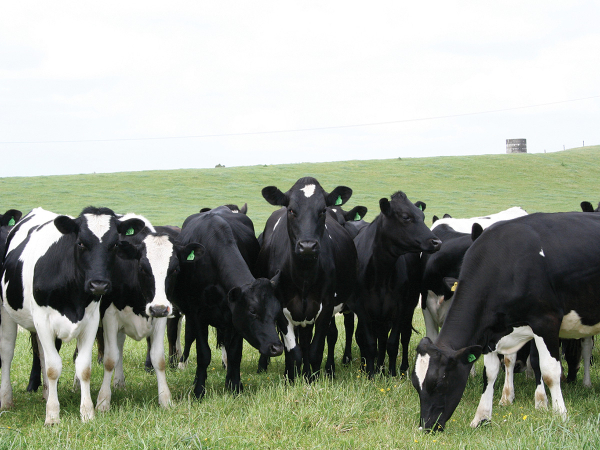 Many dairy farmers cross Holsteins with Herefords to produce calves that will perform well in beef systems.
The black and white coat of Holstein- Friesian cows is globally recognised as a symbol of dairy farming and a defining trait of domestic cattle. But until recently, scientists didn’t know which genes were responsible for the Holstein’s spots.
Coat patterns are some of the oldest traits selected by humans, likely since the dawn of domestication, showing how farmers have long shaped cattle populations.
For other breeds, the DNA variants behind unique patterns, such as the white face of Herefords or the belts of Galloways, are already known. Now, a study involving Massey University’s Professor Matt Littlejohn has solved the mystery of the Holstein’s unique coat.
Using genomic techniques, the team analysed the coat patterns of thousands of cows and identified two specific DNA variants controlling two different genes – KIT and MITF – that explain much of the variation in Holstein spotting.
“These genes are well-known for controlling pigmentation in humans, mice, dogs, horses, birds and other species,” Littlejohn says.
The KIT gene variant found in Holsteins is unusual because it doesn’t sit within the gene itself. Instead, it regulates the gene from a different position on the chromosome.
“Think of it like a light switch turning on a light in another room,” he says.
The MITF variant is also unusual for its ability to create unique coat patterns when different breeds are crossbred.
“This variant can create black speckles in dairy crosses, ‘black socks’ in Belgian Blue cattle, or reversal of the white face expected from a Hereford cross.”
While these patterns are interesting to look at, they aren’t simply aesthetic.
“Many dairy farmers cross Holsteins with Herefords to produce calves that will perform well in beef systems. The white face is important, since this marks the calf as a Hereford cross,” Littlejohn says.
“When ‘splotchy’ faced calves are born as a result of the MITF variant, these calves are harder to recognise as beef crosses and are often less valuable. Genetic testing could help produce calves with more predictable coat patterns in the future.”
Other practical applications of the research include possible animal welfare benefits. Skin pigmentation affects heat absorption and UV protection. Black coats absorb more heat but also provide better UV protection. Knowing how genes control pigmentation could help farmers select coat patterns that improve cattle comfort and performance.
“This research not only solves the mystery about how the Holstein gets its spots, but also shows how genes can interact to create unique and unexpected patterns,” Littlejohn says.
“It’s a great example of how modern genomics can uncover the hidden mechanisms behind traits we often take for granted.
Lamb survival has always been a key driver of sheep farm performance.

Be alert but not alarmed about El Niño. That’s the message from Professor Danny Donaghy, deputy head of the Massey University’s school of agriculture and the environment.
Massey University vice chancellor Pierre Venter says his institute is moving from a period of austerity into a growth phase, based on their new strategy.
Massey University is best placed to solve the “problems” facing the dairy industry, says vice chancellor, Pierre Venter.
Vetekina Pau'u is the first Tongan to win the William Gearish Memorial prize and sadly she will also be the last recipient.



Worst election result imaginable for New Zealand and not good for business confidence.

Associate Agriculture Minister, Mike Butterick has lost his Wairarapa seat in the final count released today.
Women across the dairy sector have an opportunity to invest in their leadership, education and professional development, thanks to a scholarship fund.
Three of New Zealand's leading primary sector organisations have joined forces to propose a new Food and Fibre Private Training Establishment (PTE).
OPINION: The World Dairy Summit, held in Auckland last week, delivered a poignant message – when it comes to global trade, the old order has passed away.
Deer Industry New Zealand (DINZ) has welcomed Government co-investment in a new $10 million programme aimed at increasing the value of New Zealand farmed venison, velvet and co-products and improving returns to deer farmers.