Massey Uses Portable Analyser to Measure Pasture Soil GHGs
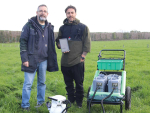
Researchers at Massey University are using a special piece of scientific equipment to improve the measurement of greenhouse gas emissions from pasture soils.




 increase font size
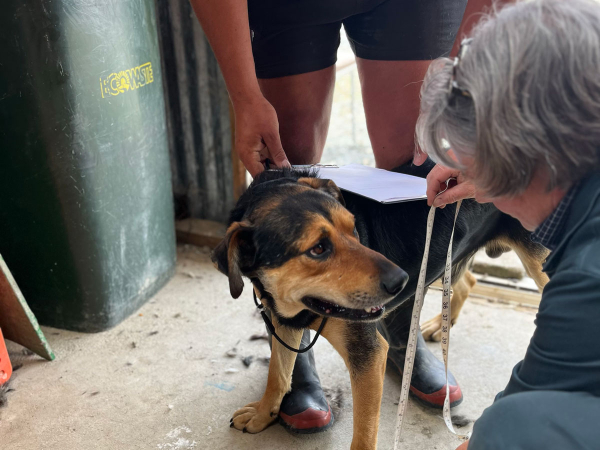 Henry getting measured by NS Vet Jill MacGibbon on a Pamu farm in Southland.
Massey University is returning to the Fieldays with a future-focused, solution-driven theme, showcasing research that delivers practical advancements in agricultural efficiency, sustainability and longevity.
The university will display the laying of the genetic groundwork for the future of Aotearoa New Zealand's working dogs.
Right Dog for the Job is a three-year research project led by Massey University, in collaboration with industry partners including Pamu and Focus Genetics. The project is co-funded by the Ministry for Primary Industries through the Sustainable Food and Fibre Futures Fund and supported by Ancestry.com. The goal? To better understand the genetics of New Zealand's working dogs and lay the foundation for future genetic testing and selection tools.
The project began with New Zealand's first large-scale genetic study of working dogs, sequencing the genomes of 249 Huntaways, heading dogs and crossbreds. This revealed over 19 million DNA variants, a vital first step in uncovering how genetics influence health and performance.
Researchers are now analysing the frequency of potentially harmful recessive variants, comparing them to those known in overseas breeds. This work supports more informed breeding decisions and aims to improve the health, working ability and longevity of our working dogs.
Of nearly 400 known variants linked to health or physical traits in other breeds, 27 were found in the dogs sampled with five appearing at high enough frequency to warrant further testing.
Professor Matt Littlejohn and members of the research team will be at Fieldays to share insights into the project and demonstrat how selective breeding can support healthier, more capable working dogs. Visitors can even get hands-on with an interactive 'Tinder for working dogs' experience, where they'll be tasked to identify the healthiest breeding matches based on genetic compatability.
Dog whistles will be up for grabs for successful participants, along with the chance to win a genetics kit, thanks to Ancestry.com.
As the project moves into its next phase, including collecting more DNA samples and collaborating with farmers and vets to track health and performance traits, Littlejohn says connecting with the farming community is key.
"The long-term aim is to enable future tools for breeders and dog owners, not just to avoid genetic disease but to select for the traits that really matter on farm. If the research can help pick the best dog for the job, it will make a real difference to farm efficiency and the wellbeing of both dog and handler."
Also, on display will be how to mitigate the cost of shearing through self-shedding sheep. With many farmers finding that the price of wool no longer offsets the cost of shearing, what was once a profitable process is now an increasing expense.
To explore alternatives, a long-term project at Massey's Riverside Farm in Wairarapa is investigating the viability of self-shedding sheep, specifically Wiltshires which naturally shed their fleece once a year. The research has two key aims: first, to model the profitability of transitioning from traditional Romney sheep to self-shedding Wiltshires, and second, to conduct a multi-year flock study tracking the production and performance of the sheep as the flock is gradually bred towards Wiltshire genetics.
Running since 2020, the project has already yielded promising insights. By collecting animal performance health and wool data from sheep from varying proportions of Wiltshire to compare with the original Romney-type sheep, the study aims to better understand the genetic control of shedding.
This study will continue to collect production data to support farmer decision making for the future of their flocks. The project will extend until 2028.
Dr Nick Sneddon and his team will be sharing more about the project at Fieldays, including its findings and what they could mean for the future of farming in New Zealand.
Site PE51
Researchers at Massey University are using a special piece of scientific equipment to improve the measurement of greenhouse gas emissions from pasture soils.

Interest in agritech and production animal systems has prompted Massey University's School of Agriculture and the Environment to new majors to its popular animal science degree.
The industry is crying out for graduates with agricultural related degrees.
A four year trial has reaffirmed that mixing plantain into dairy pastures can help reduce nitrogen losses to freshwater while maintaining milk production and profitability, say researchers.
Special courses for secondary school teachers to help excite kids about agriculture and horticulture are now being run at Massey University.


High country stations, mixed sheep and beef farms, Māori-owned farms, corporates and family operations are among the nine commercial farms taking part in the Livestock Innovation Farming Transformation programme, known as LIFT.
OPINION: New health and safety guidance unveiled by the Government recently provides farmers greater certainty about what is expected of them when managing risks on farm.
The National Animal Welfare Advisory Committee (NAWAC) is seeking public feedback on proposed changes to the Code of Welfare for Rodeos.
A New Zealand initiative supporting farmers to restore the health of grazing landscapes has received international backing through the Regenerative Fund for Nature, a global collaborative fund supporting regenerative agriculture and the communities that produce natural fibres for the fashion industry.
Combine premium New Zealand products, blend in a family ritual and what do you get? A world-class functional drink.
Entries are now open across eleven regions for the 2027 New Zealand Dairy Industry Awards (NZDIA).


OPINION: The same mainstream media muppets that brought you Jacindamania in 2017 have been flat out pimping for the Opportunities…
OPINION: Your old mate reckons the atrocious way farmers in the UK are treated by their lords and masters in…




