Heat detection with no tail paint
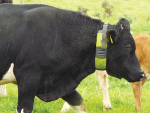
The latest device from the Irish maker, Moocall Heat, monitors cows for heat detection, centering on a collar worn by the bull to detect his activity as he moves through the herd.
 increase font size
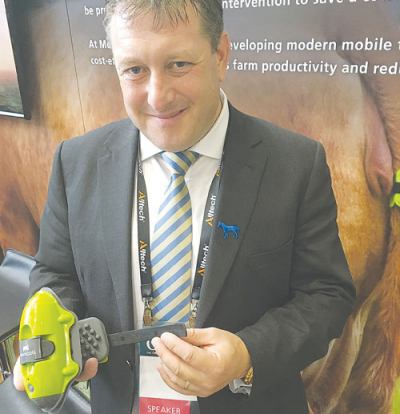 Moocall co-founder Emmett Savage.
A simple device underpinned by a complex algorithm can alert farmers via text message that a cow will calve within one hour.
Moocall Calving Sensors, developed in Ireland and available in Australia and New Zealand, are easily applied to a cow’s tail and can accurately predict when it will give birth.
It does this by measuring tail movement patterns triggered by labour contractions. When they reach a certain level of intensity over a period of time it sends an SMS text alert to a cellphone one hour prior to calving.
After calving, the sensor can be moved to the next cow. It is adjustable to any size tail.
The device was launched in 2015. Since then 23,000 sensors have been sold in 38 countries. And this growth looks likely to accelerate: Moocall has been chosen for the Pearse Lyons Global Agritech Accelerator scheme run by biotech company Alltech, this year.
Moocall was one of 10 companies selected from 183 applicants (from 38 countries) to join the scheme; it was pitched to an audience of 3000 at the Alltech One17 Ideas conference in Kentucky last month. It is the idea of Alltech founder and president Dr Pearse Lyons and was open to start-ups now funded and ready to go to market.
Moocall co-founder Emmett Savage says the resources and expertise made available via the Accelerator scheme helped grow and develop his company.
“The Accelerator has been massive for Moocall as a business, and for me personally,” he said. “The tutoring, training, pitch coaching and opening up a world of contacts helped spread Moocall around the world.”
Moocall and the other successful applicants took part in a 15-week mentorship programme aimed at accelerating their business development. They now have access to Dr Lyons and other senior executives of Alltech which has a presence in 129 countries.
Alltech chief innovation officer Aidan Connolly said, “[These businesses] want access to our footprint, our market knowledge and our contacts.
“We have a strong network of people we can bring in who may be potential customers, distributors and even investors in these start-ups,” he said.
The latest device from the Irish maker, Moocall Heat, monitors cows for heat detection, centering on a collar worn by the bull to detect his activity as he moves through the herd.
Mycotoxins threaten animal health and producer profits, so identifying and addressing these hidden challenges is important for farmers.
A new feeding programme designed by biotech company Alltech shows that with proper timing, nutrition can be a more powerful tool than genetic manipulation for controlling production, animal health and quality.
Despite its large dairy herds, China is still a long way from self-sufficiency in dairy.
Calving cows means late nights and early mornings, with statistics showing around 18% of heifers need help and 7% of calves die at birth.


Converting a longstanding cropping farm to dairy was the only way to ensure the land stayed in the family long term, says new dairy farmer Rod May.
As the election heats up, Organics Aotearoa New Zealand (OANZ) has launched its election scorecard designed to help voters wanting to support policies that grow organic and New Zealand's organic sector.
A 'tsunami' of milk from key exporting countries is winding down and this may be good news for New Zealand dairy farmers.
Will the good times last? That's one of the key issues to come out of the latest Federated Farmers confidence survey.
Outgoing Fonterra Co-operative Council chair John Stevenson says that it has been a privilege to represent the co-op's farmer shareholders.
Have a plan in place for your cows and staff.