BCS Targets: Why Body Condition Score Matters at Calving
Body Condition Score (BCS) is a critical element in managing the health and reproduction of the dairy herd.




 increase font size
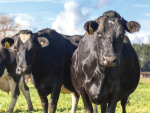
 The Moocall device came about after farmer/inventor Niall Austin had a heifer in calving difficulties.
Calving cows means late nights and early mornings, with statistics showing around 18% of heifers need help and 7% of calves die at birth.
So a new device, launching at Fieldays, should be welcomed by farmers' looking for a few more hours sleep and, more importantly, peace of mind that all is well in the calving shed or paddock.
The Moocall device came about after farmer/inventor Niall Austin had a heifer in calving difficulties. This resulted in a dead calf and the heifer having to be put down after paralysis, all leading to a financial loss of around Euro 2000 (NZ$3300).
The device, which attaches to the cow's tail, contains a motion sensor that analyses the tail's movement. It refers around 600 pieces of data per second, comparing to an algorithm and predicting the onset of calving.
When this happens, an internal GSM device sends an SMS text to the farmer or stockman's mobile device, normally an hour before the event. Messages can be sent to two different phone numbers and the device's status, and that of others, can be viewed from a computer based 'dashboard' that records any activity including calving.
Power comes from an internal rechargeable battery with 30 days life. The unit is attached to the cow's tail, opposite the vulva, with an integral ratchet strap; it is shaped to resist removal by rubbing or knocking off and is water-resistant.
Launched in 2015 after four years of testing and development, units have been sold on 10,000 farms in 25 countries. It has 'overseen' 90,000 births and won awards for technical expertise, design and manufacture.
Depending on calving patterns, the manufacturer suggests that one unit can be used to monitor 30 cattle.
Especially it is useful for early or late-calvers, heifers, animals calving at night or pedigree animals that might need a vet's assistance. It should also prove useful to stockmen working away from the farm, or in situations where the farmhouse is a distance from the calving area.
The company is currently looking for distributors in NZ and Australia
Body Condition Score (BCS) is a critical element in managing the health and reproduction of the dairy herd.

Walking around the Fieldays this year, expected most of the conversations to be about machinery purchases and farm infrastructure upgrades. Instead, one topic seemed to keep cropping up more frequently with farmers – the price of PKE.
A leading British farming politician says he's impressed with the positive attitude of New Zealand farmers that he met during his recent trip here.
A new digital assistant is now helping Ballance Agri-Nutrients farmers speed up nutrient information and ordering.
OPINION: At Fieldays this year, one theme kept surfacing across the sector: global shocks are no longer something that happens “over there”. They are now translating quickly into local, farm-level impacts through increasingly complex and connected channels.


Election years are always a concerning time for farmers, according to DairyNZ chair Tracy Brown.
The Ballance Farm Environment Awards are coming to the West Coast of the South Island.
Most dairy regions around the country have had a pretty good season so far says Tracy Brown.
Rural leader Mark Hooper has been appointed as an independent director to the NZPork board, bringing extensive farming, governance and advocacy experience to the role.
Opportunity says its land value tax (LVT) is unlikely to force farmers into a position where asset sales or increased debt are required.
Milk powder prices are keeping farmgate prices up, helping processors offset the dip in milk fat prices.




OPINION: The same mainstream media muppets that brought you Jacindamania in 2017 have been flat out pimping for the Opportunities…
OPINION: Your old mate reckons the atrocious way farmers in the UK are treated by their lords and masters in…