Fonterra FY26 Results: $9.69 Milk Price, $3.4bn Profit
Fonterra has unveiled its annual results for the 2026 financial year, posting $27 billion in revenue and close to $20 billion returned to New Zealand farmer owners and unit holders.
 increase font size
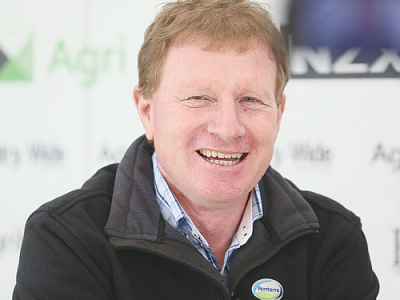 John Wilson.
Fonterra's forecast cash payout for this season will put another $3.5 billion into rural economies, says Fonterra chairman John Wilson.
The 2016-17 forecast of about $6.55/kgMS (including dividend) is up more than $2 from last year, he says.
“This is good news for our farmers after what has been a very difficult last two years for various reasons. It was also a very difficult spring,” Wilson told Dairy News.
“Not only has milk production come up on farm, we have been able to sell that at higher prices and we have been able to lift our (farmgate) milk price to $6.15/kgMS for this year.
“I know will be good news for farmers and pleasingly being we have been able to hold our earnings range at 45-55c although we will have to have a strong last quarter in the business which is expected, so we are still targeting that 4% dividend.”
Looking forward Fonterra sees a balanced market as they have now for some time.
Fonterra has forecast a $6.50kg/MS farmgate milk price for the 2017/18 season which is at the higher end of speculation by rural economists.
Wilson says there is always a lot of speculation in the market. Significant analysis goes in to forecast as to what is likely to happen over the next 15 months or so.
“Our view is we expect the global supply and demand market to remain balanced. There will be unders and overs but we are seeing good strong demand in our key markets and we don’t see any major supply shocks looming.”
But volatility will always remain a risk.
“Votality is driven by events that are outside our control and usually, but not always, have not been anticipated,” he says.
“For example the Russian trade embargoes, those sorts of things. The $6.50/kgMS (for 2017/18) is based on the markets continuing, as they have been over the last six months or so, back in balance.”
But while they always ask farmers to have caution in their on-farm budgeting, “they certainly can work on a $6.50/kgMS forecast”, he says.
“It is has been a very difficult two years for our farmers. Remember we came off a very high milk price, farmers had invested significantly in their businesses particularly in the environmental sustainability area, so the last two years have been very challenging.
“We know that it will take a couple of years of these sort of milk prices to be able to get our farm working capital back to where they were to get their balance sheets back in order. But I certainly know farmers have been very prudent.
“But another $3.5 billion in the rural economies relative to the year before is certainly great for our farmers and great for the communities we all live in.
“It shows the importance of staying on strategy and you are seeing again that we are managing to shift 360-400 million litres of milk into the consumer and food service. At the same time we have been able to achieve higher prices for our milk products over and above commodity prices.
“So we are staying very firmly on strategy. Of course we will always fine tune as we move along.”
Costs were down 4% at the end of the last quarter over last year while at the same time it has driven more value in consumer food services.
Loan repayments due
Fonterra has shaped its advance rate so farmers can pay down some of their loan, says Wilson.
The cooperative always committed to do this, he says.
Farmers will pay down 15% at the October payment.
“And the following year on our current schedule – and I encourage our farmers to look to the advance rate schedule which is up on the website – they will be able to pay down the balance next September.
“In the meantime we will be charging an interest rate of 2.47% to our farmers from June 1 for the first quarter and then we will update it every quarter.”
Fonterra has unveiled its annual results for the 2026 financial year, posting $27 billion in revenue and close to $20 billion returned to New Zealand farmer owners and unit holders.
Fonterra Co-operative Group has confirmed the independently assessed candidates standing for election to its board in 2026.
Fonterra has revised its Farmgate Milk Price forecast for the 2026/27 season, lifting the midpoint and narrowing the range on the back of improving global dairy commodity prices.
Outgoing Fonterra Co-operative Council chair John Stevenson says that it has been a privilege to represent the co-op's farmer shareholders.
OPINION: It seems Canterbury processor Synlait is still in the doldrums.



Federated Farmers says it welcomes Labour's commitment to reviewing the Sharemilking Agreements Act, calling on other major parties to do the same.
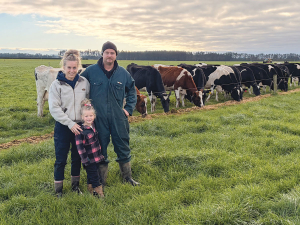
For Canterbury dairy farmers Sian Meijer and Rick Wobben, wearable technology has become one of their most valuable on-farm tools - helping manage 1850 cows across an expansive, high-performing dairy operation while improving efficiency, mating outcomes and day-to-day decision making.
Fonterra has unveiled its annual results for the 2026 financial year, posting $27 billion in revenue and close to $20 billion returned to New Zealand farmer owners and unit holders.
The first major update to the Dairy Cattle Code of Welfare in more than a decade has been released, marking what DairyNZ describes as an important step in ensuring animal welfare standards continue to evolve alongside scientific evidence and on-farm realities.
Ravensdown shareholders have elected Jane Montgomery and Kate Acland to the Ravensdown Board for three-year terms, following a closely contested director election.
Federated Farmers says new legislation replacing the Resource Management Act will cut red tape, unlock investment and help grow New Zealand's export-led economy, after the Planning Bill and Natural Environment Bill passed their third reading in Parliament yesterday.